
Get Answers
Why variant tracking matters
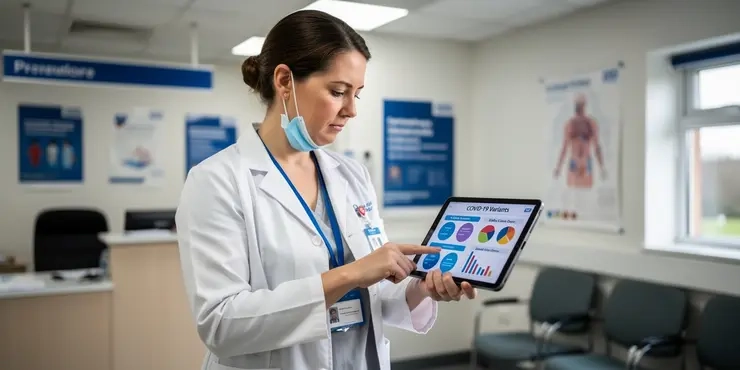
COVID-19 continues to change as the virus spreads and mutates. New variants can affect how easily the virus passes between people, how severe illness may be, and how well vaccines and treatments work.
That is why countries around the world still monitor the virus closely. The aim is to spot important changes early, before they can spread widely or cause problems for health services.
How countries are monitoring the virus
One of the main tools is genomic sequencing, which reads the virus’s genetic code from positive tests. Scientists compare samples from different places and times to see whether new mutations are appearing.
Many countries also use wastewater testing. By checking sewage, public health teams can see how much virus is circulating in a community, even when fewer people are getting tested in clinics.
In some places, extra monitoring is carried out in hospitals, care homes, airports, and high-risk settings. This helps experts pick up changes that might be missed in routine testing alone.
Global sharing of data
A big part of variant tracking is international cooperation. Countries share genetic data through global databases, allowing researchers to compare findings quickly and identify variants that are spreading across borders.
The World Health Organization coordinates much of this work and helps assess whether a variant is being watched or is becoming more concerning. This gives governments a common reference point for risk assessment.
Public health agencies and university research teams also collaborate across countries. Shared analysis helps build a clearer picture of which variants are rising, where they are spreading, and whether they are linked to changes in disease patterns.
What this means for the UK
In the UK, the NHS, UK Health Security Agency, and research partners continue to monitor COVID-19 closely. Sequencing and surveillance help identify variants arriving from abroad or emerging locally.
This information supports decisions on vaccination advice, treatment planning, and hospital preparedness. It also helps scientists update guidance if a variant shows signs of spreading more easily or reducing protection from past infection.
For the public, the key message is that COVID-19 is still being watched carefully worldwide. Although testing has changed since the height of the pandemic, the systems for tracking variants remain an important line of defence.
Frequently Asked Questions
Global tracking of COVID-19 variants is the coordinated monitoring of SARS-CoV-2 genetic changes around the world to identify, classify, and follow the spread of new variants over time.
Global tracking of COVID-19 variants helps public health agencies detect emerging variants early, assess changes in transmissibility or severity, and update vaccines, treatments, and guidance when needed.
Global tracking of COVID-19 variants works by collecting viral samples, sequencing their genomes, analyzing mutations, and sharing the results through international databases and surveillance networks.
Global tracking of COVID-19 variants is conducted by public health agencies, laboratories, universities, hospitals, research institutions, and international organizations working together.
Global tracking of COVID-19 variants uses viral genome sequences, sample collection dates, location data, epidemiological information, and sometimes clinical data such as hospitalization outcomes.
New variants in global tracking of COVID-19 variants are identified by comparing viral genomes and looking for distinct mutation patterns that differ from previously known lineages.
Genome sequencing is central to global tracking of COVID-19 variants because it reveals the viral genetic code and allows scientists to detect and monitor mutations precisely.
The speed of global tracking of COVID-19 variants depends on testing volume, sequencing capacity, and data sharing, but well-connected networks can detect signals within days to weeks after emergence.
The main challenges in global tracking of COVID-19 variants include uneven sequencing capacity, delays in data sharing, limited sampling, resource constraints, and gaps in surveillance coverage.
Data in global tracking of COVID-19 variants is shared through public repositories, national reporting systems, and international platforms that allow researchers and health authorities to compare findings.
Global tracking of COVID-19 variants helps vaccine development by showing which mutations are spreading and whether current vaccines may need updating to better match circulating strains.
Global tracking of COVID-19 variants informs public health policy by guiding travel advice, testing strategies, booster recommendations, mask guidance, and preparedness planning.
Global tracking of COVID-19 variants cannot predict outbreaks with certainty, but it can provide early warning signals that help model risk and prepare for possible surges.
Routine COVID-19 testing detects whether a person is infected, while global tracking of COVID-19 variants uses sequencing and analysis to determine which variant is present and how it is spreading.
Scientists classify variants in global tracking of COVID-19 variants using shared naming systems, genetic lineages, and public health designations that reflect mutation patterns and observed impact.
Organizations involved in global tracking of COVID-19 variants include the World Health Organization, national disease agencies, sequencing consortia, and genomic data platforms.
Global tracking of COVID-19 variants supports treatment decisions by identifying variants that may affect monoclonal antibody effectiveness or influence clinical outcomes, helping clinicians and policymakers adapt.
Privacy concerns in global tracking of COVID-19 variants include the risk of identifying individuals from linked genomic and location data, so systems typically use de-identified information and strict data governance.
Countries can improve global tracking of COVID-19 variants by expanding sequencing capacity, sampling more broadly, sharing data quickly, investing in laboratory infrastructure, and coordinating with international partners.
The future of global tracking of COVID-19 variants will likely include faster sequencing, better real-time analytics, broader surveillance integration, and stronger international collaboration for pandemic preparedness.

Ergsy Search Results
This website offers general information and is not a substitute for professional advice.
Always seek guidance from qualified professionals.
If you have any medical concerns or need urgent help, contact a healthcare professional or emergency services immediately.
Some of this content was generated with AI assistance. We've done our best to keep it accurate, helpful, and human-friendly.
- Ergsy carefully checks the information in the videos we provide here.
- Videos shown by Youtube after a video has completed, have NOT been reviewed by ERGSY.
- To view, click the arrow in centre of video.
- Most of the videos you find here will have subtitles and/or closed captions available.
- You may need to turn these on, and choose your preferred language.
- Go to the video you'd like to watch.
- If closed captions (CC) are available, settings will be visible on the bottom right of the video player.
- To turn on Captions, click settings.
- To turn off Captions, click settings again.