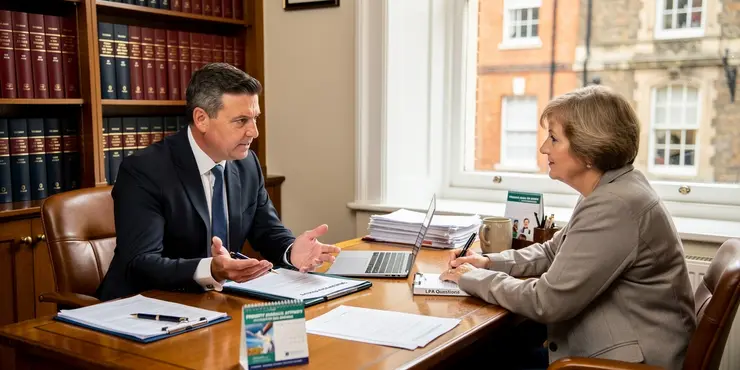

Speak To An Expert
Get clear, personalised advice for your situation.
Jot down a few questions to make the most of your conversation.
What is a Lasting Power of Attorney (LPA)?
A Lasting Power of Attorney (LPA) is a legal document that allows an individual (known as the 'donor') to appoint one or more persons (known as 'attorneys') to help them make decisions or to make decisions on their behalf. This is used when the donor no longer has the capacity to make decisions for themselves. In the United Kingdom, LPAs are crucial for planning ahead in case of future incapacity due to illness or accident.
Types of Lasting Power of Attorney
There are two main types of Lasting Power of Attorney in the UK: the Property and Financial Affairs LPA and the Health and Welfare LPA. Each serves a different purpose, addressing different aspects of the donor's life. It is possible to set up one or both types of LPA, depending on personal needs and preferences.
Property and Financial Affairs LPA
The Property and Financial Affairs LPA gives an attorney the authority to make decisions regarding the donor's financial and property matters. This can include managing bank accounts, paying bills, collecting income and benefits, or even selling the donor's home. This type of LPA can be used as soon as it is registered, with the donor's permission, allowing for assistance even when the donor still has mental capacity. It ensures that financial affairs are handled smoothly, protecting the donor's assets and ensuring their financial stability.
Health and Welfare LPA
The Health and Welfare LPA allows an attorney to make decisions about the donor's medical care and general welfare. This includes decisions about treatment types, care homes, and day-to-day care, such as diet and daily routine. Unlike the Property and Financial Affairs LPA, a Health and Welfare LPA can only be used if the donor has lost the mental capacity to make these decisions themselves. This type of LPA is vital for ensuring that the donor's healthcare and personal preferences are respected and followed when they are unable to articulate them.
Key Considerations
When choosing an attorney for either type of LPA, it is essential to select someone trustworthy and competent. The attorney must act in the best interests of the donor and make decisions that align with their wishes. Both types of LPA need to be registered with the Office of the Public Guardian before they can be used. It's crucial to prepare LPAs while the donor is still capable of making informed decisions, ensuring they have control over who manages their affairs.
What is a Lasting Power of Attorney (LPA)?
A Lasting Power of Attorney, or LPA, is a special paper that lets someone you trust help you make choices. This person is called an 'attorney', and you are called the 'donor'. If you get too sick to make decisions yourself, your attorney can help you. In the UK, an LPA is important because it helps plan for the future if you can't decide things because of illness or accident.
Types of Lasting Power of Attorney
In the UK, there are two kinds of LPA. One is for money and property, called the Property and Financial Affairs LPA. The other one is for health and personal care, called the Health and Welfare LPA. You can choose to have one or both, depending on what you need.
Property and Financial Affairs LPA
This LPA helps take care of your money and things you own. Your attorney can manage your bank accounts, pay your bills, collect money for you, or even sell your house if needed. You can use this LPA as soon as it's ready, with your permission. It helps to make sure your money is safe and well-managed.
Health and Welfare LPA
This LPA helps with health decisions and personal care. Your attorney can decide on medical treatments, where you live, and your daily routine. This type of LPA is only used if you can't make decisions yourself. It makes sure your wishes about health and care are respected.
Key Considerations
Pick someone you trust as your attorney. They should make choices that are good for you and respect your wishes. Both types of LPA need to be registered with a place called the Office of the Public Guardian before they can be used. It's important to make your LPAs when you are able to choose, so you decide who helps you in the future.
You can use tools like diagrams or easy-to-read guides to understand LPAs better. You might also talk to family or a helpful advisor to make sure everything is clear.
Frequently Asked Questions
LPA stands for Lasting Power of Attorney, a legal document allowing a person to designate someone to make decisions on their behalf.
There are mainly two types of LPA: Property and Financial Affairs LPA and Health and Welfare LPA.
A Property and Financial Affairs LPA allows the appointed attorney to manage financial matters, such as property management, bill payment, and investments, on behalf of the donor.
A Health and Welfare LPA allows the appointed attorney to make decisions about medical treatment, care, living arrangements, and other welfare concerns when the donor lacks the capacity to make these decisions.
Under a Property and Financial Affairs LPA, the attorney can make decisions as soon as the LPA is registered, with the donor's consent. For a Health and Welfare LPA, the attorney can only make decisions when the donor lacks the capacity to do so.
An attorney can be a trusted friend, relative, or a professional, provided they are over 18 and not bankrupt in the case of a Property and Financial Affairs LPA.
The person creating an LPA, known as the donor, must be at least 18 years old and have the mental capacity to make the LPA.
Yes, an LPA can be changed or revoked as long as the donor still has mental capacity to understand the implications of these changes.
An LPA must be registered with the Office of the Public Guardian (OPG) before it can be used.
An LPA is primarily valid within the jurisdiction it was registered, such as England and Wales. However, some considerations might be given abroad depending on local laws.
Without an LPA, if a person becomes unable to make decisions, their family or friends may need to apply for a deputyship through the court, which can be a lengthy and expensive process.
Enduring Power of Attorney (EPA) was the predecessor of LPA covering only financial matters. LPAs replace EPAs and offer wider scope, including health and welfare decisions.
Yes, a donor can appoint multiple attorneys and specify whether they must act jointly or can act independently.
If an attorney can no longer act and no replacement attorney is designated, the LPA may become invalid unless multiple attorneys were appointed who can act independently.
A certificate provider is an independent person who confirms the donor understands the LPA and is not under any pressure to create it.
Yes, a spouse or civil partner can be appointed as an attorney, provided they meet the general requirements of being over 18 and not bankrupt.
Attorneys cannot make or change a will, vote on the donor’s behalf, or make decisions not in the donor’s best interests.
It usually takes about 8 to 10 weeks to register an LPA with the Office of the Public Guardian if there are no mistakes in the application.
If it’s too late to appoint an LPA due to mental incapacity, an application for a court-appointed deputy may be necessary.
There are registration fees charged by the OPG, and there may be legal fees if one chooses to hire a professional to assist in creating the LPA.
LPA means Lasting Power of Attorney. It is an important paper that lets you choose someone to make choices for you if you cannot do it yourself.
There are two main types of LPA. One helps you with money and property. The other helps with health and care.
A Property and Financial Affairs LPA lets someone you choose help with money and things you own. They can pay bills, look after your home, and manage your money for you.
A Health and Welfare LPA is a way to give someone you trust, called an attorney, the power to make choices for you. This is for when you are not able to decide for yourself.
The attorney can help decide things like:
- What medical care you need.
- Where you should live.
- Other important things about your well-being.
If reading is hard, you can ask someone to read it to you. You can also use tools that read text out loud to help understand better.
With a Property and Money LPA, the helper can make choices when the paper is ready. But the person must say it's okay.
With a Health and Care LPA, the helper can only make choices when the person can't do it themselves.
A person called an attorney can help you make decisions. They can be a friend, a family member, or someone who works as an attorney. They must be over 18 years old and not bankrupt if they help with your money and things.
The person who makes an LPA (we call them the donor) must be 18 years old or older. They must also be able to understand what making an LPA means.
Yes, you can change or stop an LPA if you can still make your own decisions and understand what the changes mean.
You need to register an LPA with the Office of the Public Guardian (OPG) before you can use it.
An LPA works in the country it was made, like England and Wales. It might work in other countries, but it depends on their rules.
If someone can't make choices for themselves and they don't have an LPA, their family or friends might have to ask the court for help. This can take a long time and cost a lot of money.
Before, there was something called Enduring Power of Attorney (EPA). This only helped with money matters. Now, there is something new called Lasting Power of Attorney (LPA). LPAs help with more things, like health and welfare choices.
Yes, a donor can choose more than one person, called attorneys, to help. The donor can say if they all need to decide together or if they can decide on their own.
If a lawyer, called an attorney, can't help you anymore and no new lawyer is chosen, your plan might not work. But if you have more than one lawyer who can make decisions by themselves, your plan might still be okay.
A certificate provider is a person who helps. They make sure the donor understands the LPA. They check the donor is not being forced to make it.
Yes, your husband, wife, or civil partner can help you by being an attorney. They can do this if they are over 18 years old and they must not be bankrupt.
A lawyer cannot write or change a will for someone. They cannot vote for someone else, or make choices that are not good for the person they are helping.
It takes 8 to 10 weeks to register an LPA with the Office of the Public Guardian. This is if there are no mistakes in the application.
Here are some tips to help you:
- Double-check your application for errors.
- Ask someone to help you fill out the form.
- Use spelling tools on your computer.
These steps can make the process easier.
If someone can't choose an LPA because of mental difficulties, you might need to ask a court to choose a helper instead.
You need to pay some money to the OPG to sign up. If you get a lawyer or professional to help make the LPA, this might cost more money.

Ergsy Search Results
This website offers general information and is not a substitute for professional advice.
Always seek guidance from qualified professionals.
If you have any medical concerns or need urgent help, contact a healthcare professional or emergency services immediately.
Some of this content was generated with AI assistance. We've done our best to keep it accurate, helpful, and human-friendly.
- Ergsy carefully checks the information in the videos we provide here.
- Videos shown by Youtube after a video has completed, have NOT been reviewed by ERGSY.
- To view, click the arrow in centre of video.
- Most of the videos you find here will have subtitles and/or closed captions available.
- You may need to turn these on, and choose your preferred language.
- Go to the video you'd like to watch.
- If closed captions (CC) are available, settings will be visible on the bottom right of the video player.
- To turn on Captions, click settings.
- To turn off Captions, click settings again.