
Get Answers
Common Therapies for Autism
Autism spectrum disorder (ASD) is a developmental condition that affects communication, social interaction, and behaviour. While there is no cure for autism, there are several therapies that can help individuals manage symptoms and improve quality of life. These therapies are tailored to meet the individual needs of each person with autism. Here are some common therapies used in the UK.
Behavioural Therapy
Behavioural therapy is one of the most widely used approaches for helping individuals with autism. Applied Behaviour Analysis (ABA) is a popular method that focuses on improving specific behaviours such as communication, social skills, and academics, while minimising behaviours that interfere with learning. ABA uses positive reinforcement to encourage desired behaviours and is often implemented one-on-one with a therapist.
Speech and Language Therapy
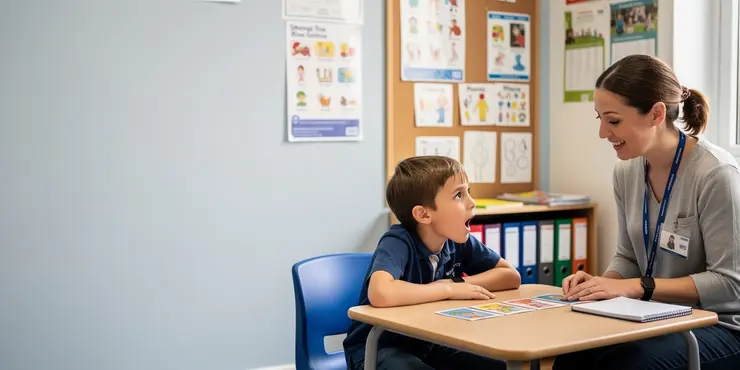
Many individuals with autism face challenges with communication, whether it's verbal, non-verbal, or both. Speech and language therapy helps individuals develop communication skills essential for daily interactions. Therapists work on aspects such as articulation, fluency, and understanding verbal and non-verbal communication. These skills are fundamental for enhancing an individual's ability to express themselves and understand others.
Occupational Therapy
Occupational therapy aims to assist individuals with autism in developing the skills necessary for daily living. This includes improving fine motor skills, sensory integration, and basic self-care tasks like dressing and eating. Occupational therapists often create personalised plans to help individuals gain independence and participate in a variety of activities, both at home and in educational settings.
Social Skills Training
Social skills training is crucial for individuals with autism who may find social interactions challenging. These sessions focus on teaching skills such as understanding social cues, taking turns, and maintaining a conversation. Group settings often provide real-life practice in navigating various social situations, which can substantially boost confidence and social competence.
Cognitive Behavioural Therapy (CBT)
Cognitive Behavioural Therapy (CBT) is particularly beneficial for individuals with autism who also experience anxiety or depression. CBT helps individuals understand and change patterns of thinking and behaviour that may be problematic. This therapy focuses on developing coping strategies, reducing anxiety, and improving overall emotional regulation, thus enhancing an individual's ability to engage successfully in social and personal environments.
Conclusion
Early intervention with appropriate therapies can significantly impact the development and quality of life for those with autism. Parents and caregivers are encouraged to work closely with healthcare providers to develop a comprehensive plan tailored to the individual's specific needs. By utilising a combination of these therapies, individuals with autism can achieve greater independence and lead more fulfilling lives.
Common Therapies for Autism
Autism is a condition that makes talking, being with others, and behaving in usual ways hard. There is no cure, but there are therapies that help. These therapies are special for each person with autism. Here are some therapies used a lot in the UK.
Behavioural Therapy
Behavioural therapy helps people with autism learn better. One type is called ABA. It helps with talking, making friends, and doing schoolwork. It also helps stop behaviours that are not good for learning. ABA uses rewards to encourage good behaviour and is usually done with a therapist one-on-one.
Speech and Language Therapy
Many people with autism find talking or understanding hard. Speech therapy helps with talking and understanding words and actions without words. This therapy is important for helping people say what they want and know what others mean.
Occupational Therapy
Occupational therapy helps people with autism learn everyday skills. This includes skills like holding a pencil, handling different sensations, getting dressed, and eating. Therapists make special plans to help each person become more independent at home and school.
Social Skills Training
Social skills training helps people with autism interact with others. It teaches how to read social cues, take turns, and talk in conversations. Practicing with groups helps people become more confident and better at making friends.
Cognitive Behavioural Therapy (CBT)
CBT is good for people with autism who also feel anxious or sad. It helps change unhelpful thoughts and actions. This therapy teaches ways to handle worries, feel less anxious, and control feelings better. It helps in making friends and handling emotions.
Conclusion
Starting therapies early helps a lot. Parents and caregivers should work with doctors to find the best plan for each person. Using these therapies, people with autism can be more independent and have happier lives.
Frequently Asked Questions
ABA therapy is a widely used approach that focuses on improving specific behaviors, such as social skills, communication, and academics, through reinforcement strategies.
Occupational Therapy helps individuals with autism to develop daily living skills, improve sensory processing, and enhance motor skills, focusing on increased independence.
Speech Therapy assists individuals with autism in improving their verbal and non-verbal communication skills, including language development and social communication.
CBT can be effective in helping individuals with autism to manage anxiety, depression, and other emotional challenges by teaching them coping strategies and changing negative thought patterns.
Social Skills Training focuses on teaching individuals with autism how to interact socially, understand social cues, and engage in appropriate social behaviors.
Yes, Play Therapy can help children with autism express themselves, improve social interactions, and develop emotional regulation through guided play.
Sensory Integration Therapy aims to help individuals with autism process and respond to sensory information, improving their ability to participate in daily activities.
The TEACCH program is a structured teaching approach that provides individuals with autism with visual schedules and environments, facilitating better understanding and learning.
Music Therapy can be beneficial for individuals with autism by providing a non-verbal way to communicate, enhance social interaction, and improve emotional expression.
DIR/Floortime is a child-led, play-based therapy that emphasizes emotional and relational development by engaging children in interactive play.
PRT focuses on developing pivotal areas such as motivation and self-management, often improving language, social, and communication skills in individuals with autism.
RDI is a family-based, behavioral treatment that focuses on building social skills by developing emotional bonds between individuals with autism and their caregivers.
ESDM is an early intervention program designed to improve language, cognitive, and social skills in young children with autism through play-based activities.
Animal-assisted therapy can be effective in improving social interaction, reducing anxiety, and promoting positive behaviors in individuals with autism through the interaction with animals.
Art Therapy provides a creative outlet for individuals with autism to express their emotions, improve communication, and develop motor skills.
Group Therapy can provide individuals with autism a safe environment to practice social skills, enhance communication, and form relationships with peers.
Auditory Integration Training aims to help individuals with autism improve their listening and concentration skills by gradually modifying the way they process sounds.
Family involvement is crucial in autism therapy as it helps reinforce learning, provides emotional support, and strengthens the overall impact of therapeutic interventions.
Some families explore nutritional therapy to address certain autism symptoms by identifying and eliminating food sensitivities, though scientific evidence varies.
Mindfulness and relaxation techniques can help individuals with autism manage stress, increase self-awareness, and improve emotional regulation.
ABA therapy helps people get better at certain things like talking, making friends, and learning in school. It uses rewards to make these skills stronger.
Occupational Therapy helps people with autism. It teaches everyday skills. It also helps with senses and movement. This makes people more independent.
Speech Therapy helps people with autism talk and communicate better. It helps them with words and talking to others.
CBT can help people with autism feel better when they are worried or sad. It teaches them ways to solve problems and change any bad thoughts to good ones.
Social Skills Training helps people with autism learn how to talk and play with others. It teaches them how to understand what people mean by their words and actions, and how to act in the right way when with other people.
Yes, Play Therapy can help kids with autism. It helps them talk about their feelings, get along with others, and manage their emotions by playing games with a helper.
Tools like picture cards or story-telling can also be useful.
Sensory Integration Therapy is a way to help people with autism. It helps them understand and react to things they feel, see, or hear. This can make it easier for them to do things every day.
The TEACCH program helps people with autism. It uses pictures and schedules to make learning easier.
Music therapy can help people with autism. It uses music to talk without words, make friends, and show feelings better.
DIR/Floortime is a special way to help children learn and grow. It uses fun and play to help kids with their feelings and making friends. In this therapy, kids choose what to play with and grown-ups join in to help them learn.
PRT is a way to help people with autism. It helps them get better at important skills like wanting to learn and doing things by themselves. This can make talking, being with others, and sharing ideas better.
RDI helps families. It is a way to teach social skills. It helps people with autism connect and feel closer to their family members.
ESDM is a program to help young children with autism. It helps them talk, think, and play with others. The program uses fun games and activities to teach these skills.
Having animals around can help people with autism. They can make it easier to talk to others, feel less worried, and be happier.
Art Therapy helps people with autism. It gives them a fun way to show their feelings. It helps them talk better and use their hands more easily.
Group Therapy can help people with autism. It gives them a safe place to make friends, talk to others, and learn how to get along.
Auditory Integration Training helps people with autism. It helps them listen better and pay more attention. It changes how they hear sounds a little bit at a time.
It is important for families to be involved in helping children with autism. They can help children learn, offer support, and make therapy work better.
Some families try different foods to help with autism. They find out which foods cause problems and reduce those. Scientists are still learning about how much this helps.
Calm breathing and quiet time can help people with autism feel less worried. These can also help them understand their feelings better and stay calm.

Ergsy Search Results
This website offers general information and is not a substitute for professional advice.
Always seek guidance from qualified professionals.
If you have any medical concerns or need urgent help, contact a healthcare professional or emergency services immediately.
Some of this content was generated with AI assistance. We've done our best to keep it accurate, helpful, and human-friendly.
- Ergsy carefully checks the information in the videos we provide here.
- Videos shown by Youtube after a video has completed, have NOT been reviewed by ERGSY.
- To view, click the arrow in centre of video.
- Most of the videos you find here will have subtitles and/or closed captions available.
- You may need to turn these on, and choose your preferred language.
- Go to the video you'd like to watch.
- If closed captions (CC) are available, settings will be visible on the bottom right of the video player.
- To turn on Captions, click settings.
- To turn off Captions, click settings again.