
Get Answers
Regular visual checks
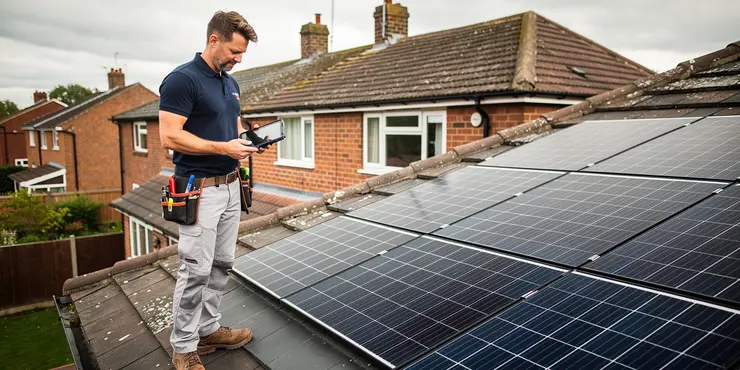
Most residential rooftop solar panels need very little day-to-day attention. A quick visual check every few months is usually enough to spot obvious issues such as dirt build-up, cracked glass, loose wiring, or shading from new tree growth.
It is also sensible to inspect the system after strong winds, heavy snow, or storms. In the UK, these events can shift fittings or damage cables, so a prompt check can help prevent small problems from becoming larger ones.
Keeping panels clean
Rain will wash away some surface dirt, but it will not remove everything. Dust, bird droppings, moss, and pollution can reduce performance, especially on low-angle roofs or in areas with lots of nearby trees.
For many homes, cleaning once or twice a year is enough. Use a soft brush, sponge, or water-fed cleaning system, and avoid abrasive tools or harsh chemicals that could damage the panels or their coating.
Safety and access
Solar panels are installed on the roof, so safety matters. Homeowners should avoid climbing onto the roof unless they are properly trained and equipped, as falls are a major risk.
If cleaning or repairs need roof access, it is best to use a qualified solar installer or roof specialist. This is particularly important for steep roofs, fragile tiles, or systems fitted several storeys up.
Electrical and system checks
Solar PV systems have electrical components that should be inspected periodically by a competent professional. Inverter lights, app monitoring, and generation readings can help you spot a fault early if output drops unexpectedly.
Some systems may need occasional testing of isolators, cabling, and mounting hardware. These checks are usually less frequent than cleaning, but they are important for long-term safety and performance.
Inverter and battery maintenance
The inverter is one of the most important parts of a rooftop solar system and may need replacement during the system’s lifetime. Many inverters last around 10 to 15 years, so owners should budget for future maintenance or replacement.
If your system includes a battery, follow the manufacturer’s guidance on ventilation, software updates, and operating temperature. Batteries generally need little routine care, but they should be monitored for performance changes or warning messages.
When to call a professional
You should contact a professional if you notice a sudden drop in generation, water ingress, damaged wiring, or visible panel faults. A qualified installer can diagnose whether the issue is with the panels, inverter, battery, or electrical connection.
It is also worth arranging a periodic service if your system is older or still under warranty. Keeping records of inspections and repairs can help protect warranties and support future maintenance planning.
Frequently Asked Questions
Basic solar panel maintenance requirements residential rooftop systems need include periodic visual inspections, keeping the panels clean, checking for shading changes, monitoring inverter performance, and ensuring wiring, mounts, and roof seals remain in good condition.
Most solar panel maintenance requirements residential rooftop systems recommend cleaning only when dirt, dust, pollen, bird droppings, or debris noticeably reduce output. In many areas, rainfall may be enough for routine cleaning, but dry or dusty climates may need more frequent care.
Solar panel maintenance requirements residential rooftop installations typically include inspecting panels for cracks, loose hardware, corrosion, hot spots, damaged wiring, animal intrusion, and signs of roof wear around mounting points.
Solar panel maintenance requirements residential rooftop systems do not always require professional service for basic visual checks or light cleaning, but professional service is recommended for electrical inspections, roof work, inverter issues, or any repair involving wiring or mounts.
Weather conditions can increase solar panel maintenance requirements residential rooftop arrays by causing debris buildup, storm damage, hail impact, or snow accumulation. Extreme heat, wind, and heavy rain can also affect mounts, seals, and electrical components.
Solar panel maintenance requirements residential rooftop safety standards are best met by using soft water, a non-abrasive sponge or brush, and gentle cleaning tools. Harsh chemicals, pressure washers, abrasive pads, and scraping should be avoided.
Yes, solar panel maintenance requirements residential rooftop systems include checking inverter status, monitoring energy production, looking for warning lights or error messages, and ensuring no visible damage exists in conduits, cables, or connectors.
Signs that solar panel maintenance requirements residential rooftop panels need immediate attention include a sudden drop in energy output, visible cracks, burned smells, inverter alarms, water intrusion, loose parts, or exposed wiring.
Roof conditions affect solar panel maintenance requirements residential rooftop installations because damaged shingles, failing flashing, or leaks beneath the array can compromise both the roof and the solar system. Roof inspections should be part of routine maintenance.
Yes, solar panel maintenance requirements residential rooftop systems change by climate. Dusty, snowy, coastal, and heavily wooded areas may require different cleaning intervals, corrosion checks, or debris removal schedules.
Solar panel maintenance requirements residential rooftop work should include fall protection, power isolation when needed, proper footwear, weather awareness, and avoiding roof access during wet, icy, or windy conditions.
Many solar panel maintenance requirements residential rooftop owners can perform on their own, such as monitoring app data, looking for visible debris, and noting changes in performance. However, rooftop access and electrical repairs are safer when handled by qualified professionals.
Inverter issues are a major part of solar panel maintenance requirements residential rooftop systems because the inverter converts solar power for home use. If the inverter shows faults, unusual noises, overheating, or reduced production, it should be inspected promptly.
Monitoring software plays an important role in solar panel maintenance requirements residential rooftop setups by helping owners track output, detect performance drops, identify faults early, and compare current production with expected generation.
Yes, solar panel maintenance requirements residential rooftop systems can include pest control because birds, squirrels, and rodents may nest under panels, damage wiring, or leave debris. Pest barriers and periodic inspections can help prevent problems.
Shading changes affect solar panel maintenance requirements residential rooftop performance because new tree growth, added structures, or debris can reduce energy production. Maintenance should include checking for new shade sources and trimming or adjusting as needed.
Useful documentation for solar panel maintenance requirements residential rooftop records includes installation details, warranty information, inspection dates, cleaning logs, production history, repair invoices, and photographs of any damage or service work.
Warranties often relate closely to solar panel maintenance requirements residential rooftop systems because some manufacturers require routine maintenance, proper installation, and documented service to keep coverage valid. Owners should review warranty terms carefully.
Seasonal tasks in solar panel maintenance requirements residential rooftop care may include removing leaves in fall, clearing snow in winter when safe, checking storm damage after severe weather, and increasing inspections during dusty or pollen-heavy seasons.
Homeowners should schedule a full solar panel maintenance requirements residential rooftop inspection at least once a year, or sooner if there is a production drop, storm damage, visible wear, roof repairs, pest activity, or an inverter alert.

Ergsy Search Results
This website offers general information and is not a substitute for professional advice.
Always seek guidance from qualified professionals.
If you have any medical concerns or need urgent help, contact a healthcare professional or emergency services immediately.
Some of this content was generated with AI assistance. We've done our best to keep it accurate, helpful, and human-friendly.
- Ergsy carefully checks the information in the videos we provide here.
- Videos shown by Youtube after a video has completed, have NOT been reviewed by ERGSY.
- To view, click the arrow in centre of video.
- Most of the videos you find here will have subtitles and/or closed captions available.
- You may need to turn these on, and choose your preferred language.
- Go to the video you'd like to watch.
- If closed captions (CC) are available, settings will be visible on the bottom right of the video player.
- To turn on Captions, click settings.
- To turn off Captions, click settings again.