
Get Answers
Understanding SEND Children
In the UK, SEND refers to children with Special Educational Needs and Disabilities. These are children who require additional or different support compared to their peers in mainstream education. The term encompasses a wide range of needs, including physical disabilities, learning difficulties, sensory impairments, and emotional and social challenges.
Categories of SEND
SEND can be broadly categorized into four areas: Communication and Interaction, Cognition and Learning, Social, Emotional and Mental Health, and Sensory and/or Physical Needs. Each category outlines specific challenges a child might face. For example, Communication and Interaction covers children with speech, language, and communication needs, as well as those on the autism spectrum. Cognition and Learning includes difficulties such as dyslexia and moderate learning difficulties. Social, Emotional and Mental Health points to conditions like ADHD or anxiety disorders, and Sensory and/or Physical Needs covers visual or hearing impairments and physical disabilities.
The Role of Education Providers
Schools and educational institutions play a crucial role in supporting SEND children. The UK's legal framework, primarily the Children and Families Act 2014, mandates that schools must accommodate these children's needs to ensure they receive a quality education on par with their non-SEND peers. This includes developing an Individual Education Plan (IEP) tailored to the child's specific requirements. Schools often need to make reasonable adjustments to their teaching methods and physical environments.
Inclusion and Support
The UK education system emphasizes inclusivity, ensuring that SEND children have the opportunity to learn alongside their peers wherever possible. Support can come in many forms, such as specialist teaching assistants, adapted materials, or speech and language therapy. The goal is to ensure that all children, regardless of their needs, can thrive in an inclusive environment. Additionally, local councils provide support services and advice for families navigating the SEND landscape.
Parental Involvement and Resources
Parents and caregivers are integral to the support system for SEND children. They collaborate with schools, health care providers, and local authorities to ensure that their child's needs are met. The SEND Code of Practice outlines the rights of parents and the processes for creating and reviewing support plans. Numerous charities and organizations in the UK, such as the National Autistic Society and Mencap, also offer resources and support for families of SEND children.
Conclusion
SEND children are a diverse and important part of the UK's education landscape. By understanding their unique challenges and the frameworks in place to support them, society can ensure that these children receive the education and opportunities they deserve. As awareness and inclusivity continue to grow, so too does the potential for SEND children to achieve their fullest potential in a supportive and accommodating environment.
Understanding SEND Children
In the UK, SEND means Special Educational Needs and Disabilities. These children need extra help or different help compared to others in regular schools. SEND includes many kinds of needs, like physical disabilities, learning problems, difficulties with senses, and issues with emotions and socializing.
Categories of SEND
There are four main types of SEND needs: Communication and Interaction, Cognition and Learning, Social, Emotional and Mental Health, and Sensory and/or Physical Needs. Each type shows different problems a child might have. For example, Communication and Interaction is about talking, understanding, and autism. Cognition and Learning covers things like dyslexia and learning challenges. Social, Emotional and Mental Health includes things like ADHD and anxiety. Sensory and/or Physical Needs involve problems with seeing, hearing, or moving.
The Role of Education Providers
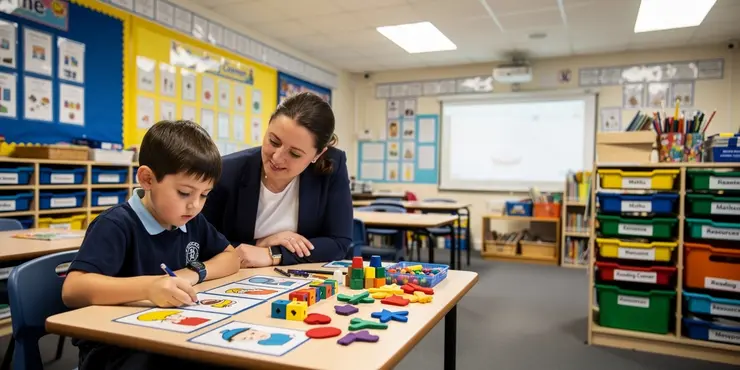
Schools have an important job to help SEND children. In the UK, the law says schools must make sure these children get a good education like everyone else. This means making a special plan called an Individual Education Plan (IEP) for each child. Schools must also change how they teach and arrange classrooms if needed.
Inclusion and Support
UK schools want SEND children to learn with everyone whenever possible. Help can be from special teachers, changed materials, or therapies like speech help. The aim is for all children to do well together. Local councils also help families with advice and support.
Parental Involvement and Resources
Parents and caregivers are very important for supporting SEND children. They work with schools and others to make sure their child gets the right help. The SEND Code of Practice tells parents what their rights are and how plans should be made and checked. Many UK charities, like the National Autistic Society and Mencap, give resources and help to families.
Conclusion
SEND children are a vital part of schools in the UK. By knowing more about their needs and how to help them, we can make sure they get the education and chances they need. As people learn more and make things more inclusive, SEND children have a better chance to succeed and grow in a caring environment.
Frequently Asked Questions
SEND stands for Special Educational Needs and Disabilities.
SEND children are those who have learning difficulties or disabilities that make it harder for them to learn than most children of the same age.
Common types of SEND include autism spectrum disorders, dyslexia, attention deficit hyperactivity disorder (ADHD), and various physical disabilities.
Identifying SEND can involve observing your child's development, consulting with teachers and professionals, and possibly undergoing formal assessments.
Schools may offer individualized education plans (IEPs), additional classroom support, specialized teaching approaches, and access to external specialists.
Many SEND children attend mainstream schools with additional support, though some may attend specialized schools depending on their needs.
An EHCP is a plan for children and young people aged up to 25 who need more support than is available through regular special educational needs support.
Assessment of SEND needs is typically carried out by educational psychologists, teachers, and other relevant professionals.
Parents are often involved in all stages, including discussing concerns, attending meetings, and contributing to the development of support plans.
Yes, there are specific laws and guidelines, such as the Children and Families Act 2014 in the UK, which outline the rights of SEND children.
Teachers are responsible for differentiating instruction, implementing IEPs, and collaborating with specialists to support SEND children effectively.
Yes, a child's SEND status can change over time, as they may make progress with appropriate support or new needs may be identified.
Misconceptions include thinking all SEND children have the same needs or that SEND only relates to academic difficulties.
Schools can create an inclusive environment by fostering a supportive culture, providing training for staff, and adapting school facilities and resources.
The SENCO (Special Educational Needs Coordinator) is responsible for overseeing the support for SEND pupils, managing EHCPs, and liaising with teachers and parents.
Progress for SEND children is often measured through individualized goals, regular reviews of IEPs, and assessment data.
Support outside of school can include therapy services, community programs, and support groups for families.
Yes, SEND children should have access to extracurricular activities, often with additional support or accommodations as needed.
Funding and resources can affect the level of support a school can provide, impacting staff availability, training, and specialized materials.
Parents can advocate for their SEND child by staying informed about their rights, maintaining open communication with schools, and participating in decision-making processes.
SEND means Special Educational Needs and Disabilities.
SEND children are kids who have a tough time learning because they have learning problems or disabilities. It can be harder for them to learn compared to most kids their age.
Some people need extra help with learning. This can be because of things like autism, dyslexia, ADHD, or physical disabilities.
Finding out if your child has special education needs can be done by watching how they grow and learn. You can talk to teachers and other experts. Sometimes, you might need to get tests done to be sure.
Schools can help kids learn better. They can make special learning plans for each child. They can give extra help in the classroom. They can also use special ways to teach. Sometimes, they get experts from outside the school to help too.
Many children who need extra help go to regular schools. They get extra support there. Some children go to special schools. It depends on what they need.
An EHCP is a plan to help kids and young people up to 25 years old. It is for those who need extra help that regular support cannot give.
People like teachers and special helpers look at what children need help with in school.
Parents help in many ways. They can talk about worries, go to meetings, and help make plans to support their child.
Yes, there are special rules and guides that help children with SEND. In the UK, there is a law called the Children and Families Act from 2014. This law explains what rights and help SEND children should get.
Teachers have an important job. They help all students learn in their own special way. They follow plans for each child if needed and work with experts to support children who need extra help.
Yes, a child's special help needs can change. They might get better with the right help, or they might need new kinds of help as time goes on. To support your child's learning, consider using visual aids, like charts or pictures. These tools can make it easier for them to understand and remember things.
Some people get it wrong and think all SEND children are the same. But they are not. SEND means Special Educational Needs and Disabilities. It can make learning hard in different ways, not just in school work.
Schools can make everyone feel welcome. They can do this by being kind and helpful, teaching teachers how to help everyone, and changing the school to make it better for all students.
The SENCO helps children who need extra support at school. They make plans for these children and talk to teachers and parents to make sure everything is okay.
We measure how well SEND children are doing by checking their personal goals, looking at their special learning plans often, and seeing how they do on tests.
Help outside of school can be from therapy, local groups, and family support groups.
Yes, children with special needs should be able to do activities after school. They might need extra help or changes to make it easier for them.
Money and things a school has can change how much help they can give. It can change how many teachers are there, how well they learn to teach, and the special stuff they have for kids.
Parents can help their child with special needs by learning about their child's rights, talking openly with teachers, and being part of decisions about their child's education.

Ergsy Search Results
This website offers general information and is not a substitute for professional advice.
Always seek guidance from qualified professionals.
If you have any medical concerns or need urgent help, contact a healthcare professional or emergency services immediately.
Some of this content was generated with AI assistance. We've done our best to keep it accurate, helpful, and human-friendly.
- Ergsy carefully checks the information in the videos we provide here.
- Videos shown by Youtube after a video has completed, have NOT been reviewed by ERGSY.
- To view, click the arrow in centre of video.
- Most of the videos you find here will have subtitles and/or closed captions available.
- You may need to turn these on, and choose your preferred language.
- Go to the video you'd like to watch.
- If closed captions (CC) are available, settings will be visible on the bottom right of the video player.
- To turn on Captions, click settings.
- To turn off Captions, click settings again.