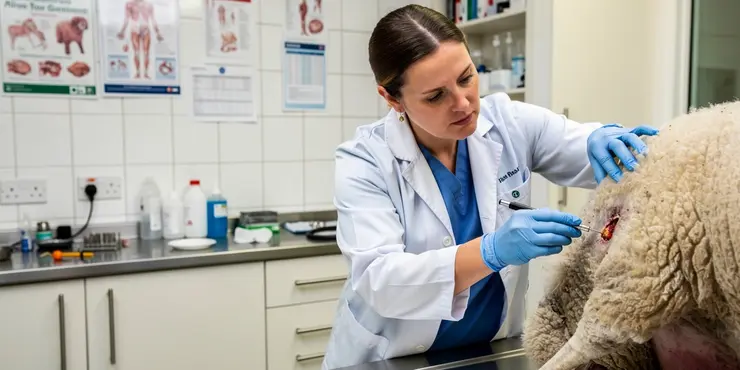

Get Answers
Introduction to Screw Worms
Screw worms are parasitic flies that are a major concern for livestock and wildlife. They belong to the family Calliphoridae and are known for their destructive larval stage. When screw worm larvae, commonly referred to as maggots, infest a host, they cause severe tissue damage that can lead to significant health issues and even death if not treated promptly.
Biology and Lifecycle
Screw worms undergo complete metamorphosis, progressing through egg, larval, pupal, and adult stages. Adult flies lay their eggs on the open wounds or mucous membranes of warm-blooded animals. Within a day, the eggs hatch into larvae, which burrow into the flesh of the host. This invasive feeding can cause extensive tissue damage, as the larvae feed on living tissue rather than dead tissue, which differentiates them from other fly larvae.
Types of Screw Worms
There are mainly two species of screw worms that are of concern: the New World screw worm (Cochliomyia hominivorax) and the Old World screw worm (Chrysomya bezziana). The New World screw worm is primarily found in the Americas, while the Old World screw worm is prevalent in parts of Africa, the Middle East, and South Asia. Both species are capable of causing severe infestations, but their geographic distribution varies.
Impact on Agriculture
Screw worms pose a significant threat to agriculture, particularly in the livestock industry. Infestations can lead to substantial economic losses due to decreased productivity, increased veterinary costs, and mortality. Animals such as cattle, sheep, goats, and even wildlife are susceptible to screw worm infestations. The economic burden has led to extensive eradication and control efforts, including the successful elimination of the New World screw worm from the United States and some parts of Central America.
Prevention and Control
Control measures for screw worms primarily involve the use of sterile insect technique (SIT), where sterile male flies are released into the wild to decrease the reproduction rate of the screw worm population. Additionally, ongoing surveillance, monitoring, and rapid response to outbreaks are crucial in preventing re-infestation. Farmers and livestock owners should remain vigilant for signs of infestation, such as unusual sores on livestock, and seek veterinary care promptly.
Conclusion
While screw worms are not currently a threat in the UK, due to stringent biosecurity measures and cooler climate conditions, awareness and understanding of these parasites remain crucial. Maintaining robust biosecurity practices ensures that screw worms and similar parasites do not become an issue for UK agriculture and wildlife.
Introduction to Screw Worms
Screw worms are a type of fly that can hurt animals like cows and sheep. The baby flies, called maggots, are the problem. They eat the animal's skin and can make the animal very sick or even die if not helped quickly.
Biology and Lifecycle
Screw worms grow in four stages: egg, maggot, pupa, and adult fly. The adult fly puts its eggs on cuts or wet areas of animals. The eggs turn into maggots in one day, and they start eating the animal's skin. This is different from other flies because screw worms eat living skin, not dead parts.
Types of Screw Worms
There are two main kinds of screw worms. The New World screw worm lives in the Americas, and the Old World screw worm lives in Africa, the Middle East, and South Asia. Both can be a big problem for animals, but they live in different parts of the world.
Impact on Agriculture
Screw worms are bad for farming, especially for animals like cows and sheep. They can cause farmers to lose money because animals get sick or die. Many countries spend a lot of time and money to stop screw worms. The United States and some areas of Central America have been able to get rid of the New World screw worm.
Prevention and Control
To stop screw worms, people use the sterile insect technique. This means they let out flies that cannot have babies. This helps reduce screw worm numbers. Farmers need to look out for new sores on animals and get help from a vet quickly.
Conclusion
Screw worms are not a problem in the UK because of good security checks and cooler weather. But people still need to know about them to keep UK animals safe. Staying careful helps ensure these flies do not cause trouble in the UK.
Frequently Asked Questions
Screw worms are parasitic fly larvae (maggots) that infest and feed on the living tissue of warm-blooded animals.
The primary species is Cochliomyia hominivorax, commonly known as the New World screw worm fly.
Adult female screw worm flies lay eggs in open wounds or mucous membranes. The larvae hatch and burrow into the flesh to feed.
Screw worms can infest a wide range of animals, including livestock, wildlife, pets, and humans.
Yes, screw worms can infest humans, causing painful wounds and potentially severe infections if untreated.
Screw worms are primarily found in tropical and subtropical regions of the Americas, but eradication programs have significantly reduced their range.
Symptoms include inflamed, foul-smelling wounds with visible larvae, along with tissue damage and secondary infections.
Infestations require prompt medical or veterinary attention, involving removal of larvae, cleaning the wound, and sometimes using topical or systemic medications.
Prevention can include maintaining good hygiene and wound care in animals and humans, as well as using insect repellents and protective coverings.
Eradication is crucial to protect livestock industries, prevent painful infestations in animals and humans, and reduce economic losses.
The sterile insect technique, involving the release of sterilized male flies, is a successful method to control and eradicate screw worms.
Female screw worm flies lay their eggs in wounds, where they hatch into larvae. The larvae feed on tissue and eventually drop to the ground to pupate.
Infestations can cause severe tissue damage, secondary infections, reduced productivity, and even death in livestock.
Certain parasitoid wasps and predatory beetles can prey on screw worm larvae, but they typically do not control populations effectively alone.
Outbreak measures include intensive surveillance, quarantine, treatment of infestations, and implementation of control programs.
Yes, successful eradication campaigns have eliminated screw worms from parts of North America and other regions through sustained efforts.
While screw worm infestations themselves are not zoonotic diseases, the parasitic nature of the larvae can cause significant health issues.
Screw worm larvae typically feed on a host for 5 to 7 days before falling off to pupate.
Screw worm infestations can cause substantial economic impacts due to treatment costs, loss of livestock, and impacts on animal trade.
Public education, reporting suspected cases promptly, supporting eradication efforts, and adhering to biosecurity measures are ways to help.
Screw worms are baby flies called maggots. They live and eat inside the bodies of animals that are warm, like cows or dogs.
The main type of fly is called the New World screw worm fly. Its scientific name is Cochliomyia hominivorax.
Adult lady screw worm flies lay eggs in open cuts or wet parts like eyes or noses. The baby flies, called larvae, come out and dig into the skin to eat.
Screw worms are small bugs that can get into many animals. They can get into farm animals, wild animals, pets, and even people.
Yes, screw worms can get into people's skin. They cause painful sores and can make you very sick if not treated.
Screw worms are mostly found in warm places in the Americas. These are places with lots of sun and rain. But, people are working hard to get rid of them, so there are not as many screw worms as before.
Signs of this problem are red and smelly sores. You might see small worms in them. The skin gets hurt, and other germs can cause infections too.
If you have a bug problem, get help from a doctor or vet right away. They will take out the bugs, clean the sore spot, and might use some medicine to help make it better.
To stay healthy, keep clean and take care of any cuts or wounds on both animals and people. Use bug spray and wear coverings like long sleeves to keep insects away.
Getting rid of pests is very important. It helps keep farm animals safe, stops bug bites that hurt animals and people, and saves money.
The sterile insect technique is a way to get rid of bad bugs. Scientists let loose male flies that can't have babies. This helps stop screw worms from spreading.
Female screw worm flies are bugs. They lay their eggs in cuts or sores on animals. The baby bugs, called larvae, hatch from the eggs. They eat the skin and flesh around the sore. After they grow, they fall to the ground. Next, they change into pupae, which is like a growing stage for bugs.
Bugs and pests can harm animals like cows and sheep. They can hurt their bodies, make them sick, slow them down, and sometimes even cause them to die.
Some special wasps and beetles can eat bad worms. But these wasps and beetles can't do the job alone.
To stop a disease from spreading, we can:
- Watch closely for any signs of the disease.
- Keep sick people or animals away from others.
- Give medicine or help to those who are sick.
- Use special plans to stop the disease.
Yes, people worked hard to get rid of screw worms in North America and other places. They did it!
Screw worms don't spread diseases that can jump from animals to people. But the larvae, or baby worms, can cause big health problems.
Baby screw worms, called larvae, eat from an animal for about 5 to 7 days. Then, they come off the animal to grow into adult flies.
Screw worms can cause big problems. They can cost a lot of money because of:
- Money needed for treatment.
- Loss of farm animals.
- Problems with selling animals.
Some things that can help are:
- Talking to a vet for help.
- Using special medicines to stop screw worms.
- Keeping animals in clean places.
You can do these things to help:
- Learn about the issue and tell others.
- Tell someone quickly if you think there is a problem.
- Help get rid of the problem.
- Follow safety rules.

Ergsy Search Results
This website offers general information and is not a substitute for professional advice.
Always seek guidance from qualified professionals.
If you have any medical concerns or need urgent help, contact a healthcare professional or emergency services immediately.
Some of this content was generated with AI assistance. We've done our best to keep it accurate, helpful, and human-friendly.
- Ergsy carefully checks the information in the videos we provide here.
- Videos shown by Youtube after a video has completed, have NOT been reviewed by ERGSY.
- To view, click the arrow in centre of video.
- Most of the videos you find here will have subtitles and/or closed captions available.
- You may need to turn these on, and choose your preferred language.
- Go to the video you'd like to watch.
- If closed captions (CC) are available, settings will be visible on the bottom right of the video player.
- To turn on Captions, click settings.
- To turn off Captions, click settings again.