
Speak To An Expert
Get clear, personalised advice for your situation.
Jot down a few questions to make the most of your conversation.
Understanding the Basics
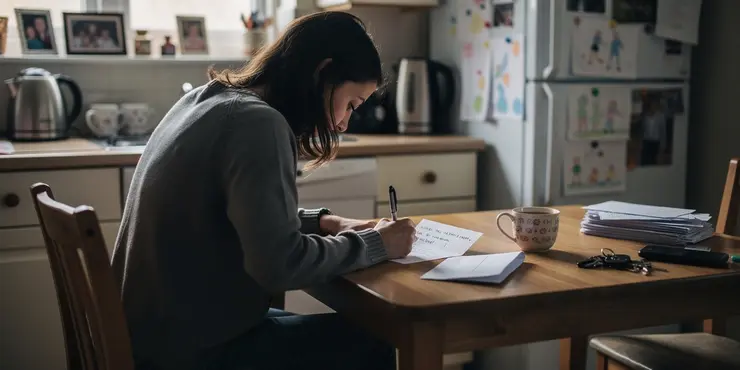
Writing to an inmate in the UK is a thoughtful way to maintain personal connections and offer emotional support. The rules for writing to inmates are designed to ensure security, decency, and the smooth operation of the correctional facility. Before beginning correspondence, it is crucial to be aware of these guidelines to ensure the letters reach the intended recipient without issues.
Addressing the Envelope
When writing to an inmate in the UK, it is essential to address the envelope correctly. Include the inmate's full name, prison number, and the full postal address of the prison. Without these details, the letter may not be delivered. The inmate's number should be used as a unique identifier to prevent any mix-up with other inmates who may have similar names.
Content Restrictions
All letters sent to inmates are subject to inspection and screening by prison authorities. Thus, it is important to avoid any content that could be deemed inappropriate or threatening to security. Refrain from including explicit content, detailed descriptions of criminal activities, or attempts to smuggle contraband, such as coded messages. Letters should focus on personal matters and positive messages to encourage the inmate.
Prohibited Items
Items such as cash, stamps, and Polaroid photos are generally not allowed to be sent directly to inmates through the mail. Many prisons have systems in place to handle money sent to inmates, such as through postal orders or bank transfers to their prison accounts. Always check the specific prison’s rules regarding permissible items and alternative ways to send money or other essentials.
Frequency and Length
There are usually no strict rules on the number of letters an inmate can receive. However, practical considerations, such as the inmate's ability to store letters and the prison's capacity to manage correspondence, may affect delivery. Be concise and respectful in your communication, staying mindful of the limitations faced by the recipient within the correctional environment.
Digital Correspondence
While traditional mail is the primary mode of communication, some UK prisons offer email services to facilitate faster communication. These services often require setting up an account and paying a fee. Be sure that both you and the inmate understand how to use the service effectively, including any restrictions on the number of emails and the type of content that can be sent.
Respect and Support
When writing to an inmate, maintaining a respectful tone and showing support is crucial. The aim is to provide encouragement and help maintain their social connections to the outside world. Respect their privacy and emotional state by avoiding pressure for immediate replies, as access to writing materials can be limited. Constructive and positive topics often result in the most meaningful exchanges.
Understanding the Basics
Writing to someone in jail in the UK is a kind way to keep in touch and show you care. There are rules for writing letters to keep everyone safe and make sure the prison runs smoothly. Knowing these rules helps your letter get to your friend without problems.
Addressing the Envelope
To send a letter to someone in jail, you must write the address correctly. Write the person's full name and prison number, and the whole address of the prison. If you miss any detail, the letter might not get there. The prison number stops letters getting mixed up with someone else’s.
Content Restrictions
Prison staff will check all letters sent to people in jail. Don’t write anything that could be unsafe or cause trouble. Avoid rude language, talking about bad things, or hiding secret messages. Stick to personal topics and share good, friendly messages to cheer them up.
Prohibited Items
You cannot send things like money, stamps, or instant photos in the mail to people in jail. Prisons have other ways to send money, like postal orders or bank transfer to their prison account. Always check what the prison allows and learn the right way to send money or other needs.
Frequency and Length
There’s usually no limit on how many letters someone in jail can get. But, too many letters can be hard to handle. Keep your letters simple and polite, and remember the person in jail might have limited space or time to read and keep letters.
Digital Correspondence
Most letters are sent by mail, but some UK prisons also let you send emails. This is quicker but might cost money. Make sure you and the person in jail know the rules and how to use the email service, like how many emails you can send and what you can talk about.
Respect and Support
When writing a letter, always be kind and supportive. Your aim is to make the person in jail feel better and stay connected to outside life. Respect their feelings and don’t expect them to reply quickly because they might not have everything they need to write back right away. Talk about happy things to have a good conversation.
Frequently Asked Questions
Include the inmate's full name, their identification number, and the facility's address.
Yes, you can send photographs, but there may be restrictions on the size and number. Check with the specific facility for their rules.
Some facilities may have restrictions, such as prohibiting colored paper or paper with embellishments. Plain, white paper is usually a safe choice.
Some institutions allow SASEs, but others do not. It's best to check the specific facility's regulations.
Yes, but each letter must be sent individually and addressed properly.
Yes, letters should not contain any offensive language, threats, or discussion of illegal activities.
There may not be a set limit, but keeping the letter concise is usually advisable. Some facilities might have restrictions, so check with them.
Typically, books and magazines must be sent directly from a publisher or bookstore, not from individuals.
The inmate's ID number is usually required. If you don't have it, contact the facility to find out how to proceed.
Most facilities prohibit stickers or anything that can be attached to the paper, and drawings may be restricted.
Plain, standard-sized envelopes are generally acceptable. Avoid using envelopes with metal clasps or embellishments.
Yes, generally inmates can receive international mail, but it must adhere to the same guidelines as domestic mail.
Yes, letters to inmates are typically screened by prison staff to ensure they comply with regulations.
Some facilities allow greeting cards, but they might have restrictions, such as no cards with glitter or pop-ups.
Legal mail often has different rules, such as needing to be sent in a special envelope marked accordingly. Check with the facility for details.
Non-compliant letters may be returned to the sender or result in the privilege of mail being revoked for the inmate.
Normally, money should not be sent through the mail. Instead, use approved methods such as a deposit service.
There are usually no limits on the frequency of letters, but time for delivery may vary.
Some facilities offer an email service where you can send messages electronically instead of traditional mail.
There usually isn't a way to verify receipt directly, but you may ask the inmate to confirm upon receipt in their reply to you.
Write down the prisoner's full name. Write their ID number too. Don't forget to add the address of the place where they are staying.
Yes, you can send pictures! But there might be rules about how big and how many. Ask the place you are sending them to about their rules.
Some places have rules about what paper you can use. They might not let you use colored paper or fancy paper. It is best to use plain, white paper.
Some places will let you use SASEs. But some places won't. It’s a good idea to find out the rules for the place you are interested in.
Yes, you can. But you need to send each letter one at a time and make sure the address is correct.
Yes, letters should not have any bad or mean words, talk about hurting people, or talk about doing bad things that are against the law.
There is no fixed rule, but try to keep your letter short. Some places might have rules, so it's a good idea to ask them first.
People can usually send books and magazines if they come straight from a shop or the company that makes them. They can't come from other people.
You usually need the inmate's ID number. If you don't have it, call the place where they are to ask what to do next.
Most places do not allow stickers or things that stick to paper. There might be rules about drawings, too.
Use plain envelopes that are regular size. Do not use envelopes with metal parts or decorations.
Yes, people in prison can get mail from other countries. The rules for these letters are the same as letters from inside the country.
Yes, prison staff usually read letters to make sure they follow the rules.
Some places let you send greeting cards. But there might be rules, like no cards with glitter or pop-ups.
Legal mail has special rules. It needs to be sent in a special envelope with a special mark. Ask the place you are sending it to for more information.
If letters do not follow the rules, they might be sent back to the person who wrote them. Also, if the rules are not followed, the person in jail might not be allowed to get any more letters.
Usually, it's not safe to send money in the mail. It's better to use other ways, like putting money in a bank.
You can send letters as often as you like. But it might take different amounts of time for them to arrive.
Some places let you send emails instead of letters. This means you can use a computer to send a message quickly.
It's hard to know if the person in prison got your letter. You can ask them to let you know when they write back.

Ergsy Search Results
This website offers general information and is not a substitute for professional advice.
Always seek guidance from qualified professionals.
If you have any medical concerns or need urgent help, contact a healthcare professional or emergency services immediately.
Some of this content was generated with AI assistance. We've done our best to keep it accurate, helpful, and human-friendly.
- Ergsy carefully checks the information in the videos we provide here.
- Videos shown by Youtube after a video has completed, have NOT been reviewed by ERGSY.
- To view, click the arrow in centre of video.
- Most of the videos you find here will have subtitles and/or closed captions available.
- You may need to turn these on, and choose your preferred language.
- Go to the video you'd like to watch.
- If closed captions (CC) are available, settings will be visible on the bottom right of the video player.
- To turn on Captions, click settings.
- To turn off Captions, click settings again.