
Get Answers
What are polyps?
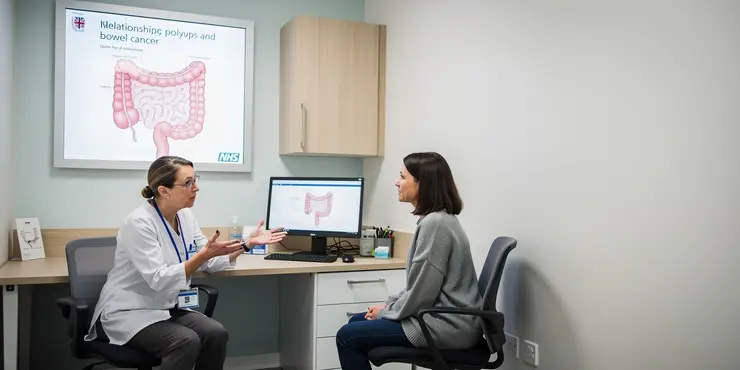
Polyps are small growths that can form on the lining of the bowel, also called the colon or rectum. They are quite common, especially as people get older.
Most polyps are not cancer. However, some can slowly change over time and become cancerous if they are not removed.
How do polyps relate to bowel cancer?
Bowel cancer often begins when a normal bowel cell changes and starts to grow in an unusual way. In many cases, this process starts in a polyp.
Not every polyp will turn into cancer, and it can take years for any changes to happen. But certain types of polyps have a higher risk, which is why doctors take them seriously.
Types of polyps
There are different kinds of polyps, and some are more likely than others to become cancerous. The most common types are adenomatous polyps, often called adenomas, and serrated polyps.
Hyperplastic polyps are usually low risk and rarely become cancer. Even so, a doctor may still check them carefully depending on their size, number and location.
Symptoms and warning signs
Polyps often do not cause any symptoms at all. This means many people may have them without knowing.
If polyps do cause symptoms, these can include bleeding from the back passage, changes in bowel habit, or mucus in the stool. These symptoms can also be caused by other conditions, so it is important to speak to a GP.
How polyps are found and removed
Polyps are often found during bowel screening or tests such as a colonoscopy. Screening is important because it can detect changes before cancer develops.
If a polyp is found, it is usually removed during the procedure and sent to a lab for testing. Removing polyps can lower the risk of bowel cancer developing in the future.
Who is at higher risk?
The risk of polyps and bowel cancer increases with age, and family history can also play a part. Other factors include a diet low in fibre, smoking, being overweight and drinking too much alcohol.
Some inherited conditions and inflammatory bowel diseases, such as Crohn’s disease and ulcerative colitis, can also increase risk. If you think you may be at higher risk, your GP can advise you.
Frequently Asked Questions
Polyps are small growths on the lining of the bowel. Most are harmless, but some can gradually become cancerous over time. Bowel cancer can develop when abnormal cells grow uncontrollably in the bowel, often starting from certain types of polyps.
The most common polyps linked to bowel cancer are adenomatous polyps, also called adenomas, and serrated polyps. The most common bowel cancers are adenocarcinomas, which begin in the gland cells lining the bowel.
Polyps and bowel cancer can develop because of a mix of age, inherited risk, lifestyle factors, and chance changes in bowel cells. Risk is higher with older age, family history, inflammatory bowel disease, smoking, obesity, and a low-fibre diet.
Polyps often cause no symptoms. When symptoms do occur, both polyps and bowel cancer may cause rectal bleeding, a change in bowel habits, abdominal pain, unexplained weight loss, tiredness, or iron deficiency anaemia.
Polyps and bowel cancer are commonly detected with screening tests such as stool-based tests, sigmoidoscopy, or colonoscopy. Colonoscopy is especially important because it can find polyps and allow them to be removed during the same procedure.
If screening or symptoms suggest a problem, doctors may use colonoscopy, biopsy, and imaging tests to confirm whether polyps or bowel cancer are present. A biopsy examines tissue under a microscope to determine if cancer cells are present.
Some cases of polyps and bowel cancer can be prevented by screening, removing polyps early, eating a healthy diet, staying active, limiting alcohol, not smoking, and maintaining a healthy weight. Regular screening is one of the most effective prevention methods.
People at higher risk of polyps and bowel cancer include those over 50, people with a family history of bowel cancer or polyps, people with inherited syndromes, and people with long-term inflammatory bowel disease. Risk also increases with smoking, obesity, and certain diet patterns.
Yes, polyps and bowel cancer can run in families. Some inherited conditions, such as Lynch syndrome and familial adenomatous polyposis, greatly increase the chance of developing many polyps and bowel cancer, but many family cases occur without a single inherited syndrome.
Benign polyps are non-cancerous growths that have not invaded deeper bowel tissue. Bowel cancer is malignant, meaning the cells can invade nearby tissue and spread to other parts of the body if not treated.
Polyps are often removed during colonoscopy. Bowel cancer treatment may include surgery, chemotherapy, radiotherapy, targeted therapy, or immunotherapy, depending on the stage and location of the cancer.
Yes, removing polyps before they become cancerous can prevent bowel cancer, and treating bowel cancer early usually improves outcomes. Early-stage bowel cancer is often easier to treat and has a better chance of cure.
After polyps or bowel cancer are found, doctors usually recommend follow-up tests, pathology review, and a treatment or surveillance plan. The plan depends on the number, size, and type of polyps or the stage of bowel cancer.
Screening intervals for polyps and bowel cancer depend on age, test type, personal history, and family history. Some people need stool tests every one to two years, while others need colonoscopy at longer or shorter intervals based on risk.
No, polyps and bowel cancer are not always linked to symptoms. Many polyps cause no symptoms, and early bowel cancer can also be silent, which is why screening is so important.
Yes, lifestyle changes can lower the risk of polyps and bowel cancer. Eating more fibre, fruits, and vegetables, being physically active, limiting processed and red meat, avoiding smoking, and reducing alcohol intake can help.
People with a history of polyps and bowel cancer may be monitored with repeat colonoscopy, stool tests, blood tests, and sometimes imaging scans. The follow-up schedule depends on the person’s risk and previous findings.
Yes, although the risk is higher with age, polyps and bowel cancer can affect younger adults. Symptoms such as rectal bleeding, persistent bowel changes, or unexplained anaemia in younger people should still be evaluated.
Urgent medical attention is needed for heavy rectal bleeding, severe abdominal pain, black stools, fainting, or signs of bowel obstruction such as vomiting and a swollen abdomen. Persistent or unexplained symptoms should also be assessed promptly.
Patients should ask about the type of polyp or cancer, the risk of recurrence, whether further treatment is needed, and how often follow-up screening should occur. It is also helpful to ask about lifestyle changes and family screening.

Ergsy Search Results
This website offers general information and is not a substitute for professional advice.
Always seek guidance from qualified professionals.
If you have any medical concerns or need urgent help, contact a healthcare professional or emergency services immediately.
Some of this content was generated with AI assistance. We've done our best to keep it accurate, helpful, and human-friendly.
- Ergsy carefully checks the information in the videos we provide here.
- Videos shown by Youtube after a video has completed, have NOT been reviewed by ERGSY.
- To view, click the arrow in centre of video.
- Most of the videos you find here will have subtitles and/or closed captions available.
- You may need to turn these on, and choose your preferred language.
- Go to the video you'd like to watch.
- If closed captions (CC) are available, settings will be visible on the bottom right of the video player.
- To turn on Captions, click settings.
- To turn off Captions, click settings again.