
Get Answers
General rule of thumb
In the UK, dogs are not automatically allowed everywhere. Shops, cafes, pubs, and transport operators can set their own rules, so the first step is always to check before you go.
Even where dogs are allowed, they must usually be well-behaved, kept under control, and not cause a nuisance. A calm dog on a lead is far more likely to be welcomed than one that jumps, barks, or blocks walkways.
Bringing dogs into shops
Many shops do not allow dogs, especially places that sell food. Supermarkets and other food retailers usually only permit assistance dogs under hygiene rules.
Some smaller shops, garden centres, and independent businesses may welcome dogs. Look for signs at the entrance, ask a staff member, or check the shop’s website before entering.
Dogs in cafes and restaurants
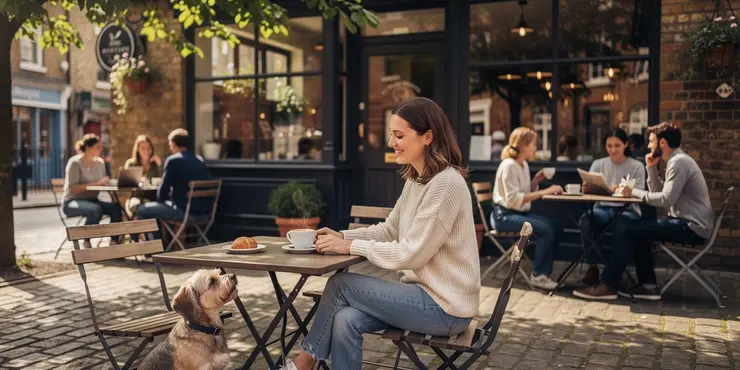
Cafes and restaurants often make their own decisions about dogs. Some allow dogs only in certain areas, such as outdoor seating or a designated indoor section.
Food hygiene rules are important here, so businesses may refuse dogs in serving or food-preparation areas. If dogs are allowed, keep them on the floor, away from other customers, and under control at all times.
Dogs on public transport
Rules for trains, buses, trams, and underground services vary by operator. In many cases, dogs are allowed for free, but they should be on a lead and should not sit on seats.
Some services have limits on the number of dogs, or may restrict travel at busy times. Always check the specific transport provider’s policy before travelling, especially on longer journeys.
Good manners and legal duties
Even when dogs are permitted, owners are expected to prevent their dog from becoming a problem. That means cleaning up after them, keeping them close, and making sure they do not disturb staff or other customers.
Under UK law, assistance dogs are usually treated differently and must be allowed in most places where the public can go. For other dogs, the final decision often rests with the business or transport operator.
Best practice before you go
If you are unsure, call ahead or check online. A quick look at the rules can save embarrassment and avoid being turned away at the door.
Carry a lead, waste bags, and water, and be ready to leave if the venue is crowded or your dog is unsettled. Being considerate helps make dog-friendly places more welcoming for everyone.
Frequently Asked Questions
Rules vary by country, city, and business, but dogs are often allowed in public transport, shops, and cafes only if they are well-behaved, under control, and not causing a hygiene or safety issue. Some places allow only assistance dogs, while others permit pets in specific areas or at certain times.
Yes, assistance dogs are usually granted broader access than pet dogs. In many places they can enter shops, cafes, and public transport even where pet dogs are restricted, provided they are properly trained and identified according to local rules.
Sometimes, yes. Some businesses and transit systems allow small dogs if they are in a carrier, bag, or stroller, but this depends entirely on local policies and the specific operator's rules.
Often, yes. Many shops, cafes, and transport providers require dogs to be on a leash or otherwise securely controlled unless they are inside an approved carrier or are an officially recognized assistance dog.
Yes, cafes often have stricter hygiene rules than other places. Dogs may be allowed only in outdoor seating areas or designated pet-friendly zones, and they are usually not permitted near food preparation areas.
Yes, shops can often set their own pet policies unless local law requires access. Even where dogs are generally allowed, a shop may refuse entry if the dog is disruptive, unsafe, or against the premises' policy.
Some venues and transport services impose size, weight, or breed restrictions, while others do not. It depends on the operator and local regulations, so checking the specific policy before traveling is important.
Dogs are usually expected to remain calm, quiet, clean, and under control. Aggressive behavior, excessive barking, jumping, or damage to property can lead to removal from the premises or transport service.
Sometimes, but not always. Some places may allow dogs at any time, while others may restrict access during peak hours, crowded periods, or special events to reduce disruption and safety risks.
In some regions or for certain transit systems, muzzles are required for dogs on public transport or in specific venues. Requirements vary widely, so it is best to check the local policy before bringing the dog.
Usually only in designated pet-friendly areas, and often only in outdoor seating spaces. Many cafes do not allow dogs in indoor dining spaces unless the dog is an assistance dog or local law permits it.
Some places may ask for proof of vaccination, registration, licensing, or assistance-dog status. Many locations do not require documents for ordinary entry, but transport operators or venues may request them in specific situations.
Puppies are often subject to the same rules as adult dogs, though some places may be more flexible if the puppy is small and carried. However, vaccination and behavior requirements still commonly apply.
Yes, owners are usually responsible for cleaning up after their dogs and preventing mess or damage. If a dog causes an accident, owners may be required to clean it up immediately or face refusal of service.
Yes, in some settings others may raise concerns about allergies, fear, or discomfort, and staff may act according to venue policy. However, the presence of objections does not always override local access rights, especially for assistance dogs.
Yes, very often. Outdoor areas are usually more dog-friendly, while indoor areas may have tighter restrictions due to hygiene, space, and safety rules.
The owner may be asked to leave the shop, cafe, or transport service immediately. In serious cases, repeated misconduct can lead to bans, fines, or liability for any damage caused.
Check the official website of the shop, cafe, or transport provider, and review local government or transit authority guidance. Calling ahead is often the best way to confirm current rules and any exceptions.
That depends on the location. In many places, emotional support animals do not receive the same access rights as trained assistance dogs, so they may be treated as ordinary pets under local rules.
Keep the dog leashed or secured, bring water and cleanup supplies, verify the venue or operator's policy in advance, and avoid crowded situations if the dog is anxious or reactive. Good preparation reduces the chance of problems and helps ensure compliance.

Ergsy Search Results
This website offers general information and is not a substitute for professional advice.
Always seek guidance from qualified professionals.
If you have any medical concerns or need urgent help, contact a healthcare professional or emergency services immediately.
Some of this content was generated with AI assistance. We've done our best to keep it accurate, helpful, and human-friendly.
- Ergsy carefully checks the information in the videos we provide here.
- Videos shown by Youtube after a video has completed, have NOT been reviewed by ERGSY.
- To view, click the arrow in centre of video.
- Most of the videos you find here will have subtitles and/or closed captions available.
- You may need to turn these on, and choose your preferred language.
- Go to the video you'd like to watch.
- If closed captions (CC) are available, settings will be visible on the bottom right of the video player.
- To turn on Captions, click settings.
- To turn off Captions, click settings again.