
Get Answers
What is an ultrasound?
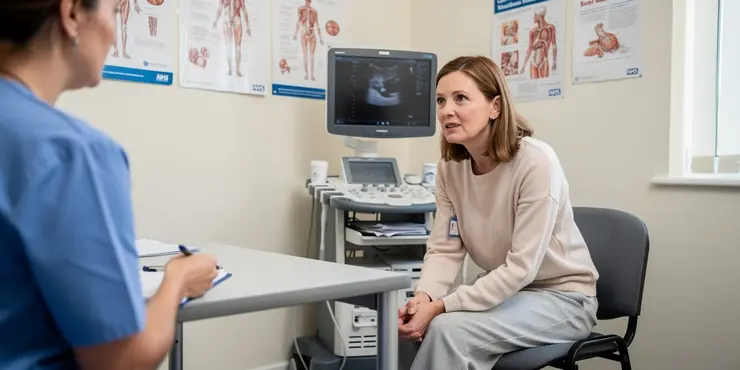
An ultrasound scan uses high-frequency sound waves to create images of the inside of the body. It is a common test because it is painless, does not use radiation, and usually takes only a short time.
In the UK, ultrasounds are widely used in NHS hospitals, GP referrals, and private clinics. The type of scan offered depends on the part of the body that needs to be checked.
Pregnancy ultrasounds
Pregnancy scans are among the most familiar types of ultrasound. They are used to check the baby’s development, confirm how far along the pregnancy is, and look for any concerns.
Common pregnancy scans include the dating scan, the nuchal translucency scan, and the anomaly scan. These are usually carried out at different stages of pregnancy, with the anomaly scan often done around 20 weeks.
Abdominal ultrasounds
An abdominal ultrasound looks at organs such as the liver, gallbladder, kidneys, pancreas, and spleen. It may be used to investigate pain, bloating, jaundice, or abnormal blood test results.
Doctors may also use this scan to check for gallstones, kidney stones, cysts, or signs of liver disease. Some abdominal scans require you to fast beforehand, depending on what is being examined.
Pelvic ultrasounds
Pelvic ultrasounds are used to examine organs in the lower abdomen. In women, this often includes the uterus and ovaries, while in men it may involve the bladder and surrounding areas.
These scans can help investigate pelvic pain, irregular periods, fertility issues, or suspected fibroids and cysts. They may be done over the abdomen or internally, depending on the information needed.
Musculoskeletal ultrasounds
Musculoskeletal ultrasounds look at muscles, tendons, ligaments, and joints. They are often used for sports injuries, swelling, pain, or suspected tears in soft tissues.
This type of scan can help guide treatment for shoulder, ankle, wrist, or knee problems. It is also useful for checking inflammation or fluid around a joint.
Heart and blood vessel ultrasounds
An echocardiogram is an ultrasound of the heart. It shows how the heart muscle and valves are working, and it may be used if someone has chest pain, breathlessness, or a heart murmur.
Ultrasound can also be used to examine blood vessels, such as in a carotid or Doppler scan. These tests help assess blood flow and may detect narrowing, clots, or circulation problems.
Other common ultrasound scans
Ultrasound is also used for the thyroid, breasts, and testicles. These scans can help doctors investigate lumps, swelling, pain, or changes in the tissue.
In some cases, ultrasound is used to guide procedures such as needle biopsies or fluid drainage. This makes treatment more accurate and can reduce the need for more invasive tests.
Frequently Asked Questions
The main types of ultrasound scans used in medicine include abdominal ultrasound, pelvic ultrasound, obstetric ultrasound, echocardiography, vascular ultrasound, musculoskeletal ultrasound, breast ultrasound, thyroid ultrasound, and transvaginal or transrectal ultrasound. Each type is used to look at different organs or tissues.
Types of ultrasound scans differ by the body part being examined, the probe used, the scanning approach, and the level of detail needed. Some are designed for pregnancy, while others focus on organs, blood flow, soft tissues, or the heart.
An abdominal ultrasound scan is a type of ultrasound scan used to image organs in the abdomen, such as the liver, gallbladder, kidneys, pancreas, spleen, and major blood vessels. It is commonly used to check for pain, swelling, stones, or other abnormalities.
A pelvic ultrasound scan is a type of ultrasound scan used to examine pelvic organs such as the bladder, uterus, ovaries, and prostate, depending on the patient. It can help evaluate pain, bleeding, cysts, fibroids, and other conditions.
An obstetric ultrasound scan is a type of ultrasound scan used during pregnancy to monitor the fetus, placenta, amniotic fluid, and pregnancy development. It can help confirm pregnancy, estimate gestational age, and assess fetal growth and anatomy.
An echocardiogram is a type of ultrasound scan that evaluates the heart's structure and function. It can show heart chambers, valves, pumping strength, and blood flow, helping diagnose heart disease or monitor known cardiac problems.
A Doppler ultrasound is a type of ultrasound scan that measures blood flow through vessels. It is used to detect narrowing, blockages, clots, or abnormal circulation in arteries and veins.
A musculoskeletal ultrasound scan is a type of ultrasound scan used to look at muscles, tendons, ligaments, joints, and soft tissues. It is often used to assess injuries, inflammation, tears, or fluid collections.
A breast ultrasound scan is a type of ultrasound scan used to examine lumps, pain, or other breast changes. It helps distinguish between fluid-filled cysts and solid masses and may be used alongside mammography.
A thyroid ultrasound scan is a type of ultrasound scan used to evaluate the thyroid gland in the neck. It can detect nodules, enlargement, cysts, inflammation, and other structural changes.
A transvaginal ultrasound scan is a type of ultrasound scan where a small probe is placed in the vagina to get closer views of the uterus, ovaries, and surrounding structures. It often provides more detailed pelvic images than an external scan.
A transrectal ultrasound scan is a type of ultrasound scan in which a probe is inserted into the rectum to view nearby organs, especially the prostate and surrounding tissues. It is commonly used to assess prostate size, structure, and abnormalities.
A vascular ultrasound scan is a type of ultrasound scan used to examine blood vessels, including arteries and veins. It helps detect blood clots, blockages, narrowing, aneurysms, and blood-flow problems.
A liver ultrasound scan is a type of ultrasound scan focused on the liver to check its size, texture, blood flow, and possible disease. It can help identify fatty liver, cirrhosis, tumors, or bile duct problems.
A kidney ultrasound scan is a type of ultrasound scan used to evaluate the kidneys and nearby urinary structures. It can help detect stones, cysts, obstruction, infections, and signs of kidney damage.
A bladder ultrasound scan is a type of ultrasound scan used to assess the bladder's size, wall, and how well it empties urine. It may be used for urinary retention, infections, or symptoms of trouble urinating.
A neonatal ultrasound scan is a type of ultrasound scan used in newborns to examine organs such as the brain, hips, heart, or abdomen. It is useful because ultrasound can image soft tissues without radiation.
A head ultrasound scan is a type of ultrasound scan often used in infants to image the brain through the soft fontanelle. It can help detect bleeding, fluid buildup, or structural problems.
An ultrasound-guided procedure uses real-time ultrasound imaging to help place a needle, drain fluid, or perform a biopsy accurately. It is not a diagnostic scan alone, but it relies on a type of ultrasound scan for guidance.
Common types of ultrasound scans used for pregnancy care include early pregnancy scans, dating scans, nuchal translucency scans, anatomy scans, growth scans, and Doppler scans. These help confirm pregnancy, assess fetal development, and monitor the health of the baby and placenta.

Ergsy Search Results
This website offers general information and is not a substitute for professional advice.
Always seek guidance from qualified professionals.
If you have any medical concerns or need urgent help, contact a healthcare professional or emergency services immediately.
Some of this content was generated with AI assistance. We've done our best to keep it accurate, helpful, and human-friendly.
- Ergsy carefully checks the information in the videos we provide here.
- Videos shown by Youtube after a video has completed, have NOT been reviewed by ERGSY.
- To view, click the arrow in centre of video.
- Most of the videos you find here will have subtitles and/or closed captions available.
- You may need to turn these on, and choose your preferred language.
- Go to the video you'd like to watch.
- If closed captions (CC) are available, settings will be visible on the bottom right of the video player.
- To turn on Captions, click settings.
- To turn off Captions, click settings again.