
Speak To An Expert
Get clear, personalised advice for your situation.
Jot down a few questions to make the most of your conversation.
Common Types of Mobility Equipment
Mobility equipment plays a crucial role in enhancing the quality of life for individuals with mobility issues. These devices assist people in moving safely and comfortably, enabling them to perform daily activities with greater ease. In the UK, various types of mobility equipment are available to meet the diverse needs of users. This article explores some common types of mobility equipment used across the country.
Wheelchairs
Wheelchairs are the most recognised form of mobility equipment. They are designed for individuals who have difficulty walking or are unable to walk at all. Wheelchairs can be manual or electric. Manual wheelchairs require the user or an assistant to push the chair, while electric wheelchairs are powered by batteries and offer independent movement through a joystick or other control mechanisms. These provide a high level of mobility for the user, allowing them to navigate their environment more freely.
Mobility Scooters
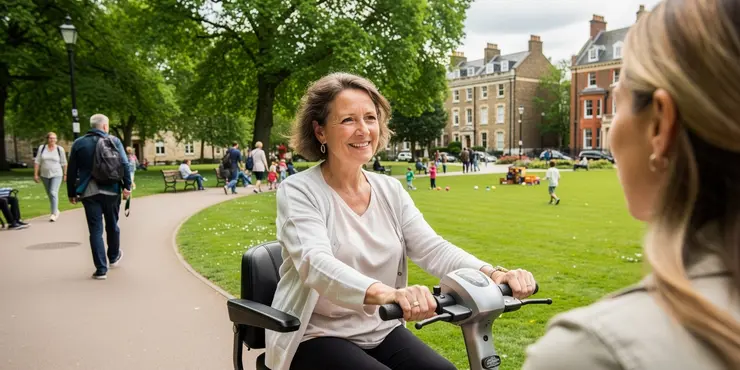
Mobility scooters are a popular choice among the elderly and those who have stamina issues but can still walk short distances. These battery-operated vehicles are equipped with a comfortable seat, steering handle, and typically three or four wheels for stability. Mobility scooters enable users to travel longer distances without fatigue, making social outings, shopping trips, and daily errands more manageable. They come in various sizes, from compact models for easy transport to larger, more robust versions for outdoor use.
Walking Aids
Walking aids include canes, crutches, and walkers, each offering different levels of support. Canes offer minimal support but can significantly enhance a person's balance. Crutches provide stability to individuals who need to keep weight off a leg or foot. Walkers, available in wheeled and non-wheeled models, offer a higher level of balance and support. Rollators, a type of walker with wheels and often a seat, are popular in the UK for individuals who need to rest frequently while walking.
Stairlifts
Stairlifts are mechanical devices that help transport individuals up and down stairs, making multi-level buildings more accessible. These are critical for those who have trouble climbing stairs due to limited mobility, arthritis, or other conditions. Installed along the staircase rail, stairlifts are designed for easy use and safety, allowing users to remain in their home environments without relocating due to mobility issues.
Hoists and Lifts
Hoists and lifts are essential for individuals who require assistance with transfers, such as moving from a bed to a wheelchair. Ceiling hoists installed at various points within a home offer a safe and efficient way to lift and transfer individuals. Portable hoists are also available for easier manoeuvring across different locations. These devices reduce the risk of injury for both the carer and the user, providing safer handling solutions.
Types of Mobility Equipment
Mobility equipment helps people move around. It is important for those who find it hard to walk or move. This equipment helps people do daily tasks on their own. In the UK, there are many types of mobility equipment to help different people. Let's look at some common ones.
Wheelchairs
Wheelchairs help people who cannot walk or find walking difficult. There are two types: manual and electric. A manual wheelchair needs someone to push it. An electric wheelchair uses a battery and moves with a joystick. Wheelchairs help people move around their home and outside.
Mobility Scooters
Mobility scooters are like small cars for people who can walk a little. They are battery-powered and have a seat and handlebars. Scooters help people travel longer distances. This makes shopping and trips easier. Scooters come in different sizes for indoor and outdoor use.
Walking Aids
Walking aids help people walk safely. Canes, crutches, and walkers are types of walking aids. A cane helps with balance. Crutches are for people who cannot put weight on a leg. Walkers give more support when walking. Rollators are walkers with wheels and a seat, good for resting.
Stairlifts
Stairlifts help people go up and down stairs safely. They are great for those who find stairs hard because of pain or difficulty walking. Stairlifts are set up on stair rails and are easy to use, helping people stay in their homes.
Hoists and Lifts
Hoists and lifts help move people from beds to wheelchairs. Ceiling hoists in homes lift people up safely. Portable hoists can be moved to different places in the house. They help carers lift people safely without getting hurt.
Frequently Asked Questions
The purpose of mobility equipment is to assist individuals who have difficulty walking or moving independently due to disability, injury, or aging.
A wheelchair is a mobility device designed for individuals who are unable to walk or have difficulty walking, consisting of a seat with wheels that can be manually pushed or powered by an electric motor.
A walker is a mobility aid that provides support for individuals who can walk but need assistance with balance or stability, typically having four legs and a frame.
A mobility scooter is an electric-powered scooter designed to assist individuals with limited mobility, providing a comfortable seat and controls for easy navigation.
Crutches help by allowing an individual to support their weight with their arms, which reduces pressure on their legs or feet, aiding movement when walking is difficult.
Walking canes come in various types including single-point canes, quad canes with four feet, foldable canes, and adjustable-height canes.
A rollator is a type of walker equipped with wheels, a seat, and often brakes, used for enhanced mobility and support for people who require stability but prefer more flexibility than a standard walker.
Knee scooters are used by individuals with below-the-knee injuries, allowing them to rest their injured leg on a padded platform while propelling themselves with the other leg.
A gait trainer is a mobility aid designed to help individuals with disabilities learn to walk or improve their ability to walk by providing support and stability.
Prosthetic devices replace or enhance limbs that are absent or impaired, enabling more natural movement and improving the user's ability to perform daily activities.
A standing frame supports a person in an upright position, allowing individuals who cannot stand unaided to maintain a standing position, which can improve circulation and bone strength.
Hoyer lifts are mechanical devices used to assist caregivers in transferring patients safely from one place to another, such as from a bed to a wheelchair.
An exoskeleton is a wearable robotic suit that assists with movement and strength, often aiding individuals with severe mobility impairments to stand, walk, or improve their walking ability.
Bariatric mobility devices are designed to support individuals with higher weight capacities, often featuring reinforced frames and special features to accommodate larger users.
A transfer bench is used in the bathroom to assist individuals in entering and exiting a bathtub or shower, providing a stable and secure seating surface.
Vehicle lifts are devices that help transport mobility equipment such as wheelchairs or scooters, enabling easy loading and unloading from vehicles.
A mobility ramp is an inclined plane installed in place of stairs, facilitating access for individuals using wheelchairs, scooters, or walkers.
Seat lift chairs are designed to assist individuals in standing up from a seated position, using a powered mechanism to safely elevate the seat.
A mobility stair lift is a mechanical device installed on a staircase to move individuals up and down in a secure chair, assisting those who have difficulty climbing stairs.
Leg braces support and stabilize weak or injured legs, helping individuals with mobility issues by improving balance and reducing strain while walking.
Mobility aids help people who find it hard to walk or move on their own because of a disability, injury, or getting older.
A wheelchair helps people who cannot walk or find it hard to walk. It has a seat with wheels. You can move the wheelchair by pushing it with your hands or using a motor.
A walker is a tool that helps people walk. It has four legs and a frame. People use it to keep their balance and stay stable while walking.
A mobility scooter is a special chair with wheels that can move on its own using electricity. It helps people who have trouble walking. The scooter has a comfy seat and easy controls to help you drive it.
If reading is hard, you can try using tools like audiobooks or screen readers to listen to the text. Highlighting keywords can also help you understand better.
Crutches are sticks you use with your hands. They let you hold up your weight with your arms. This means there is less weight on your legs or feet, which helps you move when walking is hard.
There are different types of walking sticks. Some have one point, some have four feet (called quad canes). Others can fold up, and some can change height.
A rollator is a special kind of walker. It has wheels, a seat, and sometimes brakes. It helps people move around more easily and gives support. People use rollators when they need help to stay steady, but want more freedom to move than a regular walker gives.
Knee scooters help people who hurt their leg below the knee. You rest your hurt leg on a soft pad and move with your other leg.
A gait trainer is a special tool that helps people who have trouble walking. It gives support and balance to help them learn to walk or walk better.
Prosthetic devices are tools that help people who are missing a leg or an arm. These tools help them move more like they would with their real arm or leg. This makes it easier for them to do everyday things.
A standing frame is a special tool that helps people stand up. It holds them up straight. This is good for people who can't stand by themselves. Standing up like this helps their blood move around better and makes their bones stronger.
Hoyer lifts are machines that help caregivers move patients safely from one place to another. Caregivers use them to move people from a bed to a wheelchair.
An exoskeleton is a special suit that you wear. It has robots in it. It helps people move. It makes you stronger. People who have trouble moving can use it. It helps them stand up and walk better.
Bariatric mobility devices are special tools to help people who weigh more. They are made stronger so they can safely support big users.
A transfer bench is a special chair for the bathroom. It helps people get in and out of the bathtub or shower safely. It is strong and does not move around.
Vehicle lifts are machines that help move things like wheelchairs or scooters. They make it easy to put these things in and take them out of cars.
A mobility ramp is a sloped path. It is used instead of stairs. It helps people in wheelchairs, scooters, or walkers to move easier.
Seat lift chairs help people stand up. They have a button to lift the seat up slowly and safely.
A stair lift is a special chair on the stairs. It helps people go up and down the stairs. This is good for people who find climbing stairs hard.
Leg braces help weak or hurt legs. They make walking easier and safer for people. Leg braces help you keep your balance and make your legs feel less tired.

Ergsy Search Results
This website offers general information and is not a substitute for professional advice.
Always seek guidance from qualified professionals.
If you have any medical concerns or need urgent help, contact a healthcare professional or emergency services immediately.
Some of this content was generated with AI assistance. We've done our best to keep it accurate, helpful, and human-friendly.
- Ergsy carefully checks the information in the videos we provide here.
- Videos shown by Youtube after a video has completed, have NOT been reviewed by ERGSY.
- To view, click the arrow in centre of video.
- Most of the videos you find here will have subtitles and/or closed captions available.
- You may need to turn these on, and choose your preferred language.
- Go to the video you'd like to watch.
- If closed captions (CC) are available, settings will be visible on the bottom right of the video player.
- To turn on Captions, click settings.
- To turn off Captions, click settings again.