
Get Answers
Improved Patient Monitoring
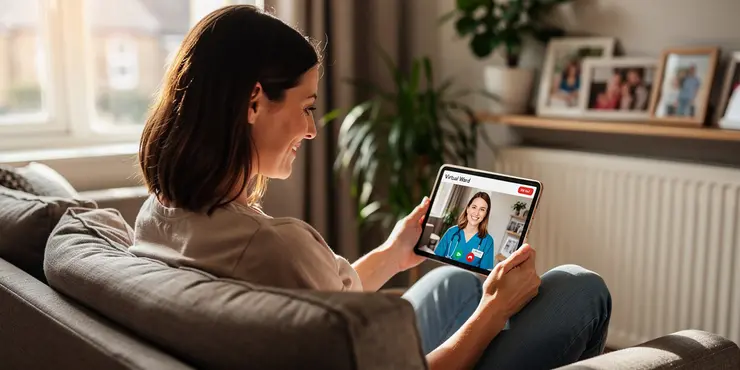
Virtual wards provide enhanced patient monitoring by using digital tools. These tools enable healthcare providers to closely observe patients from their homes.
Remote monitoring ensures early detection of potential health issues. This can significantly reduce the risk of hospital readmissions.
Increased Capacity in Traditional Wards
Virtual wards effectively increase capacity in traditional healthcare facilities. By managing patients remotely, hospitals can admit new patients in need of critical in-person care.
This approach helps alleviate pressure on healthcare services. During peak times, such as flu seasons, virtual wards can be a valuable resource.
Cost-Effectiveness
Managing patients in virtual wards can be more cost-effective than traditional hospital stays. It reduces the need for extended bed occupancy.
Cost savings can be redirected to other critical areas within the NHS. This can contribute to overall improvements in patient care quality.
Enhanced Patient Comfort
Patients often experience increased comfort and reduced stress when recovering at home. Being in familiar surroundings can aid in their recovery process.
Family presence and home comforts contribute positively to mental well-being. Virtual wards allow patients to stay connected with their support networks.
Facilitated Integration of Technology
Virtual wards make use of the latest technology to deliver healthcare. They integrate various digital tools, including mobile apps and wearable devices.
This helps promote innovation within the healthcare system. The adoption of these technologies can pave the way for future advancements.
Personalised Care Plans
Virtual wards allow for highly personalised care plans tailored to individual patient needs. Clinicians can fine-tune treatments based on real-time data.
This approach enhances the precision of healthcare delivery. It ensures each patient receives the most effective care tailored to their specific conditions.
Better Patient Outcomes
Continuous monitoring and personalised care can lead to better patient outcomes. Virtual wards can improve recovery times and reduce complications.
With better health management from home, patients can achieve healthier long-term results. This contributes to an overall improvement in population health.
Better Watching Over Patients
Virtual wards use computers to watch over patients. This means doctors can check on people while they stay at home.
Watching people from far away helps find problems early. This can stop them from going back to the hospital.
More Space in Hospitals
Virtual wards help create more space in hospitals. When patients are cared for at home, hospitals have room for new people who need a lot of care.
This helps when hospitals are very busy, like during flu season. Virtual wards are very helpful at these times.
Cheaper Care
Caring for people in virtual wards can cost less than in hospitals. This helps save money on hospital beds.
The money saved can help other important parts of the NHS. This makes patient care better overall.
More Comfort for Patients
Patients feel more comfortable and less worried at home. Being in a place they know helps them get better.
Having family and home comforts is good for their feelings. Virtual wards let patients stay close to family and friends.
Using New Technology
Virtual wards use new technology to give healthcare. They use things like phone apps and smart devices.
This brings new ideas to healthcare. Using these tools helps make future healthcare better.
Personal Care Plans
Virtual wards create care plans just for each patient. Doctors can change treatments based on what they see quickly.
This makes healthcare more precise. It means each person gets the best care for their needs.
Better Health for Patients
With watching and personal care, patients get better faster. Virtual wards help them heal and avoid more problems.
Good care at home helps people stay healthy. This helps everyone live healthier lives.
Frequently Asked Questions
A virtual ward is a healthcare model where patients receive care at home while remaining under the supervision of a hospital team, using technology to monitor their health remotely.
Virtual wards allow patients to recover in the comfort of their own homes, which can reduce stress and risk of hospital-acquired infections, leading to improved patient satisfaction and outcomes.
Yes, by allowing patients to be monitored and treated at home, virtual wards help free up hospital beds for patients in urgent need of in-hospital care, thus reducing congestion.
Virtual wards can be cost-effective by reducing the need for physical infrastructure and minimizing hospital stay durations, which leads to overall savings for both healthcare providers and patients.
Virtual wards use technology such as wearable devices and remote monitoring systems to track patient vital signs and health data, ensuring continuous and accurate monitoring.
Yes, virtual wards leverage data and technology to provide tailored health plans, ensuring that each patient receives personalized care based on their specific medical needs.
By offering remote care and regular virtual consultations, virtual wards empower patients to take an active role in their own health management and treatment decisions.
Technology is crucial in virtual wards, as it enables remote monitoring, telemedicine consultations, and electronic communication between patients and healthcare professionals.
Virtual wards can improve access by providing remote care to patients who live far from healthcare facilities or have mobility challenges, ensuring they receive timely medical attention.
Virtual wards can optimize the workload of healthcare professionals by allowing them to focus on acute cases in the hospital while managing stable patients remotely.
Yes, virtual wards employ advanced monitoring equipment and regular communication with healthcare providers to ensure patient safety and address any health concerns promptly.
Chronic conditions like diabetes, hypertension, or post-operative recovery are well-suited for virtual wards, where patients require continuous monitoring rather than intensive treatment.
Yes, virtual wards allow continuous monitoring and follow-up, which ensures a smooth transition from hospital to home care, enhancing continuity and quality of care.
Virtual wards can enhance adherence by providing patients with regular follow-up and reminders, and by involving them in their own health management, supporting better compliance with treatment plans.
During pandemics, virtual wards minimize infection risk by reducing hospital visits and providing remote care, thereby maintaining healthcare access while safeguarding both patients and healthcare workers.
Virtual wards require robust IT infrastructure, including high-speed internet, wearable health monitoring devices, telemedicine platforms, and secure data management systems.
Virtual wards facilitate better communication by enabling frequent virtual check-ins and prompt responses to queries, improving understanding and adherence to medical advice.
Yes, by closely monitoring patients and providing timely interventions, virtual wards can reduce the likelihood of complications and hospital readmissions, improving overall patient outcomes.
With continuous real-time data collection and remote monitoring, virtual wards enable healthcare professionals to make informed and timely decisions regarding patient care.
Challenges include ensuring reliable technology, patient willingness to engage with remote systems, data privacy concerns, and the initial cost of setting up the infrastructure.
A virtual ward helps people get care at home. It means doctors and nurses can watch over them even if they are not in the hospital. This is done with special technology that checks how the patients are doing.
Virtual wards let people get better at home. This can help lower stress and stop them from getting infections they might get in a hospital. Being at home can make people happier and help them get better faster.
Yes, virtual wards let patients stay and get help at home. This means there are more beds in hospitals for people who need to be there right away. This is good because it makes hospitals less crowded.
Virtual wards can save money. They don't need big buildings like hospitals do. People can also leave the hospital sooner, which saves money for both the hospitals and the people getting care.
Virtual wards use special tools like wearable devices and remote monitoring systems. These help doctors check your important health signs and information all the time.
Yes, virtual wards use computers and data to help make special health plans. This way, every patient gets the right care they need based on what is best for their health.
Virtual wards help people stay healthy.
They let you talk to your doctor on the computer. This can be done from your home. You can be involved in your health care and make choices about your treatment.
Tools like video calls and apps can help you talk to your doctor. Friends and family can help you understand and remember what the doctor says.
Technology is very important in virtual wards. It helps doctors and nurses watch over patients from far away, talk to patients through video calls, and send messages using computers.
Virtual wards help people who live far away from hospitals or have trouble moving around. They let doctors and nurses take care of people from a distance. This way, everyone can get the help they need on time.
Virtual wards help doctors and nurses with their work. They can take care of very sick patients in the hospital. At the same time, they can look after patients who are not very sick from far away.
Yes, virtual wards use special tools to watch over patients and talk with doctors often. This helps keep patients safe and take care of any health problems quickly.
Some health problems, like diabetes, high blood pressure, or getting better after surgery, can be helped in special online hospitals called virtual wards. Here, patients are watched closely all the time, but they don't need strong treatments.
For extra help, people can use tools like picture cards or storyboards to understand their care better. Voice-to-text apps can also help read out loud for clearer understanding.
Yes, virtual wards help doctors and nurses keep checking on you even after you leave the hospital. This makes sure you get good care when you go home.
Virtual wards can help people follow their treatment plans. They do this by checking in with patients often and sending them reminders. They also get patients involved in taking care of their own health. This helps them stick to their treatment better.
Tools like reminder apps or a calendar can help remember important dates. Speaking with a nurse or doctor regularly can also help a lot.
During times when lots of people are sick, virtual wards help keep everyone safe from germs. They do this by letting people get care from home instead of going to the hospital. This way, patients and healthcare workers stay safe and healthy.
Virtual wards need good technology. This includes fast internet, health gadgets you can wear, video doctor tools, and safe ways to keep information.
Virtual wards help doctors and patients talk to each other better. They let doctors and patients talk online more often. This helps people understand and follow medical advice.
Yes, virtual wards can help keep people healthier. They watch patients closely and help them quickly when needed. This can stop problems and stop people from having to go back to the hospital. This means patients get better care.
Virtual wards help doctors and nurses look after patients even if they are not in the hospital. They use computers and special tools to keep track of how a patient is doing all the time. This way, they can make quick and smart decisions to help the patient feel better.
There are some things that can be hard:
1. Making sure the technology works well all the time.
2. Getting people to want to use computers and phones for their health care.
3. Keeping everyone's personal information safe and private.
4. It can cost a lot of money to start using these new systems.
It can help to use simple tools and get support from others.

Ergsy Search Results
This website offers general information and is not a substitute for professional advice.
Always seek guidance from qualified professionals.
If you have any medical concerns or need urgent help, contact a healthcare professional or emergency services immediately.
Some of this content was generated with AI assistance. We've done our best to keep it accurate, helpful, and human-friendly.
- Ergsy carefully checks the information in the videos we provide here.
- Videos shown by Youtube after a video has completed, have NOT been reviewed by ERGSY.
- To view, click the arrow in centre of video.
- Most of the videos you find here will have subtitles and/or closed captions available.
- You may need to turn these on, and choose your preferred language.
- Go to the video you'd like to watch.
- If closed captions (CC) are available, settings will be visible on the bottom right of the video player.
- To turn on Captions, click settings.
- To turn off Captions, click settings again.