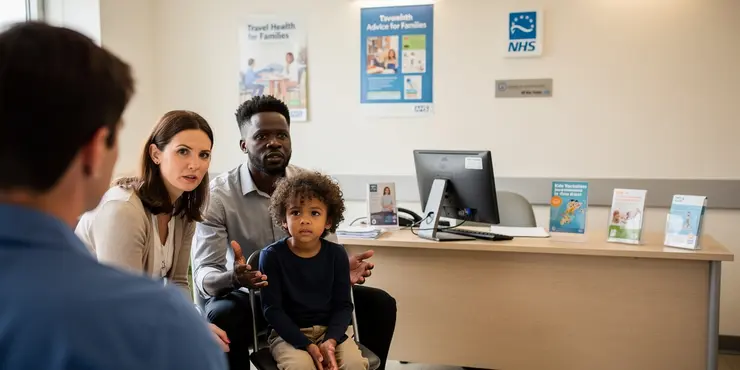

Get Answers
Do children need a travel health check before visiting a high-risk country?
In many cases, yes. A travel health check is a sensible step for children travelling to countries where there is a higher risk of infections, mosquito-borne illness, poor sanitation, or limited access to medical care.
Children can be more vulnerable than adults because their immune systems are still developing. They may also be less able to describe symptoms clearly, which makes prevention even more important.
Why the destination matters
The need for a travel health check depends on where you are going and what you will be doing there. Some destinations carry risks such as malaria, yellow fever, typhoid, hepatitis A, or traveller’s diarrhoea.
These risks can be higher in rural areas, during longer stays, or if you are visiting family and friends rather than staying in a hotel. A pre-travel appointment helps identify any country-specific advice for your child.
What a travel health check can cover
A clinician can review your child’s vaccination history and check whether any routine or travel vaccines are needed. They can also advise on timings, since some vaccines need to be given well before departure.
The appointment may include advice on malaria prevention, insect bite protection, food and water safety, and what medicines to pack. If your child has a health condition, it is a chance to discuss how travel may affect them.
When children are at higher risk
Some children need extra planning before travel. This includes babies, children with long-term health conditions, those with weakened immune systems, and children taking regular medicines.
It is also important if your child has allergies, asthma, or a history of severe reactions to vaccines or medicines. A travel health check can help make sure the trip is safe and practical.
How far in advance should you book?
Ideally, book a travel health check at least six to eight weeks before departure. This gives enough time for vaccines, repeat doses if needed, and any follow-up questions.
Even if travel is sooner than that, it is still worth arranging an appointment. Some advice, such as insect bite prevention and food hygiene, can reduce risk straight away.
Final advice for UK parents
A travel health check is not always compulsory, but it is often a smart precaution for children going to high-risk countries. It can help prevent illness and give parents confidence before they travel.
If you are unsure, speak to a GP, practice nurse, or private travel clinic. The best advice depends on your child’s age, medical history, and travel destination.
Frequently Asked Questions
A travel health check high-risk country necessary for children before travel is a medical review that assesses a child’s fitness to travel, reviews destination-specific risks, and recommends vaccines, medicines, and preventive steps needed for the trip.
A travel health check high-risk country necessary for children is important because children may be more vulnerable to infections, dehydration, insect-borne illnesses, altitude issues, and food or water hazards that are more common in high-risk destinations.
A travel health check high-risk country necessary for children should ideally be scheduled 4 to 6 weeks before departure, although even last-minute visits can still help with advice, catch-up vaccines, and travel precautions.
Any child traveling to a high-risk country should get a travel health check high-risk country necessary for children, especially infants, toddlers, children with chronic conditions, immunocompromised children, or those traveling to remote areas.
A travel health check high-risk country necessary for children may recommend routine vaccine updates and travel-specific vaccines such as hepatitis A, typhoid, yellow fever, rabies, meningococcal, or Japanese encephalitis depending on the destination and itinerary.
A travel health check high-risk country necessary for children helps by assessing malaria risk for the destination, recommending preventive medication if needed, and giving guidance on mosquito avoidance measures such as nets, repellents, and protective clothing.
Yes, a travel health check high-risk country necessary for children can assess whether the child is fit for air travel, long road journeys, or exposure to altitude, and can identify concerns such as ear problems, respiratory illness, or dehydration risk.
For a travel health check high-risk country necessary for children, bring the child’s vaccination record, medication list, medical history, allergy details, travel itinerary, and any special school or specialist reports if the child has ongoing health needs.
A travel health check high-risk country necessary for children provides advice on safe drinking water, proper hand hygiene, avoiding unsafe foods, and preventing diarrhea, which are common travel-related health issues in high-risk countries.
During a travel health check high-risk country necessary for children, parents should ask about vaccines, malaria prevention, emergency care, insect bite protection, altitude concerns, travel insurance, and any medication adjustments the child may need.
Yes, a travel health check high-risk country necessary for children is especially important for infants and toddlers because younger children may need special vaccine timing, dose adjustments, hydration advice, and closer infection prevention planning.
Yes, a travel health check high-risk country necessary for children can review chronic conditions like asthma, diabetes, epilepsy, or heart disease and provide travel planning advice, medication supplies, and emergency action steps.
A travel health check high-risk country necessary for children may include discussion of fever reducers, oral rehydration solutions, anti-motion-sickness options, malaria prophylaxis, and any destination-specific prescriptions a child may need.
No, a travel health check high-risk country necessary for children does not replace regular pediatric care; it complements routine care by focusing on destination risks, preventive measures, and travel-specific medical advice.
A travel health check high-risk country necessary for children reduces infectious disease risk by ensuring vaccines are up to date, advising on hygiene and food safety, and recommending preventive measures for insect-borne and waterborne illnesses.
If a travel health check high-risk country necessary for children is done close to departure, it can still be valuable for urgent vaccines, preventive prescriptions, and practical advice, though some vaccine series may not be fully completed.
Yes, a travel health check high-risk country necessary for children can support emergency planning by identifying medical risks, advising what to carry, and helping families understand what documentation and insurance coverage may be important.
A travel health check high-risk country necessary for children should include warning signs such as fever, persistent vomiting, severe diarrhea, rash, breathing problems, unusual sleepiness, or signs of dehydration that need urgent medical attention after travel.
Parents can prepare for a travel health check high-risk country necessary for children by writing down the itinerary, bringing immunization records, listing current medicines and allergies, and noting any planned activities such as rural visits or animal contact.
Families can usually get a travel health check high-risk country necessary for children from a pediatrician, travel medicine clinic, family doctor, or public health service that offers pre-travel medical consultations.

Ergsy Search Results
This website offers general information and is not a substitute for professional advice.
Always seek guidance from qualified professionals.
If you have any medical concerns or need urgent help, contact a healthcare professional or emergency services immediately.
Some of this content was generated with AI assistance. We've done our best to keep it accurate, helpful, and human-friendly.
- Ergsy carefully checks the information in the videos we provide here.
- Videos shown by Youtube after a video has completed, have NOT been reviewed by ERGSY.
- To view, click the arrow in centre of video.
- Most of the videos you find here will have subtitles and/or closed captions available.
- You may need to turn these on, and choose your preferred language.
- Go to the video you'd like to watch.
- If closed captions (CC) are available, settings will be visible on the bottom right of the video player.
- To turn on Captions, click settings.
- To turn off Captions, click settings again.