
Get Answers
Understanding Sedation in NHS Dental Treatments
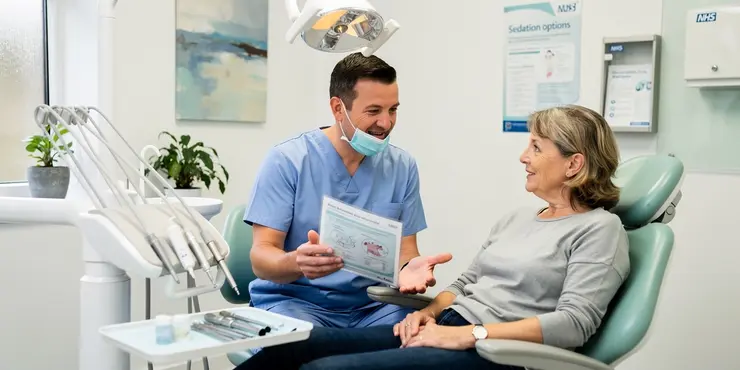
For many individuals, dental visits can evoke anxiety or fear, which may deter them from seeking necessary oral care. To address this issue, sedation options are offered during NHS dental treatments, ensuring patients have a more comfortable and stress-free experience.
What is Dental Sedation?
Dental sedation involves the use of medication to help patients relax during dental procedures. It is not the same as general anesthesia, as the patient remains conscious and responsive, except in cases requiring deeper sedation. The level of sedation can vary from minimal, where the patient is relaxed but fully awake, to moderate, where the patient might slur their words and not remember much of the procedure.
Types of Sedation Available
The NHS provides several types of sedation to accommodate different needs and levels of anxiety:
1. Inhalation Sedation: Often referred to as "laughing gas," inhalation sedation uses a mix of nitrous oxide and oxygen. Administered via a small mask, it helps patients relax without putting them to sleep. It is particularly popular for patients who have mild to moderate anxiety and is suitable for both adults and children.
2. Oral Sedation: This involves taking a sedative pill, such as diazepam, prior to the appointment. Oral sedation results in a moderate level of sedation and is recommended for patients with more pronounced dental anxiety or those undergoing lengthy procedures.
3. Intravenous (IV) Sedation: Administered through an injection, IV sedation works quickly and allows levels to be adjusted during the procedure. This type of sedation is often reserved for those with severe anxiety or when complex, lengthy treatments are required. Patients will feel deeply relaxed and may not recall much of the procedure.
Eligibility for NHS Sedation
Not every patient may be eligible for sedation through the NHS. Typically, NHS sedation is reserved for those who have been determined to have significant dental anxiety, special health care needs, or are undergoing particularly complex or invasive procedures. Dentists will assess a patient’s suitability for sedation based on their medical history, level of anxiety, and specific treatment requirements. In some cases, a referral to a specialised clinic may be necessary.
How to Access Sedation
If you think you might benefit from sedation during your dental treatment, it’s important to discuss this with your NHS dentist. They will evaluate your situation, discuss the different sedation options available, and determine the most appropriate plan for your needs. It's also essential to discuss any concerns or questions with your dentist to ensure a fully informed decision.
Conclusion
For many people, sedation offers a pathway to overcome fear and receive necessary dental care in a comfortable environment. The NHS provides various sedation options aimed at minimizing anxiety and enhancing the dental experience. By consulting with your dentist, you can better understand the options available and ensure that your dental visits are as stress-free as possible.
Understanding Sedation in NHS Dental Treatments
Some people feel scared or worried about going to the dentist. This can stop them from getting the care they need for their teeth. To help with this, the NHS offers sedation during dental treatments. This makes visiting the dentist more comfortable and less stressful.
What is Dental Sedation?
Dental sedation means using medicine to help people relax during dental work. It is not the same as being put to sleep with general anesthesia. Instead, the person stays awake and can respond, unless they need deeper sedation. There are different levels of sedation. It can be mild, where you are relaxed but awake, or moderate, where you might talk funny and not remember much.
Types of Sedation Available
The NHS has different types of sedation to help people with different needs and levels of worry:
1. Inhalation Sedation: This type is called "laughing gas." It uses a mix of nitrous oxide and oxygen. You breathe it in through a small mask. It helps you relax without going to sleep. It is good for people with mild to moderate anxiety, and it works for adults and children.
2. Oral Sedation: You take a pill, like diazepam, before your dental visit. This makes you feel moderately sedated. It's good for people who feel more anxious or have long procedures.
3. Intravenous (IV) Sedation: This is given through an injection. It works quickly and can be adjusted during treatment. It is used for people with severe anxiety or when the treatment is long or complex. You will feel very relaxed and might not remember much.
Eligibility for NHS Sedation
Not everyone can have sedation on the NHS. It is usually for people with high dental anxiety, special health needs, or those having complicated procedures. Dentists will look at your medical history and how anxious you are to decide if sedation is right for you. Sometimes, a special clinic might need to be involved.
How to Access Sedation
If you think sedation will help you during dental treatment, talk to your NHS dentist. They will look at your situation, explain the sedation options, and choose the best plan for you. Make sure to ask any questions you have and talk about your worries with your dentist to make a good decision.
Conclusion
For many people, sedation helps them get over their fear and get the dental care they need comfortably. The NHS offers different sedation options to make visiting the dentist less scary. By talking to your dentist, you can learn about your options and make dental visits as easy as possible.
Frequently Asked Questions
Yes, sedation can be available for certain NHS dental treatments, depending on the patient's needs and the complexity of the procedure.
The common types of sedation offered include inhalation sedation (such as nitrous oxide), oral sedation, and intravenous (IV) sedation.
Sedation is typically offered to patients who experience anxiety, have a strong gag reflex, or are undergoing complex or lengthy procedures.
Sedation may be covered by the NHS if it is deemed clinically necessary, but it's important to discuss this with your dentist.
You should discuss your concerns and the possibility of sedation with your NHS dentist to determine the best course of action.
Sedation is generally safe when administered by trained professionals, and your dentist will take precautions to ensure your safety.
Yes, children can receive sedation if it is deemed necessary by the dentist for certain procedures.
Under sedation, you will feel relaxed and less aware, but you will still be responsive to the dentist's instructions.
Sedation helps to reduce anxiety, and local anesthesia is also used to minimize pain during the procedure.
The effects of sedation can last several hours depending on the type used, and you will need someone to accompany you home.
Your dentist will provide specific instructions, which may include fasting for a certain period before the procedure.
No, it's not recommended to drive after sedation as your reflexes and judgment may be impaired.
While risks are minimal, possible side effects include dizziness, nausea, and prolonged drowsiness.
General anesthesia is not commonly available in dental practices and is usually reserved for hospital settings.
The level of sedation is determined based on the patient's anxiety level, medical history, and the procedure's complexity.
You may be instructed to avoid eating or drinking for a set period before your appointment based on the type of sedation.
IV sedation is administered through a vein in your arm or hand, providing a deeper level of sedation quickly.
Yes, alternatives include behavioral techniques, local anesthesia, or distraction methods which can be discussed with your dentist.
Express any concerns with your dentist beforehand so they can address them and offer reassurance.
Wear comfortable clothing to your appointment, and avoid wearing contact lenses as sedation can cause dryness in the eyes.
Yes, you can get medicine to help you relax for some NHS teeth treatments. This happens if you need it and the dental work is tricky.
There are different ways to help you relax during medical procedures. These include:
- Breathing a special gas like laughing gas (called nitrous oxide).
- Taking a calming pill that you swallow.
- Getting medicine through a small tube in your arm (called IV sedation).
You can use tools like breathing exercises or listen to music to help you stay calm. Always talk to your doctor about what is best for you.
Doctors can give medicine to help you relax if you are scared, might gag, or need a long or tricky treatment.
If your dentist says you need sedation to help with your dental treatment, the NHS might pay for it. Talk to your dentist about this. They can help you understand if you can have sedation and if the NHS will cover the cost.
Talk to your NHS dentist about your worries. Ask about using sedation. Together, you can decide what is best.
Sedation is usually safe when given by trained experts. Your dentist will make sure you are safe.
Yes, children can get medicine to help them feel calm if the dentist thinks it is needed for some treatments.
When you get medicine to help you relax at the dentist, you will feel calm. You might not notice everything, but you can still listen and do what the dentist asks you to do.
Sedation helps you feel less worried. Local anesthesia is also used to make sure you don't feel pain during the procedure.
After you have medicine to help you feel sleepy, it can last for a few hours. You will need a friend or family member to go home with you.
Your dentist will tell you exactly what to do. They might say not to eat or drink anything for some time before your appointment.
No, you should not drive after having sedation. It can make it hard for you to think clearly and react quickly. This can be dangerous when driving.
There is a small chance of feeling dizzy, feeling sick, or being sleepy for a long time. Don't worry, these usually go away. If you feel like this, sit down and rest.
Most dentists don't use sleep medicine that makes you fully asleep. This is called general anesthesia. You usually get this in a hospital, not at the dentist's office.
The amount of sleep medicine a patient gets depends on how scared they feel, their health, and how tricky the doctor's job is.
You might be told not to eat or drink for some time before your visit. This depends on the kind of sedation you will get.
Doctors give IV sedation through a vein in your arm or hand. It helps you relax very quickly.
Yes, there are other ways to help, like using special methods to stay calm, numbing your mouth, or doing something fun to keep your mind busy. You can talk about these with your dentist.
Before you go to the dentist, tell them if you are worried about anything. They will help you feel better and answer your questions.
Wear clothes that feel comfy to your appointment. Don't wear contact lenses because the medicine might make your eyes dry.

Ergsy Search Results
This website offers general information and is not a substitute for professional advice.
Always seek guidance from qualified professionals.
If you have any medical concerns or need urgent help, contact a healthcare professional or emergency services immediately.
Some of this content was generated with AI assistance. We've done our best to keep it accurate, helpful, and human-friendly.
- Ergsy carefully checks the information in the videos we provide here.
- Videos shown by Youtube after a video has completed, have NOT been reviewed by ERGSY.
- To view, click the arrow in centre of video.
- Most of the videos you find here will have subtitles and/or closed captions available.
- You may need to turn these on, and choose your preferred language.
- Go to the video you'd like to watch.
- If closed captions (CC) are available, settings will be visible on the bottom right of the video player.
- To turn on Captions, click settings.
- To turn off Captions, click settings again.