
Get Answers
Understanding Secondhand Smoke
Secondhand smoke refers to the mixture of smoke exhaled by a smoker and the smoke from the burning end of a tobacco product. It contains over 7,000 chemicals. Numerous studies have shown that exposure to secondhand smoke can lead to serious health issues, including lung cancer and respiratory illnesses.
In the UK, public smoking bans have helped reduce exposure to secondhand smoke. However, even brief exposure can have negative health effects, particularly for vulnerable groups like children and the elderly.
What is Secondhand Vapor?
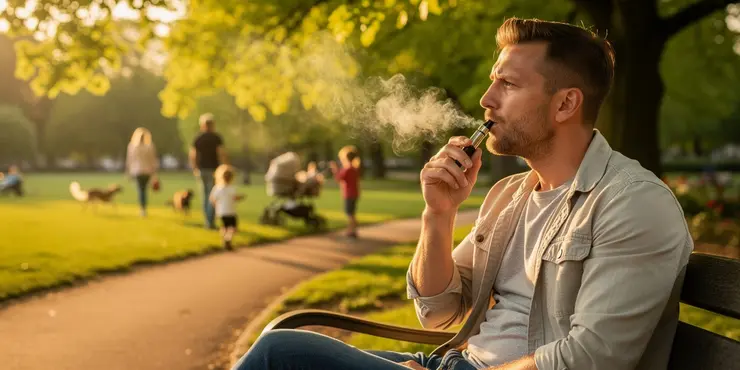
Secondhand vapor, often called passive vaping, is the aerosol exhaled by e-cigarette users. Unlike tobacco smoke, it is produced by heating a liquid containing nicotine, flavourings, and other chemicals.
Vaping devices have become increasingly popular, with many users believing them to be a safer alternative to smoking. However, concerns about the potential health impacts of secondhand vapor are growing.
Comparing Harm Levels
Research suggests that secondhand vapor is less harmful than secondhand smoke. It generally contains fewer toxicants than traditional cigarette smoke. However, this does not mean it is completely harmless.
Some studies have found that secondhand vapor can contain substances like nicotine, ultrafine particles, and certain volatile organic compounds. These can have adverse health effects, especially with prolonged exposure.
Health Advice and Regulations
The UK government and health bodies advise caution regarding secondhand vapor exposure. There is a call for more detailed research to fully understand its long-term impact on health.
The introduction of vaping regulations aims to protect non-smokers while allowing smokers an alternative. This includes restrictions on where vaping is permitted in public spaces.
Conclusion
In summary, while secondhand vapor is potentially less harmful than secondhand smoke, concerns remain. The evidence suggests that it is not entirely without risks, particularly for vulnerable individuals.
Public health strategies focus on minimizing exposure to both secondhand smoke and vapor, emphasizing the importance of protecting public health and maintaining safe air quality environments.
Frequently Asked Questions
Secondhand vapor is the aerosol exhaled by a person using an electronic cigarette or vape device.
Secondhand smoke is the combination of smoke exhaled by a smoker and the smoke from the burning end of a cigarette, cigar, or pipe.
Research suggests that secondhand vapor generally contains fewer harmful chemicals than secondhand smoke, but it is not completely harmless.
Yes, secondhand vapor can contain nicotine, depending on the e-liquid used.
Secondhand vapor can contain toxic chemicals, but typically in lower concentrations than those found in secondhand smoke.
Exposure to secondhand vapor may cause respiratory irritation or exacerbate existing respiratory conditions in some individuals.
While secondhand vapor is considered less harmful than secondhand smoke, it can still pose health risks to children, particularly those with asthma or allergies.
Vaping indoors can expose non-smokers to secondhand vapor, which may still contain harmful substances. It's best to vape outdoors or in well-ventilated areas.
Secondhand vapor may contain nicotine, propylene glycol, glycerin, flavors, and small amounts of toxicants like formaldehyde and acetaldehyde.
Regulations regarding secondhand vapor exposure vary by location, with some areas including e-cigarettes in smoke-free laws.
Nicotine levels in secondhand vapor are generally lower than those found in secondhand smoke but can still be present.
Formaldehyde can be present in secondhand vapor but usually at lower levels than in secondhand smoke.
The long-term health effects of secondhand vapor exposure are still being studied, but potential risks include respiratory irritation and exposure to nicotine.
Secondhand vapor often smells less than secondhand smoke, but it can still have a distinct odor due to flavorings.
Yes, secondhand vapor can affect indoor air quality by introducing aerosol particles and chemicals.
Reducing exposure to secondhand vapor can minimize potential health risks, especially for vulnerable populations like children and those with pre-existing health conditions.
E-cigarettes typically produce more aerosol volume than the smoke volume from cigarettes, but the chemical composition differs.
Yes, secondhand vapor can trigger allergies or respiratory issues in sensitive individuals due to chemicals and flavoring agents.
To minimize secondhand vapor exposure, vapers should use their devices outdoors or in areas away from non-users, especially in enclosed spaces.
Using nicotine replacement therapies like patches or gums can be safer alternatives to vaping around non-smokers to reduce secondhand exposure.

Ergsy Search Results
This website offers general information and is not a substitute for professional advice.
Always seek guidance from qualified professionals.
If you have any medical concerns or need urgent help, contact a healthcare professional or emergency services immediately.
Some of this content was generated with AI assistance. We've done our best to keep it accurate, helpful, and human-friendly.
- Ergsy carefully checks the information in the videos we provide here.
- Videos shown by Youtube after a video has completed, have NOT been reviewed by ERGSY.
- To view, click the arrow in centre of video.
- Most of the videos you find here will have subtitles and/or closed captions available.
- You may need to turn these on, and choose your preferred language.
- Go to the video you'd like to watch.
- If closed captions (CC) are available, settings will be visible on the bottom right of the video player.
- To turn on Captions, click settings.
- To turn off Captions, click settings again.