
Get Answers
Can you get a second opinion online in the UK?
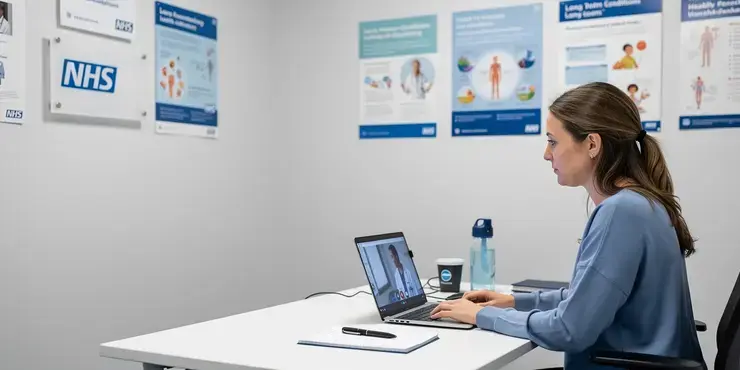
Yes, many second opinions for long-term health conditions are available online or by telehealth in the UK. This can include video appointments, phone calls, or secure messaging with a specialist.
For people who live far from a hospital, have mobility problems, or want a quicker review, remote appointments can be very useful. They may also be easier to arrange around work, family life, or ongoing treatment.
What conditions can be reviewed remotely?
Many long-term conditions can be discussed online, especially when the specialist needs to review symptoms, test results, or treatment history. Common examples include diabetes, asthma, arthritis, thyroid disorders, skin conditions, and some mental health concerns.
Telehealth is often suitable when the main question is whether a diagnosis, treatment plan, or medication needs to change. If a physical examination or procedure is needed, you may still need an in-person appointment.
How does an online second opinion work?
You usually start by sharing your medical history, test results, scans, medication list, and any letters from your current doctor. The specialist then reviews this information before or during the appointment.
After the consultation, you may receive advice on diagnosis, treatment options, further tests, or whether you should see someone face to face. In some cases, the second opinion can be sent as a written report to you or your GP.
Benefits and limitations
Online second opinions can save time and reduce travel, which is especially helpful for people managing a chronic illness. They can also give you faster access to specialist advice and help you feel more confident about your care.
However, telehealth is not always enough on its own. If a condition is complex, unstable, or needs a hands-on examination, the clinician may recommend an in-person review.
Things to check before booking
Make sure the service is provided by a qualified clinician who is registered to practise in the UK. It is also worth checking whether the second opinion will be accepted by your NHS team or insurer, if relevant.
Ask what documents you need to provide, whether the appointment is private or NHS-funded, and what happens if the specialist recommends more tests. Clear information at the start can help you get the most from the appointment.
When to seek urgent help
A second opinion is useful for ongoing concerns, but it should not delay urgent treatment. If your symptoms are severe, worsening quickly, or could be an emergency, you should contact NHS 111, your GP, or emergency services straight away.
Remote advice is a helpful option, but it works best as part of proper clinical care. If you are unsure, ask your current healthcare team whether online review is appropriate for your situation.
Frequently Asked Questions
Second opinion long-term health condition telehealth is a remote medical consultation where a qualified clinician reviews your diagnosis, treatment plan, test results, and symptoms to provide an independent opinion about a chronic or ongoing health condition.
Most people with a long-term health condition can seek second opinion long-term health condition telehealth, especially if they want confirmation of a diagnosis, more treatment options, or help understanding whether their current plan is appropriate.
You typically submit your medical history, records, imaging, labs, and current medications, then meet with a specialist by video or phone. The clinician reviews your information and gives recommendations, questions to ask your current doctor, and possible next steps.
Second opinion long-term health condition telehealth can be used for many chronic conditions, including cancer, autoimmune disease, diabetes, heart disease, neurological disorders, chronic pain, kidney disease, respiratory disease, and complex multi-condition cases.
It can help confirm a diagnosis, identify alternative treatments, clarify risks and benefits, and give you more confidence before starting, changing, or continuing a long-term care plan.
Useful records include recent clinic notes, test results, lab reports, imaging studies, pathology reports, medication lists, procedure summaries, discharge notes, and a timeline of symptoms and prior treatments.
The process can take from a few days to a few weeks depending on how quickly records are received, how complex the condition is, and the availability of the reviewing specialist.
No, second opinion long-term health condition telehealth is usually meant to complement your ongoing care. Your regular doctor remains important for follow-up, prescriptions, monitoring, and long-term management.
Coverage varies by insurer, plan, diagnosis, and provider network. Some plans cover telehealth second opinions, while others require self-pay or prior authorization, so it is best to confirm directly with your insurer.
Costs vary widely based on the specialist, the complexity of the case, and whether insurance is used. Some services charge a flat fee, while others bill per consultation or review package.
Benefits include access to specialists without travel, faster review of complex cases, broader treatment perspectives, easier sharing of records, and convenience for people with mobility issues or limited local expertise.
Yes, reputable telehealth providers use secure platforms and privacy protections to keep your medical information confidential, though you should still verify the provider's privacy practices before sharing records.
Yes, specialists can review uploaded imaging, pathology, and lab results as part of second opinion long-term health condition telehealth and may recommend additional testing or reinterpretation if needed.
A referral is sometimes helpful but not always required. Some telehealth second-opinion services allow direct scheduling, while others, especially insurance-based programs, may request a referral or medical records first.
You should ask whether the diagnosis is correct, whether other treatment options exist, what the expected benefits and risks are, whether more testing is needed, and how the recommendation changes your long-term outlook.
Yes, it is often especially valuable for rare or complex long-term health conditions because telehealth can connect you with specialists who may have more experience than local providers.
That depends on your permission and the provider's workflow. Many services can share a report with your current doctor if you request it, but they usually do not do so without your consent.
A telehealth specialist may recommend medication changes, but any actual prescription changes usually need to be coordinated with your treating clinician and must follow local licensing and prescribing rules.
Gather your records, write down your main concerns, list all medications and allergies, note prior treatments and their effects, and prepare questions about diagnosis, options, and next steps so the consultation is efficient.
Availability depends on the provider's licensure, country rules, and the type of medical advice offered. Some services operate only within certain regions, so you should confirm whether the clinician can legally provide second opinion long-term health condition telehealth where you live.

Ergsy Search Results
This website offers general information and is not a substitute for professional advice.
Always seek guidance from qualified professionals.
If you have any medical concerns or need urgent help, contact a healthcare professional or emergency services immediately.
Some of this content was generated with AI assistance. We've done our best to keep it accurate, helpful, and human-friendly.
- Ergsy carefully checks the information in the videos we provide here.
- Videos shown by Youtube after a video has completed, have NOT been reviewed by ERGSY.
- To view, click the arrow in centre of video.
- Most of the videos you find here will have subtitles and/or closed captions available.
- You may need to turn these on, and choose your preferred language.
- Go to the video you'd like to watch.
- If closed captions (CC) are available, settings will be visible on the bottom right of the video player.
- To turn on Captions, click settings.
- To turn off Captions, click settings again.