
Speak To An Expert
Get clear, personalised advice for your situation.
Jot down a few questions to make the most of your conversation.
Introduction to Spinal Anaesthesia Positioning
Spinal anaesthesia is a common procedure used to numb the lower half of the body, typically for surgeries involving the lower abdomen, pelvis, or legs. Correct positioning during the procedure is crucial to ensure the anaesthetic is administered effectively and safely. In the UK, medical professionals follow specific protocols to position patients for spinal anaesthesia.
The Sitting Position
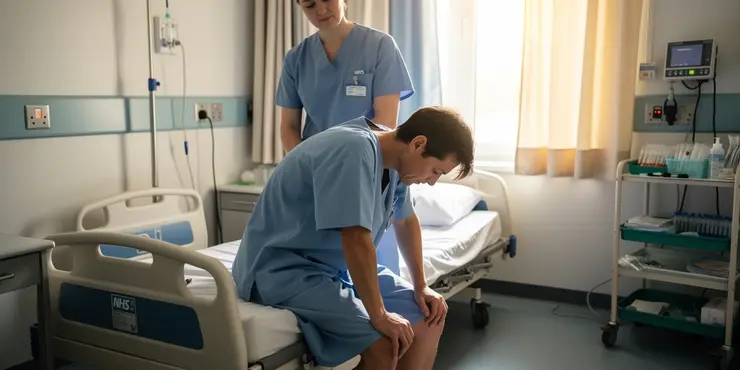
The sitting position is one of the most commonly used positions for administering spinal anaesthesia. It involves the patient sitting on the edge of the bed or operating table with their feet supported on a stool and their back fully exposed. The patient is asked to lean forward into a 'hunched' position, which helps open up the spaces between the bones of the spine. This position allows the anaesthetist to easily identify the correct place to administer the anaesthetic.
In the sitting position, the anaesthetist will locate the lumbar region of the spine, usually between the L3 and L4 vertebrae. Drapes and antiseptic solutions are used to maintain a sterile environment, and the anaesthetic is injected into the cerebrospinal fluid through a fine needle.
The Lateral Position
Alternatively, spinal anaesthesia can be administered in the lateral position. In this position, the patient lies on their side, usually with their knees drawn up to their chest and their chin tucked to their knees. This position is particularly useful when the patient is unable to sit up due to physical limitations or discomfort.
The lateral position helps in maintaining the curvature of the spine, making it easier for the anaesthetist to locate the correct puncture site. Similar to the sitting position, the L3-L4 interspace is commonly used. The same sterile precautions are taken, and the procedure is carried out with precision.
Considerations and Adjustments
The choice between the sitting and lateral positions depends on various factors including patient comfort, the expected duration of the surgery, and the anaesthetist's preference. Pregnant women, for example, might prefer the sitting position during spinal anaesthesia for a caesarean section, as it is often more comfortable.
In certain situations, modifications to these positions may be necessary. Patients with spinal deformities or those who are obese might require specific adjustments to optimally position the spine for anaesthetic administration. The anaesthetist will assess individual needs and make suitable adjustments to ensure both the effectiveness of the anaesthesia and the patient's comfort.
Conclusion
A successful spinal anaesthesia relies significantly on proper patient positioning. Whether in the sitting or lateral position, it is crucial to maintain comfort while providing the anaesthetist with clear access to the lumbar spine. By understanding these positions, patients can better prepare for the procedure and communicate effectively with their healthcare providers about any concerns or preferences they may have.
Introduction to Spinal Anaesthesia Positioning
Spinal anaesthesia is a way to make the lower half of the body numb. This is often used for surgeries on the lower belly, hips, or legs. It is very important to have the body in the right position during this procedure. This helps the medicine work well and safely. In the UK, doctors have specific ways to position the body for spinal anaesthesia.
The Sitting Position
The sitting position is one of the most common ways to give spinal anaesthesia. Here, the person sits on the edge of the bed or table. They have their feet on a stool, and their back is open. The person needs to lean forward to make a 'hunched' shape. This helps open up the spaces between the back bones. It makes it easier for the doctor to find the right spot to give the anaesthetic.
In this position, the doctor will find the lower part of the back, usually between the L3 and L4 bones. The doctor keeps everything clean and uses a small needle to inject the anaesthetic into the fluid around the spine.
The Lateral Position
Another way to give spinal anaesthesia is called the lateral position. Here, the person lies on their side. They usually bring their knees up to their chest and tuck their chin down. This is a good position if it is hard for the person to sit up.
The lateral position helps keep the natural curve of the spine. This makes it easier for the doctor to find the right spot. Just like the sitting position, the doctor uses the area between the L3 and L4 bones. Everything is kept clean, and the procedure is done carefully.
Considerations and Adjustments
The doctor will choose between the sitting and lateral positions based on what is best for the person. They also consider how long the surgery will take and the doctor's experience. For example, pregnant women might find sitting more comfortable for certain surgeries.
Sometimes, changes to these positions are needed. People with curved spines or who are larger might need special adjustments. The doctor will check what each person needs to make sure the anaesthesia works well and feels comfortable.
Conclusion
Proper positioning is very important for spinal anaesthesia to work well. Whether sitting or lying on the side, it is important to stay comfortable and give the doctor a clear view of the back. By understanding these positions, people can be ready for the procedure and talk to their healthcare team about any worries or choices they have.
Frequently Asked Questions
You are typically placed in a sitting or side-lying (lateral) position for spinal anaesthesia.
The sitting position helps to open up the spaces between the vertebrae, making it easier for the anesthesiologist to access the spinal area.
You will sit on the edge of the bed or table and lean forward, often with your arms resting on a pillow or a table in front of you, arching your back outward.
The lateral position involves lying on your side with your knees drawn up to your chest and chin tucked in, creating a fetal-like position.
Both positions are commonly used, and the choice depends on the specific circumstances and preference of the anesthesiologist.
Neither position is universally better; both have their advantages depending on the patient's anatomy and the procedure.
Your anesthesiologist will discuss the options with you and choose a position based on your medical needs and comfort.
If you cannot sit up, you will most likely be placed in the lateral (side-lying) position.
You may feel some discomfort, but your medical team will help you get into a comfortable and secure position.
You will need to remain in the position until the procedure is complete, which usually takes a few minutes.
Once the anaesthetic is administered, you will be positioned for your surgery or procedure.
Arching your back helps to open the spaces between the vertebrae, allowing easier access to the spinal canal.
Yes, medical staff will assist you in getting into and maintaining the correct position safely.
Yes, these positions are safe for the duration needed to administer spinal anaesthesia, and you'll be monitored closely.
It's not necessary to practice, but understanding the positions can make you feel more prepared and at ease.
You will likely wear a hospital gown so that the area for spinal anaesthesia is easily accessible.
You will not be strapped down, but staff may assist in holding you steady and secure in the position.
Let your medical team know about your anxiety; they can provide support and reassurance.
You should remain still until the anaesthetic has taken effect and you are positioned for your procedure.
Yes, the medical staff will communicate with you about what they are doing and what to expect throughout the process.
You will usually sit up or lie on your side for spinal medicine to numb your back.
Sitting helps open the gaps between the bones in the back. This makes it easier for the doctor to reach the spine.
You will sit on the edge of the bed or table. Lean forward. Put your arms on a pillow or a table in front of you. Make your back like a rainbow shape.
The lateral position is when you lie on your side. You pull your knees up to your chest and tuck your chin in. It is like being in a small ball, like a baby in a tummy.
Doctors can choose either way of doing it. They decide based on the situation and what they like best.
There is no one best choice for everyone. Both choices can be good. It depends on the person's body and what the doctor needs to do.
Your doctor will talk with you about the choices. They will pick the best option for you, thinking about what you need for your health and to make sure you feel okay.
If you cannot sit up, you will probably be put on your side. This is called the side-lying position.
You might feel a little uncomfortable. But the doctors and nurses will help you sit or lie down in a way that feels safe and snug.
You need to stay still until the doctor finishes. It usually takes a few minutes.
When the medicine makes you sleepy, the doctors will help you get ready for your operation.
Bending your back can help make more space between the bones in your spine. This makes it easier to reach the spine.
Yes, the medical staff will help you get into and stay in the right position safely.
Yes, these positions are safe while you get spinal anaesthesia. People will check on you the whole time to make sure you're okay.
You don't have to practice, but knowing where things go can help you feel ready and calm.
You will probably wear a special hospital dress. This is to make sure doctors can easily reach your back for the spinal injection.
You won't be tied down, but the staff might help you stay still and safe.
Tell your doctors and nurses if you feel worried or scared. They can help you feel better and give you support.
Stay still until the medicine makes you numb and you are ready for the procedure.
Yes, the doctors and nurses will talk to you. They will tell you what they are doing and what will happen next.

Ergsy Search Results
This website offers general information and is not a substitute for professional advice.
Always seek guidance from qualified professionals.
If you have any medical concerns or need urgent help, contact a healthcare professional or emergency services immediately.
Some of this content was generated with AI assistance. We've done our best to keep it accurate, helpful, and human-friendly.
- Ergsy carefully checks the information in the videos we provide here.
- Videos shown by Youtube after a video has completed, have NOT been reviewed by ERGSY.
- To view, click the arrow in centre of video.
- Most of the videos you find here will have subtitles and/or closed captions available.
- You may need to turn these on, and choose your preferred language.
- Go to the video you'd like to watch.
- If closed captions (CC) are available, settings will be visible on the bottom right of the video player.
- To turn on Captions, click settings.
- To turn off Captions, click settings again.