
Get Answers
Start with the basics
Before taking your dog into shops, cafes or on public transport, make sure they are comfortable in busy environments. A dog that is calm around people, noises and movement will find these trips much easier. Start in quieter places and build up gradually.
Check that your dog is up to date with vaccinations, flea and worm treatments, and is wearing a secure collar or harness with an ID tag. In the UK, dogs should also be microchipped by law. Having the basics in place helps keep your dog safe if you are out and about.
Train for real-world situations
Practice simple cues such as sit, stay, leave it and walking calmly on the lead. These are useful when you need your dog to wait at a café table or stay settled in a queue. Short training sessions at home can make a big difference.
It also helps to teach your dog how to settle on a mat or blanket. This gives them a clear place to relax when you stop for a drink or sit on a train. Reward calm behaviour so they learn that being quiet and still is a good thing.
Build confidence slowly
Do not go straight into a busy café or crowded station if your dog is inexperienced. Begin with short visits to quieter shops or outdoor seating areas. Keep the first trips brief and positive.
Watch your dog’s body language carefully. If they seem tense, overly excited or worried, give them more time and space. Pushing too quickly can make future outings harder.
Pack the right essentials
Bring water, a bowl, treats, poo bags and anything your dog needs to stay comfortable. A familiar blanket or toy can also help them relax in a new place. For longer journeys, consider packing wipes in case of muddy paws.
Make sure your dog has had enough exercise before you go out. A well-exercised dog is often better able to settle in shops, cafes and on public transport. Try to avoid setting off when your dog is already full of energy.
Be considerate of others
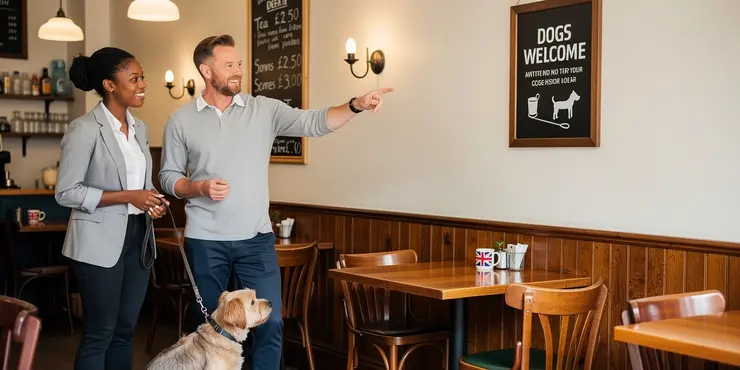
Not every place welcomes dogs, so always check the rules first. In the UK, many cafes and shops are dog-friendly, but some may only allow assistance dogs. On public transport, follow the operator’s guidance and keep your dog under control.
Keep your dog close, avoid letting them greet strangers unless invited, and do not allow them to block walkways or seats. Being respectful makes outings more pleasant for everyone. It also helps build a good reputation for dogs in public spaces.
Frequently Asked Questions
Preparing a dog before bringing it into shops cafes public transport means teaching calm, safe, and polite behavior so the dog can cope with busy, unpredictable environments. It is important because it reduces stress, prevents disruptions, improves safety, and helps the dog and owner have a better experience in public places.
Training for preparing a dog before bringing it into shops cafes public transport should begin as early as possible, ideally during puppyhood or as soon as you get the dog. Early, consistent practice makes it easier to build confidence, impulse control, and good manners before visiting busy public spaces.
The basic obedience skills needed for preparing a dog before bringing it into shops cafes public transport include sit, stay, down, come, leave it, and walking calmly on a loose leash. These skills help the dog remain under control in crowded or distracting settings.
To socialise a dog for preparing a dog before bringing it into shops cafes public transport, gradually expose the dog to different people, sounds, surfaces, vehicles, and environments in a positive way. Start at low intensity, reward calm behavior, and increase difficulty only when the dog is comfortable.
Before entering shops as part of preparing a dog before bringing it into shops cafes public transport, the dog should be able to walk calmly on leash, ignore distractions, refrain from jumping or sniffing merchandise, and settle quietly at your side. Good manners and self-control are essential in retail environments.
Before visiting cafes as part of preparing a dog before bringing it into shops cafes public transport, the dog should be comfortable lying quietly under a table or beside a chair, not begging for food, and remaining calm around strangers, smells, and noises. The dog should also be able to relax for longer periods.
Before using public transport as part of preparing a dog before bringing it into shops cafes public transport, the dog should tolerate crowds, vibrations, loud sounds, sudden movement, and close proximity to other passengers. The dog should stay settled, avoid blocking walkways, and remain responsive to the handler.
A dog is ready for preparing a dog before bringing it into shops cafes public transport when it can stay calm in mildly distracting settings, follows basic cues reliably, and recovers quickly from surprises. If the dog is easily frightened, reactive, or overexcited, more training is needed before going into public places.
Useful equipment for preparing a dog before bringing it into shops cafes public transport includes a secure leash, well-fitted harness or collar, treat pouch, high-value rewards, waste bags, and sometimes a muzzle if appropriate and properly trained. The goal is to keep the dog safe, comfortable, and under control.
To help a nervous dog with preparing a dog before bringing it into shops cafes public transport, use gradual exposure, positive reinforcement, and short practice sessions in quiet areas first. Avoid forcing the dog into overwhelming situations, and let the dog retreat or rest when needed.
Common mistakes in preparing a dog before bringing it into shops cafes public transport include moving too quickly into crowded places, skipping basic training, rewarding anxious behavior unintentionally, and assuming the dog will naturally behave well. Another mistake is ignoring local rules about pets in public spaces.
The time needed for preparing a dog before bringing it into shops cafes public transport varies by age, temperament, and past experiences. Some dogs learn quickly in a few weeks, while others need months of gradual practice and confidence-building before they are ready for busy public settings.
Yes, a dog should be up to date on vaccinations and parasite prevention before preparing a dog before bringing it into shops cafes public transport, especially if it will be around other animals or high-traffic areas. This helps protect the dog and reduces health risks in public spaces.
To train a dog to stay calm during waits as part of preparing a dog before bringing it into shops cafes public transport, practice settle exercises, mat work, and short periods of stillness with rewards for relaxed behavior. Gradually increase the length of waiting time and the level of distraction.
Signs of stress during preparing a dog before bringing it into shops cafes public transport can include panting, pacing, whining, trembling, excessive barking, tucked tail, avoidance, yawning, lip licking, or freezing. If these signs appear, reduce the difficulty and give the dog a break.
To teach polite leash behavior for preparing a dog before bringing it into shops cafes public transport, reward the dog for walking beside you with a loose leash and stop moving when the leash tightens. Consistent practice in low-distraction areas helps the dog learn to stay near you calmly.
Impulse control is crucial in preparing a dog before bringing it into shops cafes public transport because the dog must resist chasing smells, greeting everyone, grabbing food, or reacting to noise. Exercises like leave it, wait, and settle build the self-control needed for public access.
For noise exposure in preparing a dog before bringing it into shops cafes public transport, introduce sounds such as traffic, door chimes, cups clinking, and train or bus noises at low volume or from a distance. Pair each sound with treats and increase intensity only when the dog stays relaxed.
You should avoid public outings while preparing a dog before bringing it into shops cafes public transport if the dog is sick, injured, highly anxious, reactive, or unable to follow basic cues reliably. It is better to train more at home or in controlled environments before attempting busy public places.
The safest way to start real-world practice for preparing a dog before bringing it into shops cafes public transport is to begin in quiet, low-traffic places with short visits and lots of rewards. Gradually increase the number of people, sounds, and distractions only after the dog remains calm and responsive.

Ergsy Search Results
This website offers general information and is not a substitute for professional advice.
Always seek guidance from qualified professionals.
If you have any medical concerns or need urgent help, contact a healthcare professional or emergency services immediately.
Some of this content was generated with AI assistance. We've done our best to keep it accurate, helpful, and human-friendly.
- Ergsy carefully checks the information in the videos we provide here.
- Videos shown by Youtube after a video has completed, have NOT been reviewed by ERGSY.
- To view, click the arrow in centre of video.
- Most of the videos you find here will have subtitles and/or closed captions available.
- You may need to turn these on, and choose your preferred language.
- Go to the video you'd like to watch.
- If closed captions (CC) are available, settings will be visible on the bottom right of the video player.
- To turn on Captions, click settings.
- To turn off Captions, click settings again.