
Get Answers
Understanding Shingles
Shingles, also known as herpes zoster, is a viral infection that results in a painful rash. It is caused by the varicella-zoster virus, the same virus responsible for chickenpox. Even after recovering from chickenpox, the virus remains dormant in the body and can reactivate years later, causing shingles. Early diagnosis and treatment are crucial to managing the symptoms and preventing complications.
Recognising the Symptoms
Shingles typically begins with pain, itching, or tingling in a specific area, usually on one side of the body. Within a few days, a red rash appears, developing into small blisters filled with fluid. The rash commonly occurs on the torso, but it can also affect the face, neck, or eyes. Other symptoms may include fever, headache, and general feelings of being unwell. Recognising these symptoms early is essential for timely diagnosis and treatment.
The Diagnostic Process
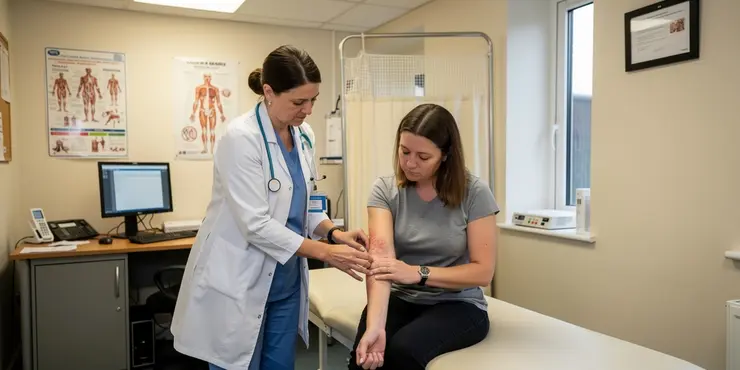
Diagnosing shingles in the UK usually involves a clinical evaluation by a healthcare professional, often a General Practitioner (GP). The GP will inquire about the patient’s symptoms and medical history and will examine the rash. The characteristic appearance of the rash and the pattern of pain often suffice for diagnosis. However, the GP might consider additional tests if the diagnosis is unclear or if complications are suspected.
Laboratory Tests
In some cases, laboratory tests are administered to confirm the diagnosis. The most common test is a polymerase chain reaction (PCR) test, which detects viral DNA in a sample taken from the rash's blisters. A less common alternative is examining a sample under a microscope for signs of the virus. Blood tests can also be performed to detect the body's immune response to the virus, although these are less definitive than direct testing of the rash.
Complications and Further Assessment
In certain situations, a more thorough assessment may be necessary. For instance, shingles can sometimes affect the eye (ophthalmic shingles), leading to complications that require an examination by an eye specialist. Additionally, especially in older adults or individuals with weakened immune systems, shingles can lead to complications like postherpetic neuralgia, a condition characterised by prolonged pain even after the rash has healed.
Next Steps After Diagnosis
Once diagnosed, timely medical treatment is crucial. The primary treatment for shingles is antiviral medication, which can help reduce the severity and duration of the symptoms. Pain management is also an important aspect of treatment, often involving over-the-counter painkillers or prescribed medications for more severe pain. It is advised that patients diagnosed with shingles should follow their healthcare provider's recommendations closely and attend any follow-up appointments to monitor their condition.
Understanding Shingles
Shingles is a sickness that gives you a sore rash. It comes from a virus that also causes chickenpox. Even after you feel better from chickenpox, the virus stays hidden in your body. It can "wake up" years later and cause shingles. It is important to see a doctor early to make sure you get better and avoid more problems.
Recognising the Symptoms
At first, shingles might make you feel pain, itching, or a tingling feeling on one side of your body. A few days later, a red rash comes out, which turns into small blisters filled with liquid. The rash often shows up on your tummy or back but can be on your face, neck, or eyes. You might also get a fever, headache, and feel generally unwell. It's key to notice these signs early so you can see a doctor quickly.
The Diagnostic Process
In the UK, to check if you have shingles, you need to see a doctor. The doctor will ask about how you feel and check your rash. Usually, the look of the rash and where it hurts can show if it's shingles. Sometimes, the doctor might need more tests if they are not sure or think there might be other issues.
Laboratory Tests
Sometimes, labs do tests to make sure it's shingles. The main test is called PCR, which looks for the virus in the blisters. Another test, not used as much, looks at the rash under a microscope. Blood tests can also be done to see how your body fights the virus, but these are not as reliable as rash tests.
Complications and Further Assessment
Shingles can have other issues. For example, if it affects your eye, you might need to see an eye doctor. Older people or those not feeling very strong might get a problem called postherpetic neuralgia. This is when the pain stays even after the rash goes away.
Next Steps After Diagnosis
After finding out you have shingles, getting treatment fast is important. The main treatment is medicine that fights the virus, which helps you feel better sooner. Managing pain is also important. You might take simple painkillers or get stronger medicines if the pain is very bad. Follow your doctor’s advice and go to check-ups to make sure you are healing well.
Frequently Asked Questions
Shingles diagnosis is the process a clinician uses to identify shingles, usually by reviewing the rash pattern, asking about symptoms, and examining the skin. In many cases, shingles diagnosis is made based on the appearance of a painful, one-sided blistering rash.
Symptoms that may lead to shingles diagnosis include burning, tingling, or pain on one side of the body followed by a rash with blisters. Fever, headache, or sensitivity to touch can also occur.
Shingles diagnosis is often confirmed through a physical exam and medical history. If the rash is unusual, a clinician may order a laboratory test such as a swab from a blister to confirm the infection.
Shingles diagnosis is more difficult without a rash because the skin eruption is a major clue. A clinician may still suspect shingles diagnosis if there is severe localized pain, but other conditions must be considered.
Tests used in shingles diagnosis may include a PCR test on blister fluid or a skin swab, especially when the diagnosis is uncertain. Blood tests are less commonly helpful for diagnosing an active shingles outbreak.
Shingles diagnosis based on symptoms and rash appearance is often accurate when the presentation is typical. However, if the rash is mild, widespread, or atypical, laboratory testing can improve diagnostic accuracy.
Anyone with a painful, blistering rash on one side of the body should seek shingles diagnosis promptly, especially older adults, pregnant people, or those with weakened immune systems. Early evaluation can help reduce complications.
Shingles diagnosis should happen as soon as symptoms or rash appear, ideally within the first few days. Early diagnosis is important because antiviral treatment works best when started early.
Several conditions can be confused with shingles diagnosis, including herpes simplex, contact dermatitis, insect bites, impetigo, and eczema. Pain without rash can also resemble nerve pain from other causes.
Yes, a telehealth visit can sometimes be used for shingles diagnosis if the rash can be clearly shown in photos or video. In-person evaluation may still be needed if the diagnosis is uncertain or testing is required.
During shingles diagnosis, it helps to show clear images or a close look at the rash, including its location, blistering, and any spread. The clinician may also ask about pain, itching, fever, and when symptoms began.
Shingles diagnosis is different from chickenpox diagnosis because shingles usually causes a localized, one-sided rash in someone who previously had chickenpox or varicella vaccination. Chickenpox typically causes a more widespread rash.
Yes, shingles diagnosis can be made in children, though it is less common than in adults. A clinician will look for the same typical symptoms, rash pattern, and any history of prior varicella infection or vaccination.
Yes, having had shingles before can mean another shingles diagnosis is possible, although recurrences are not common. A clinician may evaluate new symptoms carefully to confirm whether it is truly shingles again.
Pain is a major clue in shingles diagnosis because it often appears before the rash and may be severe, burning, or stabbing. The pain usually follows a nerve distribution on one side of the body.
Yes, shingles diagnosis can be made if the rash is on the face, and facial involvement needs prompt medical attention. Shingles near the eye can be especially serious and may require urgent care.
Helpful information for shingles diagnosis includes when symptoms started, where the pain or rash is located, whether it is on one side only, and whether there is fever or exposure to varicella. Photos can also be useful.
Shingles diagnosis helps determine whether antiviral medicine, pain control, or further evaluation is needed. Early shingles diagnosis can make treatment more effective and may reduce the risk of complications.
Emergency care should be sought after a shingles diagnosis if there is eye involvement, facial weakness, confusion, severe headache, trouble breathing, or a rapidly worsening rash. These signs may indicate complications.
Yes, shingles diagnosis can be missed if the rash is mild, small, or mistaken for another skin condition. If localized nerve pain and a new rash appear together, medical evaluation is important.

Ergsy Search Results
This website offers general information and is not a substitute for professional advice.
Always seek guidance from qualified professionals.
If you have any medical concerns or need urgent help, contact a healthcare professional or emergency services immediately.
Some of this content was generated with AI assistance. We've done our best to keep it accurate, helpful, and human-friendly.
- Ergsy carefully checks the information in the videos we provide here.
- Videos shown by Youtube after a video has completed, have NOT been reviewed by ERGSY.
- To view, click the arrow in centre of video.
- Most of the videos you find here will have subtitles and/or closed captions available.
- You may need to turn these on, and choose your preferred language.
- Go to the video you'd like to watch.
- If closed captions (CC) are available, settings will be visible on the bottom right of the video player.
- To turn on Captions, click settings.
- To turn off Captions, click settings again.