
Get Answers
Understanding Scabies Symptoms
Scabies is a skin condition caused by tiny mites that burrow into the skin. People with scabies often experience intense itching, especially at night. A rash composed of small red bumps and blisters may develop, often in skin folds or between fingers.
If you notice these symptoms, it's important to consult a healthcare professional. Early diagnosis can prevent scabies from spreading to others in close contact. Prompt treatment can also alleviate discomfort more quickly.
Initial Assessment by a GP
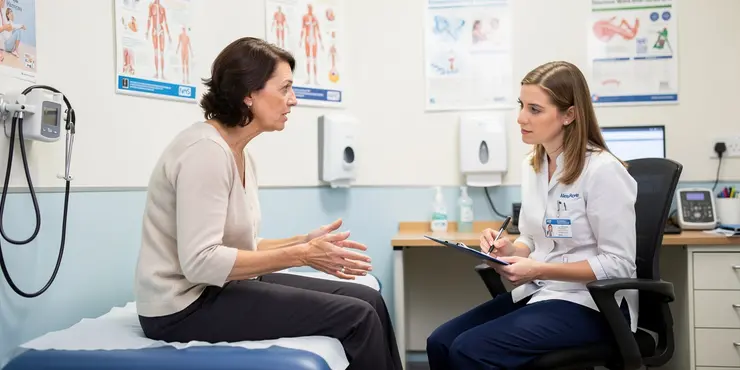
In the UK, your General Practitioner (GP) will typically conduct an initial assessment. They will ask about your symptoms and any recent contact with individuals who might have scabies. This helps them understand your risk and the potential for transmission.
The GP may perform a visual examination of your skin. They will look for signs of the scabies rash and burrow tracks. This examination is usually straightforward and non-invasive.
Confirmed Diagnosis Techniques
To confirm a scabies diagnosis, your GP might employ additional diagnostic techniques. One common method is the skin scraping test. During this test, a small sample of skin is collected and examined under a microscope.
Another method involves using dermoscopy, where a special magnifying tool helps the doctor inspect your skin more closely. These techniques can reveal the presence of mites, eggs, or mite faeces, confirming the diagnosis.
Handheld Magnifier Use
Some healthcare professionals in the UK may use a handheld magnifier. This tool allows them to spot the classic burrow patterns more easily. The magnifier aids in differentiating scabies from other skin conditions.
This simple, non-invasive tool can quickly assist in the identification process and is particularly useful when patients have a mild case. Early identification can lead to faster treatment and recovery.
Importance of Timely Diagnosis
Diagnosing scabies in a timely manner is crucial for effective treatment. It ensures the person affected receives appropriate medication, like topical creams or oral medication. Prompt treatment reduces discomfort and risk of spreading the mites to others.
Early diagnosis also allows for proper public health measures. It can help prevent outbreaks, especially in communal living environments such as care homes and schools.
Next Steps After Diagnosis
Once scabies is diagnosed, your GP will provide a treatment plan. You will need to follow instructions carefully to ensure the mites and their eggs are eradicated. This often involves treating all household members simultaneously.
Your GP may recommend washing clothing and bedding at high temperatures. This helps to kill any remaining mites. Staying informed and proactive is key to managing and overcoming scabies effectively.
Frequently Asked Questions
Scabies is a skin condition caused by an infestation of the human itch mite (Sarcoptes scabiei).
Scabies is diagnosed by a healthcare professional through a physical examination of the skin and sometimes confirmed by identifying mites, eggs, or fecal matter under a microscope.
Common symptoms include intense itching, especially at night, and a pimple-like skin rash at the site of the mite burrows.
A dermatologist or a general healthcare provider can diagnose scabies.
A skin scraping test involves taking a sample of skin from the affected area to be examined under a microscope for mites, eggs, or scabies fecal matter.
Yes, experienced healthcare providers can often diagnose scabies based on the appearance and distribution of the rash and burrows.
The diagnosis is usually clinical, but a microscope can confirm scabies by identifying mites, eggs, or scybala (mite feces) from skin scrapings.
The diagnosis can often be made during a single appointment following a physical examination and possible skin scraping.
Common areas include the webs of fingers, wrists, elbows, armpits, waist, buttocks, and genitalia.
If you suspect you have scabies, contact a healthcare provider for an evaluation and diagnosis.
Yes, scabies can be confused with other skin conditions like eczema or dermatitis because of similar itching and rash symptoms.
It's important to get a confirmed diagnosis to ensure correct treatment, as other skin conditions may require different management.
No, there is no blood test for diagnosing scabies; diagnosis is made through a physical exam and skin scraping.
While visualization with a microscope confirms the diagnosis, often the pattern of the rash and burrows allows for diagnosis without one.
No, swab testing is not used; diagnosis is based on clinical examination and skin scraping.
No, there are no over-the-counter tests for scabies; a healthcare professional must perform the diagnosis.
Dermoscopy is a tool that may be used by some healthcare providers to magnify the skin and help identify scabies infection features.
While itching is a common symptom and a clue, it is not definitive; a medical evaluation is needed for diagnosis.
It is not recommended to self-diagnose scabies. A professional medical diagnosis is essential for proper treatment.
Diagnosis in children follows the same methods as adults: through a clinical examination and potential microscope confirmation.

Ergsy Search Results
This website offers general information and is not a substitute for professional advice.
Always seek guidance from qualified professionals.
If you have any medical concerns or need urgent help, contact a healthcare professional or emergency services immediately.
Some of this content was generated with AI assistance. We've done our best to keep it accurate, helpful, and human-friendly.
- Ergsy carefully checks the information in the videos we provide here.
- Videos shown by Youtube after a video has completed, have NOT been reviewed by ERGSY.
- To view, click the arrow in centre of video.
- Most of the videos you find here will have subtitles and/or closed captions available.
- You may need to turn these on, and choose your preferred language.
- Go to the video you'd like to watch.
- If closed captions (CC) are available, settings will be visible on the bottom right of the video player.
- To turn on Captions, click settings.
- To turn off Captions, click settings again.