
Get Answers
Introduction
Psoriasis is a chronic skin condition that affects many individuals in the UK and around the world. Diagnosing psoriasis involves a combination of clinical assessments and diagnostic tests to differentiate it from other similar skin conditions. Prompt diagnosis is essential for effective management and treatment of symptoms.
Initial Assessment
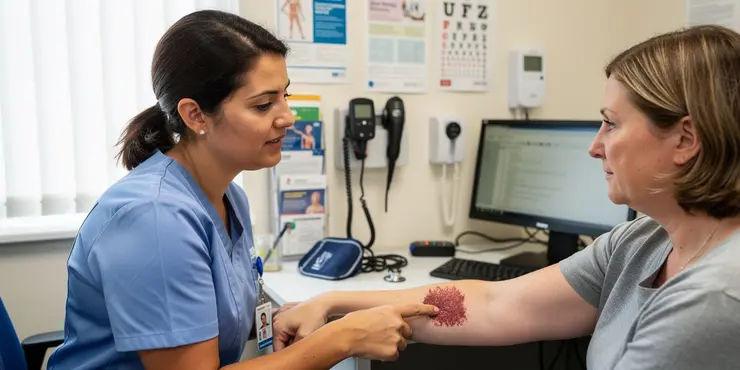
The first step in diagnosing psoriasis generally begins with a visit to a General Practitioner (GP). During the initial assessment, the GP will inquire about the patient’s medical history, family history of psoriasis, and the symptoms experienced. The doctor will ask questions regarding the onset of symptoms, any triggers noticed by the patient, and any medications being taken that might influence skin conditions. A thorough physical examination of the skin, scalp, and nails is then conducted to look for signs characteristic of psoriasis, such as red, scaly patches.
Clinical Examination
In a clinical examination, the GP will examine the affected skin areas to identify the hallmark features of psoriasis—these include thickened areas of skin covered with silvery-white scales, red patches that can vary in size, and other typical symptoms like itching and discomfort. Psoriasis can also impact the nails, causing pitting or discoloration. The GP may check for joint tenderness or swelling, indicating a possibility of psoriatic arthritis, a related condition. Based on this examination, a tentative diagnosis of psoriasis can often be made.
Referral to a Specialist
In some cases, the GP may refer the patient to a dermatologist for further evaluation, particularly if the diagnosis is uncertain or if the psoriasis is severe. A dermatologist specializes in skin conditions and can provide a more detailed assessment. They may request additional tests or diagnostic procedures to confirm the diagnosis or rule out other skin disorders that mimic psoriasis.
Skin Biopsy
One definitive method of diagnosing psoriasis is through a skin biopsy. A small sample of skin is removed under local anesthesia and examined under a microscope. This procedure can help confirm psoriasis by showing changes in the skin characteristic of this condition, such as thick subepidermal plaques. While not always necessary, a biopsy can be instrumental in challenging cases or atypical presentations.
Conclusion
Diagnosing psoriasis involves careful clinical evaluation and, when needed, specialized tests like a skin biopsy. Accurate diagnosis is crucial for effective management, as it enables the patient and healthcare provider to tailor treatment strategies appropriately. With the right diagnosis, patients can seek the best possible care to manage their condition and improve their quality of life.
Introduction
Psoriasis is a skin problem that many people have in the UK and all over the world. Diagnosing psoriasis means checking the skin and doing some tests to make sure it's not another skin condition. Finding out soon can help with managing and treating the symptoms better.
Initial Assessment
When someone thinks they have psoriasis, they usually go to see a doctor called a GP. The GP will ask about their health, if anyone in the family has psoriasis, and what skin problems they're having. The doctor will ask when the skin problems started, what makes them worse, and if any medicines are being taken that could affect the skin. The GP then carefully looks at the skin, scalp, and nails to see if there are signs of psoriasis, like red and scaly patches.
Clinical Examination
In the examination, the GP looks at the skin to find signs of psoriasis, like thick patches with shiny scales, red spots of different sizes, itching, and discomfort. Psoriasis can also affect the nails, making them look different. The GP may also check the joints to see if they hurt or are swollen, which can mean another problem called psoriatic arthritis. After looking at everything, the GP might think it's psoriasis.
Referral to a Specialist
Sometimes, the GP will send the patient to see a skin specialist called a dermatologist, especially if it's hard to tell if it's psoriasis or another skin problem, or if it's very bad. The dermatologist knows a lot about skin problems and can do more checks. They might ask for extra tests to be sure it's psoriasis and not something else.
Skin Biopsy
To be really sure, doctors can do a test called a skin biopsy. They take a tiny piece of skin and look at it under a microscope. This helps confirm psoriasis because it shows certain changes in the skin. A biopsy isn't always needed, but it helps a lot when it's hard to tell what the problem is.
Conclusion
Finding out if someone has psoriasis takes careful checking and sometimes special tests like a skin biopsy. Knowing for sure is really important because it helps the doctor and patient choose the best treatment. Getting the right help can make living with psoriasis easier and improve life for the patient.
Frequently Asked Questions
Psoriasis is a chronic autoimmune condition that causes rapid skin cell turnover, leading to thick, red, scaly patches on the skin.
The common symptoms include red patches of skin covered with silvery scales, dry and cracked skin that may bleed, itching or burning sensations, and thickened or ridged nails.
Psoriasis is diagnosed primarily through a physical examination by a dermatologist, who will look at the skin. In some cases, a skin biopsy may be performed to confirm the diagnosis.
A dermatologist specializes in skin conditions and is typically the healthcare provider who diagnoses and treats psoriasis.
Yes, a general practitioner can often recognize psoriasis, but they may refer you to a dermatologist for confirmation and specialized treatment.
A skin biopsy is not always necessary but may be performed if the diagnosis is uncertain or to rule out other conditions.
During a skin biopsy, a small piece of skin is removed under local anesthesia and examined under a microscope to determine if psoriasis or another skin condition is present.
There are no specific blood tests for diagnosing psoriasis, but blood tests may be conducted to rule out other conditions and check for psoriasis-related complications.
Yes, there are different types of psoriasis, such as plaque, guttate, inverse, and pustular, and a detailed examination may be needed to identify the specific type.
Imaging tests like X-rays are not used to diagnose psoriasis, but they can help in diagnosing psoriatic arthritis, which is a related condition affecting the joints.
Yes, family history is an important factor, as psoriasis can be hereditary. A doctor may inquire about any family history of psoriasis during diagnosis.
The time to diagnose psoriasis can vary. A visual exam can lead to an immediate diagnosis, while a biopsy might take a few days for results.
Yes, psoriasis can be mistaken for other skin conditions like eczema, dermatitis, or fungal infections, thus requiring professional diagnosis.
Lifestyle factors such as stress, alcohol consumption, and smoking don't influence diagnosis but can affect symptoms and severity.
If you suspect you have psoriasis, it is best to consult a healthcare provider or dermatologist for an accurate diagnosis and treatment plan.
Yes, psoriasis can occur in children and young adults, and they can be diagnosed similarly through a physical exam and, if necessary, a biopsy.
There are no specific tests to differentiate psoriasis types; diagnosis is usually based on appearance, location, and pattern of skin lesions.
Skin biopsies are generally low-risk procedures but can lead to minor bleeding, infection, or scarring at the biopsy site.
Seasonal changes don't affect the diagnosis, but symptoms may vary with seasons, being often more severe in colder months.
Yes, an accurate diagnosis can help determine the most effective treatment options tailored to the type and severity of psoriasis.
Psoriasis is a long-lasting skin problem. It makes the skin build up too fast. This causes thick, red, scaly spots on the skin.
Here are signs you might notice:
- Red spots on your skin with shiny, white bits
- Skin that feels dry and might have little cuts
- Skin that feels itchy or like it's burning
- Thick or bumpy nails
If you need help, you can try talking to someone or using a picture dictionary to learn more about these signs.
Doctors find out if someone has psoriasis by looking at their skin. A special skin doctor, called a dermatologist, usually does this. Sometimes, the doctor will take a tiny piece of skin, called a biopsy, to look at it more closely and make sure.
A dermatologist is a skin doctor. They help people with skin problems. They are the ones who find out if you have psoriasis and help make it better.
Yes, a family doctor can usually tell if you have psoriasis. But they might send you to a skin doctor to make sure and for special help.
Sometimes, doctors need to check a small piece of skin. This is called a skin biopsy. They do this when they are not sure what skin problem you have or to check for other skin issues.
In a skin biopsy, a doctor takes a tiny piece of skin. They use medicine to numb the area so it doesn't hurt. Then, they look at the skin piece with a special lens to check for psoriasis or other skin problems.
Blood tests can't tell if you have psoriasis. But doctors might do blood tests to make sure you don't have other health problems and to see if psoriasis has caused any other issues.
Yes, psoriasis can look different on different people. There are types like plaque, guttate, inverse, and pustular. A doctor might need to look closely to tell which one you have.
If you find this hard to understand, it might help to use pictures or videos about psoriasis. You can also ask someone you trust to explain it to you.
Doctors do not use X-rays to find out if someone has psoriasis. But, X-rays can help doctors find out if someone has psoriatic arthritis. This is a condition that makes your joints hurt.
Yes, psoriasis can run in families. This means you might get it because someone else in your family has it too. A doctor might ask if anyone in your family has had psoriasis to help them understand your case better.
Finding out if someone has psoriasis can take different amounts of time. A doctor might look at your skin and tell you right away if you have it. Sometimes, they need to do a small skin test called a biopsy, and that can take a few days to get the results back.
Yes, psoriasis can look like other skin problems. It can look like eczema, dermatitis, or a fungal infection. This is why a doctor needs to check it to know for sure.
Things like stress, drinking alcohol, and smoking don't change a diagnosis, but they can make symptoms better or worse.
If you think you might have psoriasis, it’s a good idea to talk to a doctor or skin specialist. They can tell you for sure if you have it and help you with treatment.
Yes, kids and young people can get psoriasis. Doctors can find it by looking at the skin and sometimes taking a tiny piece to look at closely.
There are no special tests to tell the different kinds of psoriasis. Doctors usually look at how the skin looks, where the spots are, and the pattern of the spots to figure it out.
If you have trouble reading, you can ask someone to help you, or use a tool that reads text out loud for you.
Taking a small piece of skin is usually safe. But sometimes, it can cause a little bleeding, infection, or a scar where they took the skin.
The change in seasons does not change if someone is diagnosed or not. But, when it gets colder, people might feel worse.
Yes, knowing what type of psoriasis you have can help doctors choose the best treatment for you. This can help you feel better.

Ergsy Search Results
This website offers general information and is not a substitute for professional advice.
Always seek guidance from qualified professionals.
If you have any medical concerns or need urgent help, contact a healthcare professional or emergency services immediately.
Some of this content was generated with AI assistance. We've done our best to keep it accurate, helpful, and human-friendly.
- Ergsy carefully checks the information in the videos we provide here.
- Videos shown by Youtube after a video has completed, have NOT been reviewed by ERGSY.
- To view, click the arrow in centre of video.
- Most of the videos you find here will have subtitles and/or closed captions available.
- You may need to turn these on, and choose your preferred language.
- Go to the video you'd like to watch.
- If closed captions (CC) are available, settings will be visible on the bottom right of the video player.
- To turn on Captions, click settings.
- To turn off Captions, click settings again.