
Get Answers
Understanding the IVF Cycle Timeline
For couples or individuals exploring in vitro fertilisation (IVF) as a means to conceive, understanding the timeline is crucial. IVF is a complex process that involves multiple stages, each with its own duration. It's essential to note that while some aspects of the procedure can be predicted, individual responses to treatment can vary.
Initial Consultation and Pre-treatment Preparation
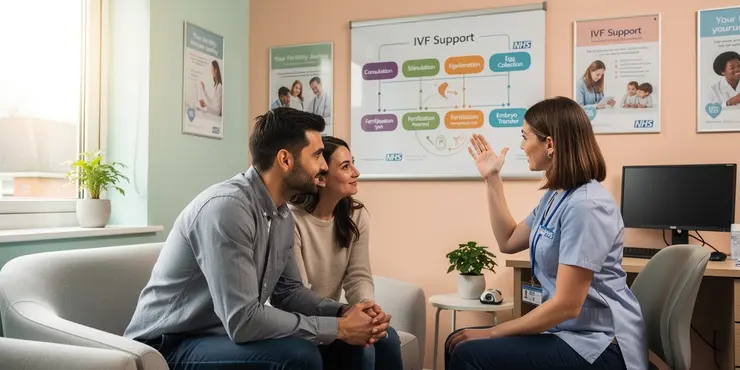
The first step in an IVF cycle is the initial consultation with a fertility specialist. This appointment involves assessing the individual's or couple's medical history, conducting preliminary tests, and discussing the treatment plan. This stage can take a few weeks to a couple of months, depending on the availability of appointments and the completion of necessary tests.
Ovarian Stimulation
Once pre-treatment assessments are complete, the IVF cycle begins with ovarian stimulation. This involves taking fertility medications, commonly for 8-14 days, to encourage the ovaries to produce multiple eggs. During this period, patients undergo frequent monitoring through blood tests and ultrasounds to assess the response to medication and adjust dosages if necessary.
Egg Retrieval
Once the eggs have matured, a minor surgical procedure called egg retrieval is scheduled. This typically occurs around 34-36 hours after the final trigger injection, which prepares the eggs for collection. The retrieval process itself is brief, often taking only 20-30 minutes, but patients generally spend a few hours at the clinic to recover from anaesthetic effects.
Fertilisation and Embryo Culture
After retrieval, eggs are fertilised with sperm in the laboratory. The fertilisation process can vary, depending on whether traditional IVF or Intracytoplasmic Sperm Injection (ICSI) is used. Following fertilisation, the embryos are cultured in the lab, usually for 3-5 days, while embryologists monitor their development to identify the best candidates for transfer.
Embryo Transfer
Embryo transfer is a simple procedure conducted a few days after fertilisation, typically around day 3 or 5 of embryo culture. The selected embryo(s) are placed into the uterus, guided by an ultrasound. The process is brief and usually does not require anaesthesia, although some patients may experience mild discomfort.
Two-Week Wait and Pregnancy Test
The final part of the cycle is the two-week wait, a period filled with anticipation as patients wait to take a pregnancy test. Approximately 9-14 days after the embryo transfer, a blood test is conducted to measure the hormone hCG, indicating whether implantation has occurred and if a pregnancy is underway.
Total Duration of an IVF Cycle
In total, an IVF cycle typically spans 4-6 weeks, from the start of ovarian stimulation to the pregnancy test. However, additional time should be factored in for the initial consultation and pre-treatment preparations, making the entire journey closer to 6-8 weeks. The exact duration may vary based on individual circumstances and treatment responses.
Understanding the IVF Cycle Timeline
If you want to have a baby using in vitro fertilisation (IVF), it's important to know how the process works. IVF has different steps, and each step takes time. Remember, not everyone will have the same experience, so times can vary for each person.
First Meeting and Getting Ready
The IVF journey starts with a first meeting with a doctor who helps with having babies. The doctor will look at medical history and do some tests to make a plan. This part can take a few weeks to a couple of months. It depends on how quickly you can see the doctor and finish the tests.
Getting the Ovaries Ready
After all the tests are done, the IVF cycle begins with getting the ovaries ready. Medicines are used for about 8 to 14 days to help the ovaries make more eggs. During this time, there will be frequent check-ups with blood tests and scans to make sure the medicines are working well.
Collecting the Eggs
Once the eggs are ready, a small operation called egg retrieval is done. This usually happens 34-36 hours after a final medicine is given. The operation is quick, taking about 20-30 minutes. Afterward, you will stay at the clinic for a few hours to rest.
Fertilising the Eggs and Growing Embryos
After the eggs are collected, they are mixed with sperm in a lab to create embryos. This can be done in different ways. The embryos are then watched for a few days, usually 3-5 days, to pick the best ones for the next step.
Transferring the Embryo
A few days after fertilisation, the best embryo is placed into the womb. This is a simple procedure done with the help of an ultrasound. It doesn’t take long and usually doesn’t hurt, but some people might feel a bit uncomfortable.
Waiting Two Weeks and Testing for Pregnancy
The last part is waiting for about two weeks to see if it worked. After 9-14 days, a blood test will tell if you are pregnant by checking for a hormone called hCG.
How Long Does an IVF Cycle Take?
From start to finish, an IVF cycle usually takes 4-6 weeks. However, you need to add more time for the first meeting and preparation. So, the whole process might take 6-8 weeks. The time can change based on each person’s needs and how they respond to treatment.
Frequently Asked Questions
An IVF cycle typically lasts about 4 to 6 weeks from the start of medication to the retrieval and transfer of embryos.
The initial steps, including ovarian stimulation, usually take about 10 to 14 days.
The egg retrieval process itself is a one-day procedure, but it typically occurs 34 to 36 hours after the trigger shot.
Embryo transfer usually occurs 3 to 5 days after egg retrieval.
Implantation can occur within a few days after the embryo is transferred back into the uterus.
The ovarian stimulation phase usually lasts about 8 to 14 days.
The luteal phase, after embryo transfer, lasts about 9 to 14 days until a pregnancy test can confirm results.
Preparations such as diagnostic testing and screenings can take several weeks before starting the IVF cycle.
Fertility medications are usually taken for about 10 to 12 days during the ovarian stimulation phase.
Recovery from egg retrieval usually takes a day or two.
From the start of the cycle to the pregnancy test is roughly 4 to 6 weeks.
Including preparation, the entire IVF process can take several months.
Often, a waiting period of one to two menstrual cycles is recommended between IVF attempts.
Doctor visits can be frequent, especially during the ovarian stimulation, averaging every few days for monitoring.
Several ultrasounds, approximately 3 to 5, are performed during the ovarian stimulation phase.
A frozen embryo transfer usually takes place in a different cycle, requiring a wait of several weeks to months.
Without delays, the total days from start to finish can be around 28 to 42 days.
Yes, IVF cycle lengths can vary depending on the protocol used, such as long, short, or antagonist protocols.
The egg retrieval is done in a single day, while sperm collection can be done the same day or in advance.
Genetic testing adds additional time, as embryos need to be frozen until results return, extending the cycle by several weeks.
An IVF cycle takes about 4 to 6 weeks. It starts with taking medicine and ends when doctors take out and put back the embryos.
The first steps take about 10 to 14 days. This part starts with making the ovaries produce more eggs.
The egg collection is a short procedure that takes one day. It usually happens 34 to 36 hours after you get the special medicine called a trigger shot.
The embryo is put back into the body 3 to 5 days after the eggs are taken out.
The tiny baby starts to stick to the mom's tummy a few days after it's put back in.
The time when doctors help eggs grow in the ovaries takes about 8 to 14 days.
After the embryo is put into the womb, the wait time is between 9 to 14 days. Then, you can take a pregnancy test to see if you are pregnant.
Before you start IVF, there are some tests and checks you need to do. These might take a few weeks.
People usually take medicine to help have a baby for about 10 to 12 days. This is during a time called the "ovarian stimulation phase."
After doctors collect the eggs, most people feel better in one or two days.
It takes about 4 to 6 weeks from when your cycle starts to when you can take a pregnancy test.
Getting ready for IVF can take a long time. It can take a few months from start to finish.
Doctors usually say to wait for one or two periods before trying IVF again.
When you are getting treatment to help your ovaries, you might need to see the doctor a lot. This could be every few days to make sure everything is going well.
Doctors use a special camera called an ultrasound to look inside the body. During the time when we help eggs grow, doctors will use this camera about 3 to 5 times.
You will need to wait a few weeks or months for a frozen embryo transfer. This happens in a different cycle.
From start to finish, it can take about 28 to 42 days.
Yes, the time it takes for IVF can be different. It depends on the steps your doctor uses, like long, short, or antagonist plans.
The doctor takes the eggs in one day. The sperm can be collected the same day or before.
Genetic testing takes extra time. Doctors freeze the embryos and wait for the test results. This makes the process last several more weeks.

Ergsy Search Results
This website offers general information and is not a substitute for professional advice.
Always seek guidance from qualified professionals.
If you have any medical concerns or need urgent help, contact a healthcare professional or emergency services immediately.
Some of this content was generated with AI assistance. We've done our best to keep it accurate, helpful, and human-friendly.
- Ergsy carefully checks the information in the videos we provide here.
- Videos shown by Youtube after a video has completed, have NOT been reviewed by ERGSY.
- To view, click the arrow in centre of video.
- Most of the videos you find here will have subtitles and/or closed captions available.
- You may need to turn these on, and choose your preferred language.
- Go to the video you'd like to watch.
- If closed captions (CC) are available, settings will be visible on the bottom right of the video player.
- To turn on Captions, click settings.
- To turn off Captions, click settings again.