
Get Answers
Why insurance matters for community sports groups
Insurance is a key part of keeping community sports groups safe and financially protected. In the UK, clubs, leagues and volunteer-run teams often rely on public liability insurance, personal accident cover and sometimes employer’s liability insurance.
It helps protect the group if someone is injured, property is damaged, or a claim is made against the club. Without suitable cover, a small incident can become a serious financial problem.
Insurance and safety compliance go hand in hand
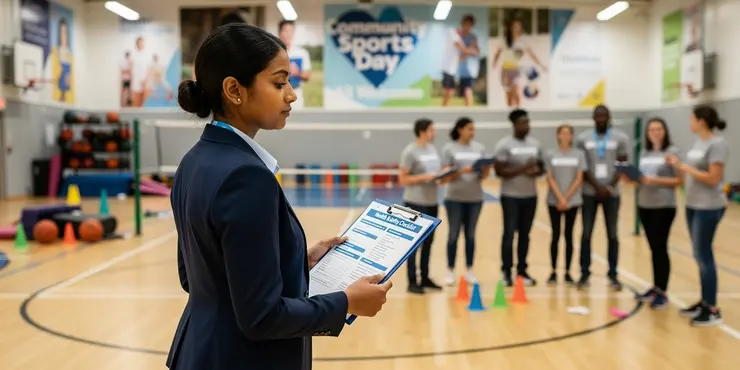
Insurance providers usually expect sports groups to follow sensible safety procedures. This includes carrying out risk assessments, keeping facilities and equipment in good condition, and making sure coaches or volunteers are properly trained.
If a club ignores basic safety duties, an insurer may reduce cover or refuse to pay a claim. That means safety compliance is not just good practice; it is often part of meeting insurance requirements.
What insurers may look for
Many insurers want to see clear evidence that the group manages risk properly. They may ask about first aid arrangements, safeguarding policies, emergency procedures and how accidents are recorded.
They may also expect clubs to follow sport-specific guidance from governing bodies. For example, a football, cricket or gymnastics club may need to show that it follows recognised standards for coaching, equipment use and participant welfare.
How compliance can affect premiums and cover
Good safety compliance can make insurance more affordable and easier to arrange. A club with clear policies, regular checks and trained volunteers is usually seen as a lower risk.
By contrast, poor compliance can lead to higher premiums or limited cover. In some cases, insurers may place conditions on the policy, such as requiring certain procedures before cover applies.
Practical steps for UK sports groups
Community sports groups should keep written records of risk assessments, incident reports and maintenance checks. These documents can help show that the club takes safety seriously and follows reasonable procedures.
It is also wise to review insurance at the same time as safety policies. If the club changes venue, adds new activities or works with children or vulnerable adults, the policy may need to be updated.
Conclusion
Insurance and safety compliance are closely linked for community sports groups in the UK. Insurance provides financial protection, while compliance helps reduce the chance of accidents and claims.
When a club manages risk well, it protects participants, volunteers and the organisation itself. That makes insurance more effective and supports a safer sporting environment for everyone.
Frequently Asked Questions
Community sports group safety compliance insurance is coverage designed to help community sports organizations manage risks tied to safety rules, legal compliance, participant injuries, and related liability exposures.
A community sports group needs community sports group safety compliance insurance to help protect against claims, financial losses, and regulatory issues that can arise from accidents, supervision failures, or noncompliance with safety requirements.
Community sports clubs, leagues, recreational teams, youth sports programs, and similar organizations may be eligible for community sports group safety compliance insurance, depending on the insurer's underwriting rules.
Community sports group safety compliance insurance typically covers liability claims, participant injury allegations, defense costs, and some costs related to compliance-related incidents, depending on the policy terms.
Community sports group safety compliance insurance usually does not cover intentional misconduct, excluded high-risk activities, fraud, known prior claims, or losses specifically excluded by the policy wording.
The cost of community sports group safety compliance insurance depends on factors such as the sport, group size, age of participants, claims history, safety procedures, coverage limits, and location.
Pricing for community sports group safety compliance insurance is affected by the type of sport, participant numbers, frequency of events, coach qualifications, venue conditions, risk controls, and prior insurance claims.
A group can often reduce the cost of community sports group safety compliance insurance by improving safety training, documenting procedures, maintaining equipment, using background checks, and keeping a clean claims history.
Common safety requirements linked to community sports group safety compliance insurance include incident reporting, first aid readiness, equipment inspections, supervision standards, emergency action plans, and participant consent forms.
When a covered incident occurs, the insured group typically reports the event to the insurer, provides documentation, and cooperates with the claims process so the insurer can evaluate coverage and handle defense or payment obligations.
A community sports group should choose community sports group safety compliance insurance limits based on participant risk, event size, contractual requirements, and the financial impact of a serious injury or liability claim.
Many community sports group safety compliance insurance policies can include volunteers and coaches as insured persons if they are properly named or covered under the policy definitions.
Yes, many policies for community sports group safety compliance insurance are written for youth sports programs, though insurers may require stricter supervision, screening, and safety controls.
Yes, community sports group safety compliance insurance often helps a group meet venue or landlord contract requirements by providing proof of liability coverage and additional insured options when needed.
To apply for community sports group safety compliance insurance, a group usually needs basic organizational details, participant counts, sport descriptions, safety policies, claims history, and event or venue information.
The time to secure community sports group safety compliance insurance varies, but straightforward applications can sometimes be issued quickly once the insurer reviews the group's risk profile and documents.
Yes, community sports group safety compliance insurance can often be customized with different limits, deductibles, endorsements, and optional coverages to match the group's specific activities and risks.
After a safety incident, a community sports group should provide care, document what happened, preserve evidence, notify the insurer promptly, and follow the insurer's reporting instructions under community sports group safety compliance insurance.
A community sports group should review community sports group safety compliance insurance at least once a year and whenever activities, membership, venues, staffing, or regulations change.
A broker can help a group compare community sports group safety compliance insurance options, identify coverage gaps, explain policy terms, and match the organization with an insurer that fits its risk profile.

Ergsy Search Results
This website offers general information and is not a substitute for professional advice.
Always seek guidance from qualified professionals.
If you have any medical concerns or need urgent help, contact a healthcare professional or emergency services immediately.
Some of this content was generated with AI assistance. We've done our best to keep it accurate, helpful, and human-friendly.
- Ergsy carefully checks the information in the videos we provide here.
- Videos shown by Youtube after a video has completed, have NOT been reviewed by ERGSY.
- To view, click the arrow in centre of video.
- Most of the videos you find here will have subtitles and/or closed captions available.
- You may need to turn these on, and choose your preferred language.
- Go to the video you'd like to watch.
- If closed captions (CC) are available, settings will be visible on the bottom right of the video player.
- To turn on Captions, click settings.
- To turn off Captions, click settings again.