
Get Answers
Why skin irritation happens
Skin irritation around a stoma is often caused by leakage from the pouch, friction from the flange, or an allergy to products used on the skin. The area around the stoma is delicate, so even small amounts of moisture can lead to soreness, redness, or itching.
It is important to act quickly if you notice a change. Mild irritation can usually be managed more easily than broken or weeping skin.
Get the fit right
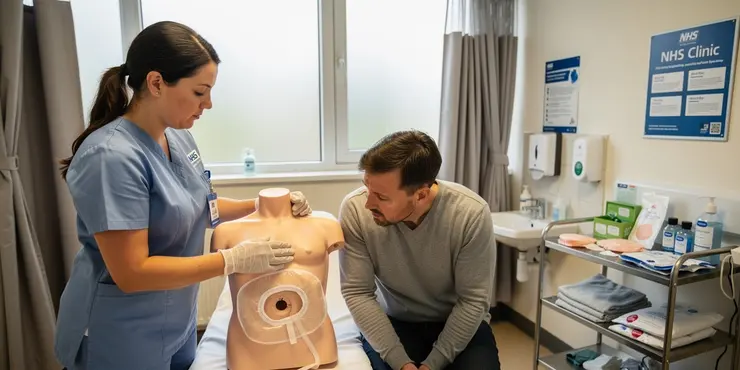
A well-fitting stoma bag is one of the best ways to protect the skin. The opening in the baseplate should fit closely around the stoma, with only a small gap to allow for movement.
If the hole is too big, output can get onto the skin. If it is too tight, it may rub and cause discomfort. A stoma nurse can help you check the fit and suggest the right pouching system.
Keep the skin clean and dry
Before applying a new bag, gently wash the skin around the stoma with warm water and a soft cloth. Avoid perfumed soaps, baby wipes, or oily products, as these can leave a residue and affect adhesion.
Pat the area dry completely before putting on the new pouch. A dry surface helps the bag stick properly and reduces the risk of leakage.
Use the right products
Barrier wipes, protective films, and stoma pastes can help shield the skin from moisture. These products may be especially useful if you have uneven skin, scars, or folds around the stoma.
However, not every product suits everyone. If a spray, wipe, or adhesive seems to make things worse, stop using it and ask a stoma nurse or pharmacist for advice.
Change the bag before problems start
Do not wait until the pouch is leaking or peeling off. Regular changes, based on your stoma nurse’s advice and your own routine, can help prevent skin contact with output.
Check the seal each time you empty the bag. If you notice itching, burning, or a smell, it may be time to change it sooner.
When to get help
If the skin stays sore, becomes broken, bleeds, or looks infected, speak to a stoma nurse, GP, or NHS 111 for advice. Ongoing irritation may mean the bag size or type needs to be changed.
You should also get help if you have repeated leaks, pain, or swelling around the stoma. Early support can stop a minor problem becoming a bigger one.
Frequently Asked Questions
Skin irritation stoma bag prevention refers to the steps used to protect the skin around a stoma from redness, soreness, itching, and breakdown. It is important because healthy peristomal skin helps the pouch seal properly, reduces leaks, and lowers the risk of infection and discomfort.
Skin irritation stoma bag prevention starts with a pouching system that fits the stoma closely without rubbing it. Measuring the stoma regularly and cutting the wafer opening to the right size helps prevent stool or urine from contacting the skin and reduces irritation.
A gentle skin care routine supports skin irritation stoma bag prevention by using warm water, avoiding harsh soaps or oily products, and drying the skin completely before applying the appliance. Clean, dry skin helps the adhesive stick and lowers the chance of irritation.
Skin barrier wipes, barrier sprays, and skin sealants can help skin irritation stoma bag prevention by creating a protective layer between the skin and the pouching system. These products should be used according to a clinician's guidance so they do not interfere with adhesion.
Changing a stoma bag on schedule helps skin irritation stoma bag prevention because worn adhesives can loosen and leak, exposing the skin to output. Regular changes before the seal fails reduce moisture and chemical irritation around the stoma.
Leakage control is central to skin irritation stoma bag prevention because even small leaks can quickly damage the skin. Using the correct fit, emptying the pouch when needed, and checking the seal often all help prevent output from reaching the skin.
Skin irritation stoma bag prevention may improve with a convex wafer when the stoma is flush, retracted, or difficult to seal. Convexity can help direct output into the pouch and reduce leakage, but it should be selected with professional advice to avoid pressure injury.
Adequate fluid intake and a balanced diet support skin irritation stoma bag prevention indirectly by helping output stay manageable and reducing skin exposure from frequent leaks or diarrhea. If output is very loose or frequent, a clinician or dietitian may suggest dietary changes.
Ostomy belts or support garments can help skin irritation stoma bag prevention by stabilizing the pouching system and reducing movement that breaks the seal. They should fit comfortably and not dig into the skin, because too much pressure can cause irritation.
Signs that skin irritation stoma bag prevention is not working include persistent redness, burning, itching, weeping skin, rash, pain, or a pouch that repeatedly leaks. These symptoms suggest the fit or skin care routine may need adjustment by a stoma nurse or clinician.
Skin irritation stoma bag prevention helps with itching by keeping output away from the skin and minimizing adhesive trauma. If itching continues, it may be caused by leakage, allergy, fungal infection, or an ill-fitting appliance, all of which need assessment.
For skin irritation stoma bag prevention, avoid using alcohol, fragranced wipes, heavy creams, and scrubbing the skin. These can strip the skin barrier or prevent the pouch from sticking well, leading to more leakage and irritation.
Managing output consistency supports skin irritation stoma bag prevention because very liquid or frequent output is more likely to leak and irritate the skin. Depending on the stoma type, medications, diet changes, or hydration strategies may help improve output control.
If skin irritation stoma bag prevention fails and the skin is broken, the area should be assessed promptly by a stoma care nurse or healthcare professional. Broken skin may require a different pouching method, protective powders or pastes, and treatment for infection or allergy.
Yes, skin irritation stoma bag prevention can reduce the risk of fungal rash by keeping the skin dry, clean, and protected from leaks. Warm, moist areas around a stoma can encourage yeast growth, so persistent rash should be evaluated if it does not improve.
The skin should be checked every time the pouch is changed as part of skin irritation stoma bag prevention. Early checks make it easier to spot redness, swelling, or leaks before they become serious.
The best way to remove a pouch for skin irritation stoma bag prevention is to peel it off gently while supporting the skin and using adhesive remover if recommended. Slow removal reduces skin trauma and helps preserve the skin barrier.
Allergies can interfere with skin irritation stoma bag prevention if the skin reacts to adhesive, barrier products, or pouch materials. If a rash appears in the shape of the appliance or worsens after product use, a clinician may recommend alternative supplies.
A clinician should be contacted if skin irritation stoma bag prevention problems include severe pain, bleeding, spreading redness, fever, repeated leaks, or symptoms that do not improve within a few days. Early support can prevent complications and help find a better-fitting system.
Skin irritation stoma bag prevention can be personalized by matching the pouching system to the stoma type, location, output, and skin condition. A stoma nurse can recommend products and routines tailored to colostomy, ileostomy, or urostomy needs.

Ergsy Search Results
This website offers general information and is not a substitute for professional advice.
Always seek guidance from qualified professionals.
If you have any medical concerns or need urgent help, contact a healthcare professional or emergency services immediately.
Some of this content was generated with AI assistance. We've done our best to keep it accurate, helpful, and human-friendly.
- Ergsy carefully checks the information in the videos we provide here.
- Videos shown by Youtube after a video has completed, have NOT been reviewed by ERGSY.
- To view, click the arrow in centre of video.
- Most of the videos you find here will have subtitles and/or closed captions available.
- You may need to turn these on, and choose your preferred language.
- Go to the video you'd like to watch.
- If closed captions (CC) are available, settings will be visible on the bottom right of the video player.
- To turn on Captions, click settings.
- To turn off Captions, click settings again.