
Get Answers
Why snow and ice matter for solar panels
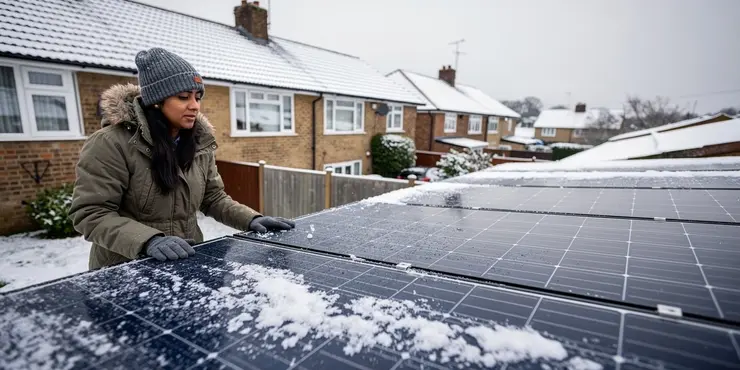
In the UK, snow and ice can affect solar panel performance, especially during colder spells in Scotland, northern England, Wales, and higher ground elsewhere. While panels are built to withstand winter weather, a layer of snow can block sunlight and temporarily reduce electricity generation.
Ice is usually less of a direct problem than snow, but freezing conditions can create risks around mounting systems, cables, and access for inspection. Maintenance requirements are designed to keep the system safe, efficient, and in good condition throughout winter.
What maintenance checks usually cover
Routine maintenance typically includes looking for visible snow build-up, signs of ice damage, and any movement in the panels or fixing points. Installers may also check for debris, cracked glass, or blocked drainage areas that could worsen winter conditions.
In many cases, the system does not need special intervention after light snowfall. Solar panels are often installed at an angle, which helps snow slide off naturally once temperatures rise or sunlight returns.
Safe ways to deal with snow
Maintenance guidance usually advises against climbing onto roofs to clear snow manually. Roofs can be slippery, and using sharp tools or heavy scraping equipment can damage the panel surface or invalidate a warranty.
For ground-mounted systems, a soft-bristled brush or long-handled snow rake may be used carefully if access is safe. Even then, the emphasis is on gentle removal only when it is practical and does not create a safety risk.
How installers and warranties approach winter conditions
Most manufacturers do not require owners to clear every snowfall immediately. Instead, maintenance terms focus on keeping the system structurally sound and free from damage caused by poor installation, ice loading, or neglected faults.
In the UK, installers may also advise checking that frames, fixings, and roof edges remain secure after heavy snow or frost. If panels have shifted, wiring appears exposed, or water ingress is suspected, a qualified solar technician should inspect the system.
Practical winter advice for homeowners
Homeowners are usually encouraged to monitor performance through their inverter or monitoring app. A sudden drop in output during snowy weather may be normal, but a prolonged decline after the thaw could point to a maintenance issue.
It is also sensible to keep gutters, roof areas, and nearby trees in good order, as falling snow, ice, or branches can affect the array. Good winter maintenance is mostly about observation, caution, and calling in professionals when needed.
Frequently Asked Questions
Solar panel maintenance snow and ice requirements for homeowners generally include safely removing excessive snow, avoiding damage to the panels, checking for ice buildup around mounting hardware, and following manufacturer guidance to prevent cracking, slipping hazards, or roof damage.
Solar panel maintenance snow and ice requirements should be checked after major snowstorms, during prolonged freezing periods, and whenever energy production drops noticeably. Regular visual inspections from the ground are often enough unless there is a clear safety or performance issue.
Safety steps in solar panel maintenance snow and ice requirements include never climbing onto an icy roof without proper training and equipment, using fall protection where required, switching off equipment if instructed by the manufacturer, and avoiding metal tools that can damage panels or wiring.
Yes, snow can often be removed under solar panel maintenance snow and ice requirements, but it should be done gently with a soft roof rake, foam squeegee, or manufacturer-approved tool. Never use sharp tools, salt, or hot water, since these can damage the panels.
Solar panel maintenance snow and ice requirements usually discourage de-icing chemicals unless the manufacturer explicitly approves them. Many chemicals can harm panel coatings, seals, wiring, roofing materials, or nearby landscaping.
Recommended tools for solar panel maintenance snow and ice requirements typically include a roof rake with a non-abrasive edge, a soft brush, a telescoping snow tool designed for solar panels, and protective gear for safe ground-level work.
Solar panel maintenance snow and ice requirements affect energy output because snow cover blocks sunlight and ice can reduce efficiency. Light snowfall may slide off panels as they warm, but heavy accumulation can significantly reduce production until cleared.
Heated systems can be part of solar panel maintenance snow and ice requirements if they are built into the installation or approved by the manufacturer. These systems should be installed by professionals and checked regularly for proper operation and electrical safety.
Solar panel maintenance snow and ice requirements include roof risks such as ice dams, falling snow, slipping hazards, and extra weight from accumulation. Maintenance should protect both the roof structure and the solar mounting system.
Yes, solar panel maintenance snow and ice requirements differ for ground-mounted systems because access is usually easier and roof fall risks are lower. However, panels still need snow cleared safely, and frames, wiring, and supports should be checked for ice-related stress.
Professional help should be used for solar panel maintenance snow and ice requirements when panels are on steep roofs, ice is hard to remove safely, electrical issues are suspected, or the system shows signs of damage from freezing or heavy snow.
Yes, solar panel maintenance snow and ice requirements can lead to damage if done incorrectly. Scratching the glass, loosening mounting hardware, forcing ice off the surface, or using ladders unsafely can all harm the system and create hazards.
Important inspection points in solar panel maintenance snow and ice requirements include panel glass, frame edges, mounting rails, wiring connections, inverter readings, and signs of ice buildup or roof deformation.
Yes, manufacturer instructions are a key part of solar panel maintenance snow and ice requirements. They often specify approved cleaning methods, temperature limits, snow removal tools, and any warranty-related restrictions.
Solar panel maintenance snow and ice requirements can affect warranties because using improper tools, chemicals, or unsafe methods may void coverage. Following the manufacturer’s winter maintenance guidance helps protect warranty eligibility.
Recommended personal protective equipment for solar panel maintenance snow and ice requirements includes slip-resistant footwear, insulated gloves, eye protection, and fall protection gear when work must be done on or near a roof.
Yes, solar panel maintenance snow and ice requirements often include inverter checks because winter conditions can expose performance issues, moisture intrusion, or fault messages. Monitoring system output helps identify snow-related problems early.
Ice buildup in solar panel maintenance snow and ice requirements should be handled cautiously by waiting for safer conditions when possible, using approved removal methods, and avoiding force that could crack panels or damage seals. Persistent ice may require a professional assessment.
Best practices for solar panel maintenance snow and ice requirements after a storm include inspecting from a safe location, clearing accessible snow with approved tools, checking for broken mounts or wiring, and monitoring production for any drop that suggests hidden damage.
Property owners can create a solar panel maintenance snow and ice requirements plan by documenting approved snow-removal methods, setting inspection intervals, identifying when to call a professional, and keeping manufacturer manuals and emergency contacts available before winter begins.

Ergsy Search Results
This website offers general information and is not a substitute for professional advice.
Always seek guidance from qualified professionals.
If you have any medical concerns or need urgent help, contact a healthcare professional or emergency services immediately.
Some of this content was generated with AI assistance. We've done our best to keep it accurate, helpful, and human-friendly.
- Ergsy carefully checks the information in the videos we provide here.
- Videos shown by Youtube after a video has completed, have NOT been reviewed by ERGSY.
- To view, click the arrow in centre of video.
- Most of the videos you find here will have subtitles and/or closed captions available.
- You may need to turn these on, and choose your preferred language.
- Go to the video you'd like to watch.
- If closed captions (CC) are available, settings will be visible on the bottom right of the video player.
- To turn on Captions, click settings.
- To turn off Captions, click settings again.