
Speak To An Expert
Get clear, personalised advice for your situation.
Jot down a few questions to make the most of your conversation.
What are lice?
Lice are tiny insects that live on the human body and feed on blood. The most common type in the UK is head lice, which live in hair and on the scalp. They are small, grey-brown, and can be hard to spot.
Head lice do not jump or fly. They move from person to person by crawling, usually through close contact or by sharing items like hats and brushes.
How do lice feed?
Lice feed by biting the skin and sucking blood. They use special mouth parts to pierce the skin and draw blood from very small vessels close to the surface. This feeding is what allows them to survive and lay eggs.
A louse will feed several times a day. Each feeding only lasts a short time, but it is repeated often because lice need regular blood meals to stay alive.
When a louse feeds, it also releases saliva into the skin. This saliva can irritate the scalp and cause itching in some people. Not everyone reacts in the same way, so lice may be present even if there is little or no itching.
Why do lice cause itching?
The itchiness is not caused by the bite alone. It is usually the body’s reaction to the saliva left behind when the louse feeds. For many people, this irritation leads to scratching, especially behind the ears and at the back of the neck.
It can take time for itching to appear after the first infestation. Some people do not notice any symptoms at first, which is why lice can spread before they are detected.
Where do lice live while feeding?
Head lice stay close to the scalp because they need warmth and regular access to blood. They are often found near the hairline, around the ears, and at the nape of the neck. These are the areas where they tend to feed most often.
Unlike some other pests, head lice do not live on furniture or bedding for long. They depend on being on a human host, so they quickly weaken if they cannot feed.
How can you spot an infestation?
The best sign of lice is often finding live lice or nits, which are the eggs laid in the hair. Nits are usually attached firmly to individual hairs and can be mistaken for dandruff at first glance. They do not come off as easily as flakes of skin.
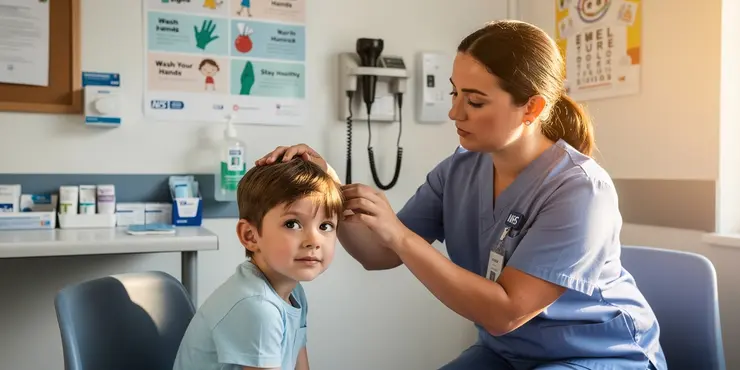
A fine-toothed lice comb can help check for live lice. Regular checking is especially useful for children, as head lice are common in schools and can spread easily through close head-to-head contact.
What helps stop them feeding?
Treatments for head lice aim to kill the lice or make it harder for them to survive. Wet combing and pharmacy treatments are commonly used in the UK. Following the instructions carefully helps improve the chances of clearing them.
Checking everyone in the household and treating only those with live lice can help prevent reinfestation. Washing combs, brushes, hats, and bedding as advised can also reduce the chance of lice continuing to feed and spread.
Frequently Asked Questions
Lice feeding is the way head lice obtain nourishment by piercing the scalp and feeding on small amounts of blood several times a day.
Lice feeding usually happens multiple times per day, because lice need frequent blood meals to survive and grow.
Lice feeding can cause itching because saliva from the lice may irritate the scalp and trigger an allergic skin reaction.
Lice feeding marks may appear as tiny red bumps, small irritated spots, or scratch marks from repeated itching.
Lice feeding is not known to spread disease in most cases, but it can cause discomfort, irritation, and secondary skin infections from scratching.
Lice feeding can occur at any age, but head lice are most commonly found in school-aged children because close contact makes transmission easier.
Lice feeding differs from flea feeding because lice live on the scalp or body of a host and feed repeatedly there, while fleas typically jump on and off hosts.
Yes, lice feeding can happen without obvious symptoms at first, especially when an infestation is new or the person has not yet developed much scalp irritation.
Lice feeding is carried out by live lice, while nits are eggs attached to hair shafts; eggs do not feed until they hatch into nymphs and later adults.
Lice feeding depends on access to blood vessels near the scalp surface, where the lice use specialized mouthparts to pierce the skin and draw blood.
Lice feeding can disturb sleep because itching often becomes more noticeable at night, making it harder to rest comfortably.
Lice feeding can be reduced quickly by treating the infestation with appropriate lice treatments and removing live lice and nits from the hair.
Hair washing alone does not reliably stop lice feeding, because lice cling tightly to hair and can survive normal washing.
Yes, lice feeding can occur on clean hair as well as dirty hair, because lice care more about finding a human host than hair cleanliness.
Lice feeding supports infestation growth by giving lice the nutrients they need to survive, mature, reproduce, and lay more eggs.
If lice feeding is suspected, check the scalp carefully for live lice and nits, use an approved treatment if needed, and wash bedding and combs.
Some lice species feed on other body areas, but head lice feeding is mainly focused on the scalp and nearby hair-bearing skin.
Lice feeding can continue for weeks or even longer without treatment, as long as the lice remain on a human host and keep reproducing.
Lice feeding is harder to notice early because a small number of lice may cause only mild or no itching until the body reacts to their bites.
Lice feeding can be prevented by avoiding head-to-head contact, not sharing combs or hats, and checking for lice early so infestations are treated promptly.

Ergsy Search Results
This website offers general information and is not a substitute for professional advice.
Always seek guidance from qualified professionals.
If you have any medical concerns or need urgent help, contact a healthcare professional or emergency services immediately.
Some of this content was generated with AI assistance. We've done our best to keep it accurate, helpful, and human-friendly.
- Ergsy carefully checks the information in the videos we provide here.
- Videos shown by Youtube after a video has completed, have NOT been reviewed by ERGSY.
- To view, click the arrow in centre of video.
- Most of the videos you find here will have subtitles and/or closed captions available.
- You may need to turn these on, and choose your preferred language.
- Go to the video you'd like to watch.
- If closed captions (CC) are available, settings will be visible on the bottom right of the video player.
- To turn on Captions, click settings.
- To turn off Captions, click settings again.