
Get Answers
Checking for Financial Services Compensation Scheme (FSCS) Coverage
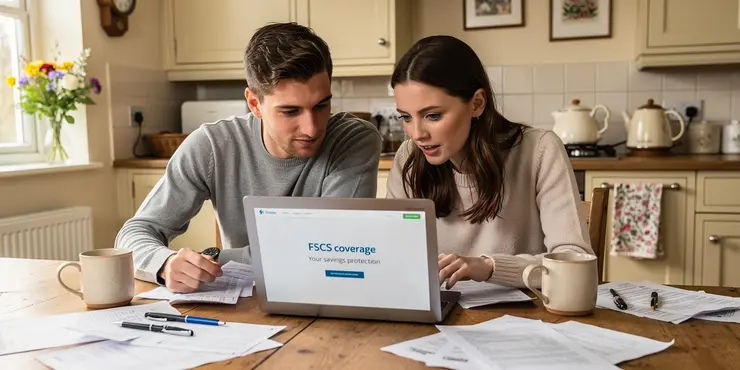
One of the first steps to ensure your bank is secure is to look for FSCS coverage. The FSCS is the UK's compensation fund of last resort. It protects consumers if banks, building societies, or credit unions fail.
You can verify if a bank is covered by the FSCS on their website. Most banks will display this information on their marketing materials. If you’re unsure, contact the bank directly or visit the FSCS website for confirmation.
Understanding Regulatory Bodies
The Prudential Regulation Authority (PRA) and the Financial Conduct Authority (FCA) regulate UK banks. PRA supervises financial stability, while FCA focuses on consumer protection.
To be considered secure, a bank must be authorised by both the PRA and FCA. You can find this information through the Financial Services Register online.
Verifying Online Security Measures
With rising cyber threats, online security measures are crucial. Look for banks that employ strong encryption and secure login processes. Features like two-factor authentication add an extra layer of security.
Secure banks will also regularly update their systems to combat new threats. Check for information on the bank’s website about their cybersecurity measures. Keeping your software up-to-date is a sign of a secure bank.
Reviewing the Bank’s Financial Health
A financially stable bank is less likely to fail. You can review credit ratings from agencies like Moody’s or Standard & Poor’s to assess a bank’s health.
High credit ratings usually indicate financial soundness. Information on these ratings is often available on the bank's website or the agency's sites.
Reading Customer Reviews and Ratings
Customer feedback offers insights into a bank’s reliability and service quality. Check online reviews and star ratings on financial comparison sites.
Consistent complaints about security or support could be red flags. However, balance this information with professional assessments for a comprehensive view.
Listening to Available Resources
If you’re still unsure, financial advisors can provide additional guidance. Forums and consumer protection agencies can also offer advice.
Utilise resources like newspapers and financial websites that provide updates on bank security. Staying informed helps ensure your bank is a secure choice.
Frequently Asked Questions
You can verify if a bank is FDIC insured by checking the FDIC's official website and using their BankFind tool or by looking for the FDIC insurance sign at the bank. You can also ask a bank representative directly.
FDIC insurance protects your deposits up to $250,000 per depositor, per insured bank, for each account ownership category, in case the bank fails.
You can verify that your credit union is insured through the National Credit Union Administration (NCUA) by checking for NCUA signage or using the NCUA's online tools to confirm insurance status.
While the FDIC is the primary insurer for banks, some private institutions might offer additional deposit insurance through private insurers, although this is less common.
Evaluate the bank’s online security protocols, such as encryption and two-factor authentication, check its financial health and ratings with agencies like Moody's or Standard & Poor's, and read customer reviews.
Common indicators include FDIC insurance, strong cybersecurity measures, consistent positive financial health ratings, and clear, transparent communication with customers.
Yes, online-only banks can be FDIC insured. You should confirm their insurance status on the FDIC website or through their financial disclosures.
If a bank is not FDIC insured, consider the risks of depositing your funds there. Non-insured banks may not provide the same level of protection for your deposits.
FDIC insurance covers checking accounts, savings accounts, money market deposit accounts, and certificates of deposit (CDs). It does not insure securities, mutual funds, or similar types of investments offered by banks.
Verify with your bank directly by inquiring about FDIC insurance or use the FDIC BankFind tool to confirm the bank's insured status.
The standard FDIC insurance amount is $250,000 per depositor, per insured bank, for each account ownership category.
Most banks in the United States are required to have FDIC insurance. However, some financial institutions may opt to remain uninsured, so it's important to confirm with the bank.
You can find a bank's health ratings through financial analysis companies like BauerFinancial, or look for reports issued by credit rating agencies such as Moody's or Standard & Poor's.
FDIC insurance only covers deposits in the United States, whether they are in U.S. dollars or foreign currencies, but the payout is in U.S. dollars.
Besides FDIC insurance, a secure bank should have robust cybersecurity practices, regular audits, a strong capital base, and a history of financial stability.
To effectively increase FDIC coverage, you can open accounts at multiple FDIC-insured banks or use different account ownership categories (individual, joint, retirement accounts, etc.).
Yes, joint accounts are insured up to $250,000 per co-owner if all owners have equal rights to withdraw funds. Each co-owner's share is insured separately.
In the event of a bank failure, the FDIC typically steps in to reimburse depositors up to the insured limits, either by transferring deposits to another insured institution or by issuing checks directly.
Federally chartered credit unions are insured by the National Credit Union Share Insurance Fund (NCUSIF), but state-chartered credit unions may have different insurance arrangements.
Your first step should be to confirm the bank's insurance status with the FDIC or NCUA and then review its financial health ratings and cybersecurity measures.

Ergsy Search Results
This website offers general information and is not a substitute for professional advice.
Always seek guidance from qualified professionals.
If you have any medical concerns or need urgent help, contact a healthcare professional or emergency services immediately.
Some of this content was generated with AI assistance. We've done our best to keep it accurate, helpful, and human-friendly.
- Ergsy carefully checks the information in the videos we provide here.
- Videos shown by Youtube after a video has completed, have NOT been reviewed by ERGSY.
- To view, click the arrow in centre of video.
- Most of the videos you find here will have subtitles and/or closed captions available.
- You may need to turn these on, and choose your preferred language.
- Go to the video you'd like to watch.
- If closed captions (CC) are available, settings will be visible on the bottom right of the video player.
- To turn on Captions, click settings.
- To turn off Captions, click settings again.