
Get Answers
What safety compliance checks are
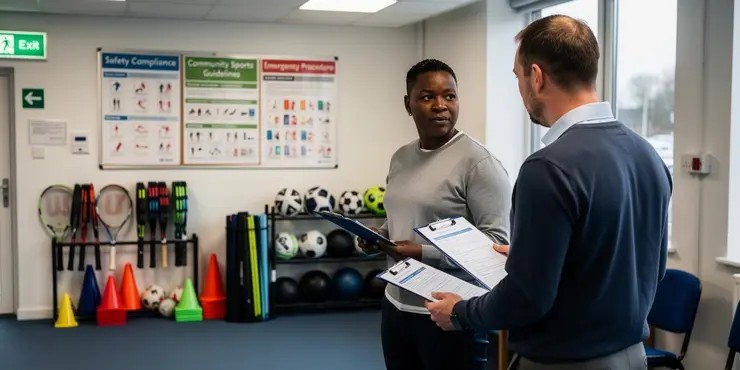
Community sports group safety compliance checks are the basic steps clubs take to make sure activities are run safely and legally. They help protect players, coaches, volunteers, spectators, and the wider public.
In the UK, these checks usually focus on risk management, safeguarding, equipment, premises, and insurance. The exact process depends on the sport, the venue, and whether the group works with children or vulnerable adults.
Who carries them out
Checks are often led by club committee members, a designated safety officer, or the head coach. Larger organisations may also use external assessors, governing body guidance, or local council requirements.
Volunteers may complete a checklist before sessions start, while some clubs arrange formal inspections at set intervals. If a venue is hired, the landlord or facility operator may also have responsibilities that need to be checked.
What they look at
A safety check normally begins with a risk assessment. This identifies hazards such as unsafe surfaces, poor lighting, broken equipment, traffic near the pitch, or weather-related risks.
It also covers first aid arrangements, emergency exits, fire safety, and whether people know what to do if someone is injured. For junior groups, safeguarding procedures and supervision ratios are usually part of the review too.
How the process works
Most clubs use a simple checklist before or during sessions. The person responsible walks around the site, notes any issues, and decides whether activities can go ahead as planned.
If a problem is found, the club may remove equipment, cordon off an area, or change the session. More serious concerns can lead to cancelling training until the issue is fixed.
Good practice also involves recording what was checked, what action was taken, and who was informed. This written record helps show the club has taken reasonable steps if an incident happens later.
Why regular checks matter
Safety compliance checks are not a one-off task. Conditions can change quickly because of weather, wear and tear, staffing changes, or new participants joining the group.
Regular checks help clubs stay compliant with insurer expectations, venue rules, and guidance from national sport governing bodies. They also build trust with members and parents by showing that safety is being taken seriously.
What clubs should keep in mind
Community sports groups do not need to make the process complicated, but they do need to make it consistent. A simple system that is used every time is usually better than a detailed form that is rarely completed.
Clubs should review their checks after accidents, near misses, or changes in activity. That way, safety procedures stay practical, up to date, and suitable for the way the group actually operates.
Frequently Asked Questions
Community sports group safety compliance checks are inspections and reviews that help confirm a sports group is following required safety rules, policies, and good practices to reduce risks for participants, volunteers, and spectators.
Community sports group safety compliance checks are important because they help prevent injuries, improve emergency readiness, protect participants, and demonstrate that the group is meeting legal, insurance, and organizational safety obligations.
Community sports group safety compliance checks are usually the responsibility of club leaders, safety officers, facility managers, coaches, and designated volunteers, though outside inspectors or governing bodies may also be involved.
Community sports group safety compliance checks commonly review facilities, equipment, first aid readiness, emergency procedures, safeguarding practices, staff training, recordkeeping, accessibility, and incident reporting.
Community sports group safety compliance checks should be conducted regularly, with the exact frequency depending on the sport, facility, local rules, and risk level; many groups do them before seasons, after incidents, and on a scheduled basis throughout the year.
Community sports group safety compliance checks often require risk assessments, maintenance logs, incident reports, training records, emergency plans, insurance documents, participant consent forms, and inspection checklists.
Community sports group safety compliance checks can affect insurance coverage because insurers may require evidence that the group follows safety procedures, maintains equipment, and responds properly to hazards and incidents.
If community sports group safety compliance checks identify problems, the group should correct them promptly, document the actions taken, and, if needed, pause activities until serious hazards are resolved.
Community sports group safety compliance checks improve participant safety by identifying hazards early, ensuring equipment is safe, confirming emergency plans are ready, and promoting consistent safety habits among staff and volunteers.
Training for community sports group safety compliance checks may include first aid, CPR, safeguarding, emergency response, equipment inspection, risk assessment, and sport-specific safety procedures.
Facilities in community sports group safety compliance checks are evaluated for safe surfaces, lighting, signage, cleanliness, exit access, hazard controls, weather risks, and compliance with accessibility and fire safety requirements.
Equipment in community sports group safety compliance checks is assessed for damage, wear, correct installation, proper storage, age suitability, maintenance history, and whether it meets the rules and standards for the sport.
Emergency plans are a core part of community sports group safety compliance checks because they show whether the group knows how to respond to injuries, severe weather, fire, missing persons, and other urgent situations.
Community sports group safety compliance checks support safeguarding by reviewing policies and procedures that protect children and vulnerable adults from abuse, neglect, harassment, and inappropriate conduct.
Volunteers can help conduct community sports group safety compliance checks if they are properly trained and supervised, but serious inspections may also require qualified staff or external professionals.
Findings from community sports group safety compliance checks should be recorded in a clear written report or checklist that includes hazards found, risk levels, corrective actions, deadlines, responsible persons, and completion status.
Internal community sports group safety compliance checks are performed by the group itself, while external checks are carried out by regulators, insurers, governing bodies, or independent inspectors for a more objective review.
Weather conditions affect community sports group safety compliance checks because rain, heat, lightning, ice, wind, and poor visibility can create hazards that require activity changes, cancellations, or extra controls.
A community sports group can prepare for community sports group safety compliance checks by keeping records current, fixing known hazards, training staff, reviewing procedures, inspecting equipment, and assigning clear safety responsibilities.
The most common mistakes in community sports group safety compliance checks include incomplete records, skipped inspections, outdated emergency plans, poor follow-up on hazards, untrained volunteers, and inconsistent equipment maintenance.

Ergsy Search Results
This website offers general information and is not a substitute for professional advice.
Always seek guidance from qualified professionals.
If you have any medical concerns or need urgent help, contact a healthcare professional or emergency services immediately.
Some of this content was generated with AI assistance. We've done our best to keep it accurate, helpful, and human-friendly.
- Ergsy carefully checks the information in the videos we provide here.
- Videos shown by Youtube after a video has completed, have NOT been reviewed by ERGSY.
- To view, click the arrow in centre of video.
- Most of the videos you find here will have subtitles and/or closed captions available.
- You may need to turn these on, and choose your preferred language.
- Go to the video you'd like to watch.
- If closed captions (CC) are available, settings will be visible on the bottom right of the video player.
- To turn on Captions, click settings.
- To turn off Captions, click settings again.