
Get Answers
What happens first?
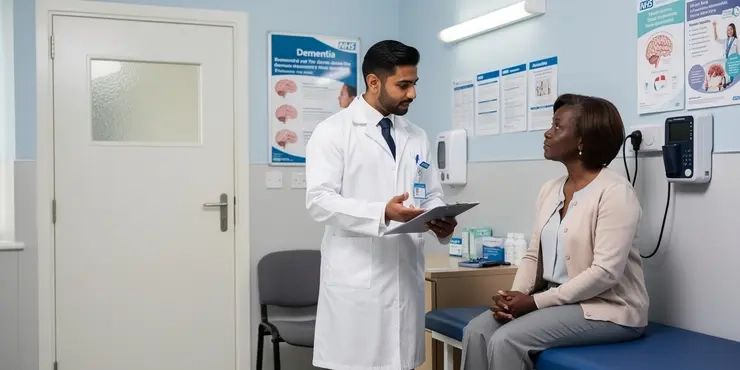
Dementia is usually diagnosed after someone or their family notices problems with memory, thinking, language, or daily tasks. In the UK, the first step is normally to book an appointment with a GP.
The GP will ask about symptoms, how long they have been happening, and whether they are getting worse. They may also ask a family member or carer to describe any changes they have noticed.
What the GP looks for
There is no single test for dementia. Instead, the GP looks at the overall picture and tries to rule out other causes that can affect memory and thinking.
These can include depression, thyroid problems, vitamin deficiencies, sleep issues, medication side effects, alcohol use, or infections. Some of these causes can improve with treatment, so it is important to check them early.
Common tests and assessments
The GP may do a short memory or thinking test, such as asking the person to remember words, draw shapes, or answer simple questions. These tests help show whether thinking skills may be affected.
Blood tests are often arranged to check for reversible causes. A urine test may also be needed if an infection is suspected.
In some cases, the person is referred for a brain scan, such as a CT scan or MRI. A scan can help rule out other conditions, such as a stroke, tumour, or bleeding in the brain.
Referrals to specialists
If dementia is still suspected, the GP may refer the person to a memory clinic or specialist service. This is common across the NHS and can provide a fuller assessment.
A specialist may take a detailed history, carry out further cognitive testing, and speak with relatives or carers. They may also look at how symptoms affect everyday life, such as managing money, driving, or taking medication.
Getting a diagnosis
A diagnosis is made when the tests, symptoms, and assessment together suggest dementia. The specialist may also identify the type of dementia, such as Alzheimer’s disease, vascular dementia, or dementia with Lewy bodies.
Knowing the type can help with treatment, support, and planning. It can also explain why symptoms are happening and what to expect next.
Why diagnosis matters
An early diagnosis can help people get the right support, advice, and treatment sooner. It may also give families time to plan for the future.
If you are worried about dementia, it is a good idea to speak to a GP as early as possible. Finding out what is causing the symptoms is the best way to get the right help.
Frequently Asked Questions
Dementia diagnosis is the process of evaluating symptoms, medical history, cognitive function, and sometimes brain imaging or lab tests to determine whether a person has dementia and, if so, what type. It is important because it can identify reversible causes, guide treatment and support, and help plan for future care.
Early signs that may lead to dementia diagnosis often include memory loss that affects daily life, trouble finding words, confusion about time or place, difficulty planning or solving problems, and changes in mood or behavior. These symptoms can also be caused by other conditions, so evaluation is needed.
A person should seek dementia diagnosis evaluation if they or others notice worsening memory problems, confusion, personality changes, or difficulty managing everyday tasks. A family member, caregiver, or healthcare professional may also suggest evaluation when symptoms interfere with normal functioning.
Dementia diagnosis is usually performed through a clinical assessment that includes symptom review, medical history, physical and neurological exams, cognitive testing, and sometimes blood tests or brain scans. The goal is to identify the cause of symptoms and rule out other conditions.
Tests used in dementia diagnosis may include memory and thinking assessments, blood tests to check for vitamin deficiencies or thyroid problems, brain imaging such as MRI or CT, and sometimes more specialized neurological or laboratory testing. The exact tests depend on the person’s symptoms and medical history.
Dementia diagnosis can take one visit or several appointments, depending on symptom complexity and the tests needed. Some causes can be identified quickly, while others require more detailed evaluation over time to confirm the diagnosis.
Dementia diagnosis can sometimes be made in one appointment if symptoms are clear and the evaluation is straightforward. In many cases, however, doctors need additional tests, follow-up visits, or input from family members before confirming the diagnosis.
Conditions that can mimic dementia diagnosis symptoms include depression, delirium, medication side effects, sleep disorders, vitamin B12 deficiency, thyroid disease, infections, and hearing or vision problems. Because some of these are treatable, proper evaluation is essential.
Dementia diagnosis is a general term for identifying cognitive decline severe enough to affect daily life, while Alzheimer’s diagnosis refers to a specific cause of dementia. Alzheimer’s disease is one type of dementia, but not all dementia diagnoses are Alzheimer’s disease.
Dementia diagnosis can sometimes be made without brain imaging if the clinical picture is clear, but imaging is often used to rule out strokes, tumors, bleeding, or other structural causes. Whether imaging is needed depends on the person’s age, symptoms, and medical history.
For a dementia diagnosis appointment, family should bring a list of symptoms, when they started, current medications, medical history, and examples of changes in daily function. It can also help to bring notes about behavior, safety concerns, and any prior test results.
A primary care doctor can often begin dementia diagnosis by reviewing symptoms, ordering initial tests, and performing basic cognitive screening. If the case is complex or the diagnosis is uncertain, the doctor may refer the person to a neurologist, geriatrician, or memory specialist.
The best specialist for dementia diagnosis depends on the situation, but neurologists, geriatricians, and psychiatrists with experience in memory disorders often evaluate patients. Memory clinics may also provide comprehensive assessment and testing.
Dementia diagnosis is not the same as mild cognitive impairment diagnosis. Mild cognitive impairment means there are measurable thinking problems, but daily independence is mostly preserved, whereas dementia diagnosis involves cognitive decline that significantly affects everyday life.
Yes, dementia diagnosis can sometimes be wrong or missed because symptoms may overlap with other conditions or early signs may be subtle. That is why thorough assessment, follow-up, and sometimes a second opinion are important when uncertainty remains.
After dementia diagnosis is confirmed, the healthcare team usually discusses the likely cause, treatment options, safety concerns, support services, and plans for follow-up care. Patients and families may also receive advice on medications, driving, legal planning, and caregiver support.
Dementia diagnosis cannot usually be made from memory tests alone because doctors must consider medical history, daily functioning, physical findings, and other possible causes. Memory tests are important, but they are only one part of the full evaluation.
Age affects dementia diagnosis because the likelihood of dementia increases with age, but younger people can also develop dementia and may need a broader workup for other causes. Doctors interpret symptoms, test results, and risk factors in the context of the person’s age.
Many people can continue working while undergoing dementia diagnosis, depending on symptom severity and job demands. However, if memory, judgment, or safety are affected, adjustments, support, or time off may be necessary during evaluation.
During dementia diagnosis, people may feel anxiety, fear, relief, grief, or uncertainty. A diagnosis can be emotionally difficult, so support from family, counselors, support groups, and healthcare professionals can be helpful throughout the process.

Ergsy Search Results
This website offers general information and is not a substitute for professional advice.
Always seek guidance from qualified professionals.
If you have any medical concerns or need urgent help, contact a healthcare professional or emergency services immediately.
Some of this content was generated with AI assistance. We've done our best to keep it accurate, helpful, and human-friendly.
- Ergsy carefully checks the information in the videos we provide here.
- Videos shown by Youtube after a video has completed, have NOT been reviewed by ERGSY.
- To view, click the arrow in centre of video.
- Most of the videos you find here will have subtitles and/or closed captions available.
- You may need to turn these on, and choose your preferred language.
- Go to the video you'd like to watch.
- If closed captions (CC) are available, settings will be visible on the bottom right of the video player.
- To turn on Captions, click settings.
- To turn off Captions, click settings again.