
Get Answers
What is Hantavirus?
Hantaviruses are a group of viruses spread mainly by rodents. In the UK, the risk to most people is low, but it can increase if you clean areas where mice or rats have been nesting. The virus can be passed on through contact with rodent urine, droppings, saliva, or contaminated dust.
You are most likely to be exposed in sheds, garages, lofts, outbuildings, and other places where rodents may shelter. Taking sensible precautions at home can greatly reduce your risk.
Keep rodents out of your home
The best way to lower your risk is to stop rodents getting in. Seal gaps around pipes, vents, doors, and windows, and repair holes in walls, floors, and roofs. Use wire mesh or suitable filler for larger openings.
Store food in sealed containers and keep bin lids closed tightly. Clean up crumbs and spills quickly, and avoid leaving pet food out overnight. Reducing access to food and shelter makes your home less attractive to rodents.
Clean up safely
If you find droppings, nests, or signs of rodent activity, avoid sweeping or vacuuming straight away. These actions can disturb particles and increase the chance of breathing them in. Instead, ventilate the area by opening windows and leaving it for at least 30 minutes if possible.
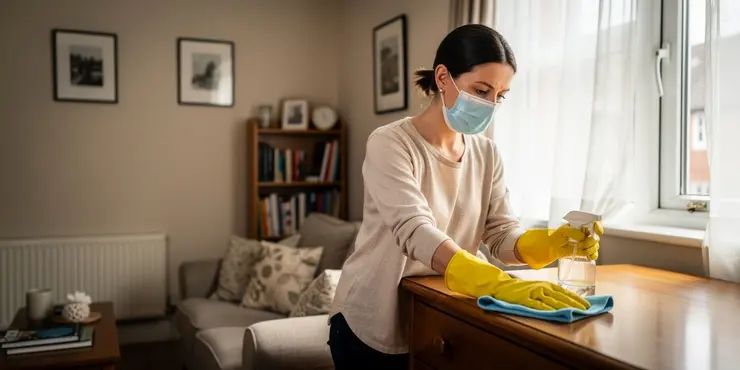
Wear rubber or disposable gloves, and use disinfectant or a bleach solution to soak droppings and nesting material before wiping them up. Put waste into a sealed bag, then place that bag into a second bag before disposing of it. Wash your hands thoroughly afterwards.
Take care in sheds, lofts, and garages
These are common places for rodents to nest, so extra caution is sensible. Before cleaning, wear gloves and consider a face covering if there is a lot of dust or droppings. Keep your movements gentle and avoid creating dust.
If an area is heavily contaminated, or if you are unsure how to clean it safely, contact a professional pest control service. This is especially important if the problem is ongoing or widespread.
Know when to get medical advice
If you think you may have been exposed and then develop fever, muscle aches, headache, tiredness, or breathing problems, seek medical advice promptly. Mention the possible rodent exposure so the clinician can assess your risk properly. Early assessment can be important.
Most homes in the UK will never have a Hantavirus problem, but good hygiene and rodent control are practical precautions. A tidy, well-sealed home with safe cleaning habits offers the best protection.
Frequently Asked Questions
Keep rodents out, seal entry points, store food securely, clean up droppings safely, and avoid sweeping or vacuuming contaminated areas.
Do not sweep or vacuum them dry. Ventilate the area, wear gloves and a mask if available, wet the droppings with disinfectant, and wipe them up with disposable materials.
Seal gaps around pipes, vents, doors, windows, and foundations with steel wool, caulk, metal flashing, or hardware cloth.
No. Vacuuming can stir up contaminated dust and increase the risk of breathing in virus particles.
No. Sweeping can aerosolize particles. It is safer to wet the area with disinfectant and wipe it up without dry sweeping.
Use a disinfectant or a bleach solution according to label directions, and allow it to sit before wiping the area clean.
Yes. Wear gloves and, if there is dust or droppings, a well-fitting mask or respirator may help reduce inhalation risk.
Remove food, disinfect the surfaces, wipe them thoroughly, and replace any damaged or contaminated items.
Store food in sealed, rodent-proof containers and clean up crumbs and spills promptly.
Yes. Keep pet food in sealed containers, feed pets only what they will eat quickly, and clean bowls and feeding areas regularly.
Declutter basements, attics, garages, and storage areas so rodents have fewer places to nest.
Do not disturb nests dry. Spray them with disinfectant, wait for it to soak in, and then remove the material while wearing gloves.
Yes, the virus is mainly a risk through rodent urine, droppings, saliva, and contaminated dust, so avoid contact with rodents and their nesting materials.
Traps can help reduce rodents, but place and check them carefully, and clean the area safely after removal.
Check regularly, especially after seasons when rodents seek shelter indoors, and repair any new openings promptly.
Yes. Ventilating the area before cleaning can help reduce inhalation risk, especially in enclosed spaces.
No. These can spread contaminated dust into the air and increase exposure risk.
Wear gloves, spray the area with disinfectant, place the rodent and cleanup materials in a sealed bag, and wash your hands afterward.
Pets do not usually spread Hantavirus, but they can bring in rodents or contaminate areas indirectly, so keep them away from rodent nests and droppings.
Call a pest control professional if you have a large infestation, repeated entry, or contamination that is hard to clean safely.

Ergsy Search Results
This website offers general information and is not a substitute for professional advice.
Always seek guidance from qualified professionals.
If you have any medical concerns or need urgent help, contact a healthcare professional or emergency services immediately.
Some of this content was generated with AI assistance. We've done our best to keep it accurate, helpful, and human-friendly.
- Ergsy carefully checks the information in the videos we provide here.
- Videos shown by Youtube after a video has completed, have NOT been reviewed by ERGSY.
- To view, click the arrow in centre of video.
- Most of the videos you find here will have subtitles and/or closed captions available.
- You may need to turn these on, and choose your preferred language.
- Go to the video you'd like to watch.
- If closed captions (CC) are available, settings will be visible on the bottom right of the video player.
- To turn on Captions, click settings.
- To turn off Captions, click settings again.