
Get Answers
When to think about getting tested
If you or someone close to you has become more forgetful, confused, or has trouble finding words, it may be worth speaking to a GP. Small memory lapses are common, but changes that affect everyday life should be checked.
Alzheimer’s disease is not the only cause of memory problems. Stress, depression, thyroid problems, vitamin deficiencies, sleep issues, and other forms of dementia can also cause similar symptoms.
Start with your GP
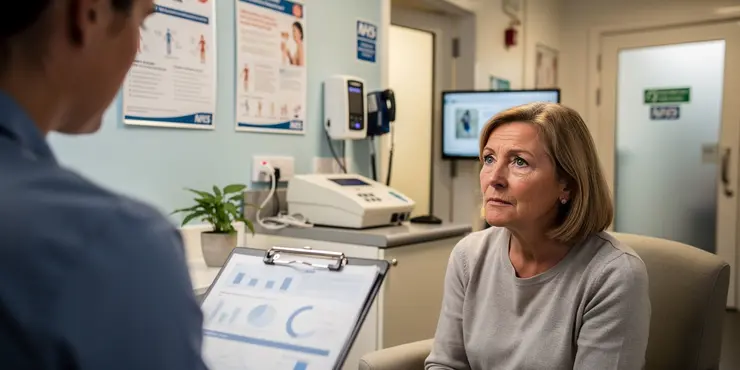
In the UK, the usual first step is to book an appointment with your GP. They can ask about your symptoms, how long they have been happening, and whether they are affecting work, driving, finances, or day-to-day routines.
If possible, bring a family member or friend who has noticed the changes. They may be able to describe things you have not noticed yourself, which can help the GP get a clearer picture.
What the assessment may involve
Your GP may do a basic memory or thinking test in the surgery. This is often a short set of questions or tasks to check attention, recall, language, and problem-solving.
You may also have a physical examination and some blood tests. These are used to rule out other possible causes, such as infections, hormone problems, or vitamin B12 deficiency.
The GP may review your medicines too, because some drugs can affect memory or concentration. They may also ask about mood, alcohol use, sleep, and any recent life events.
Referral to a specialist
If your GP thinks further assessment is needed, they may refer you to a memory clinic or a specialist such as a psychiatrist, geriatrician, or neurologist. These clinics are common in the NHS and are designed to assess memory and thinking problems in more detail.
A specialist assessment may include more detailed cognitive tests, a discussion of symptoms, and sometimes brain scans. The aim is to understand what is causing the changes and whether Alzheimer’s is the most likely diagnosis.
Getting a diagnosis and support
There is no single simple test for Alzheimer’s disease. Diagnosis is usually based on a combination of symptoms, tests, medical history, and sometimes imaging results.
If Alzheimer’s is diagnosed, the team should explain the next steps clearly. This may include treatment options, advice on managing symptoms, and support for you and your family.
If you are worried but not sure whether to seek help, it is still sensible to talk to your GP. Getting checked early can bring peace of mind and allow support to start sooner if needed.
Frequently Asked Questions
Alzheimer's testing refers to a set of evaluations used to assess memory, thinking, behavior, and sometimes biomarkers to determine whether Alzheimer's disease or another cause may be affecting a person's cognition.
People who have memory loss, confusion, language problems, changes in judgment, or other cognitive concerns should consider Alzheimer's testing, especially if symptoms are affecting daily life.
Alzheimer's testing is usually performed through a medical history review, cognitive screening, physical and neurological exams, lab tests, brain imaging, and sometimes specialized biomarker testing.
Symptoms that can lead to Alzheimer's testing include forgetting recent events, repeating questions, getting lost in familiar places, trouble finding words, poor judgment, and difficulty completing everyday tasks.
Alzheimer's testing may be provided by primary care doctors, neurologists, geriatricians, psychiatrists, neuropsychologists, or memory clinic specialists.
Common cognitive tests used in Alzheimer's testing include the Mini-Mental State Examination, Montreal Cognitive Assessment, clock drawing tasks, word recall tests, and detailed neuropsychological assessments.
Blood tests in Alzheimer's testing may check for vitamin B12 deficiency, thyroid problems, infection, inflammation, metabolic issues, and other conditions that can affect memory and thinking.
Brain imaging in Alzheimer's testing may include MRI or CT scans to look for strokes, tumors, bleeding, fluid buildup, or patterns of brain shrinkage that help with diagnosis.
Biomarker testing in Alzheimer's testing looks for biological signs of Alzheimer's disease, such as amyloid or tau, often using cerebrospinal fluid tests, PET scans, or sometimes blood-based biomarkers.
Alzheimer's testing can strongly suggest Alzheimer's disease, but a definitive diagnosis may still require combining clinical findings with biomarkers and ruling out other causes of symptoms.
The accuracy of Alzheimer's testing depends on the type of test used, the stage of disease, and the expertise of the clinician, with combined assessments generally being more reliable than a single test.
Alzheimer's testing may take from a single office visit for initial screening to multiple appointments over days or weeks for full cognitive, lab, imaging, and biomarker evaluation.
Before Alzheimer's testing, a person should expect questions about symptoms, medical history, medications, mood, sleep, and daily functioning, and may be asked to bring a family member or caregiver.
To prepare for Alzheimer's testing, a person should gather a list of medications, prior medical records, symptom notes, and any concerns from family members, and follow instructions about fasting if lab tests are planned.
Coverage for Alzheimer's testing varies by insurance plan and the specific tests ordered, so patients should check benefits for cognitive assessments, imaging, lab work, and biomarker testing.
The main risks of Alzheimer's testing are usually low, but some tests can cause anxiety, fatigue, discomfort, or minor complications, especially with lumbar puncture or contrast-based imaging.
Yes, Alzheimer's testing can often help distinguish Alzheimer's disease from other dementias such as vascular dementia, Lewy body dementia, frontotemporal dementia, or reversible causes of memory loss.
After Alzheimer's testing results are available, the clinician usually explains the diagnosis or next steps, discusses treatment options, addresses safety and support needs, and may recommend follow-up testing.
Yes, a person can have normal Alzheimer's testing and still have memory problems due to stress, depression, sleep issues, medication effects, pain, or an early stage of a condition that may need follow-up.
Alzheimer's testing may be repeated if symptoms worsen, new symptoms appear, initial results are unclear, or the clinician wants to monitor changes over time.

Ergsy Search Results
This website offers general information and is not a substitute for professional advice.
Always seek guidance from qualified professionals.
If you have any medical concerns or need urgent help, contact a healthcare professional or emergency services immediately.
Some of this content was generated with AI assistance. We've done our best to keep it accurate, helpful, and human-friendly.
- Ergsy carefully checks the information in the videos we provide here.
- Videos shown by Youtube after a video has completed, have NOT been reviewed by ERGSY.
- To view, click the arrow in centre of video.
- Most of the videos you find here will have subtitles and/or closed captions available.
- You may need to turn these on, and choose your preferred language.
- Go to the video you'd like to watch.
- If closed captions (CC) are available, settings will be visible on the bottom right of the video player.
- To turn on Captions, click settings.
- To turn off Captions, click settings again.