
Get Answers
What Botox is and how it works
Botox is a prescription-only treatment made from botulinum toxin in very small, controlled doses. It is commonly used to relax specific facial muscles and reduce the appearance of lines and wrinkles.
In the UK, Botox should only be administered by a qualified medical professional or suitably trained practitioner. A consultation is usually needed first to check whether the treatment is suitable and to discuss any risks.
What happens before treatment
Before Botox is administered, the practitioner will examine your face and ask about your medical history. They may also ask about any medicines you take, including blood thinners or supplements that could increase bruising.
This is also the time to discuss your goals and the areas you want treated. The practitioner will explain what Botox can and cannot do, so you have a realistic idea of the results.
How Botox is given
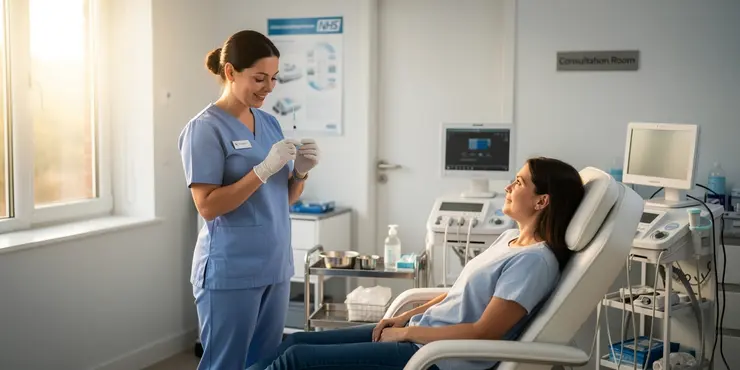
Botox is administered using a very fine needle and injected directly into the targeted muscles. The procedure is usually quick and may take around 10 to 20 minutes, depending on how many areas are being treated.
Most people describe the feeling as a small pinprick or mild sting. No general anaesthetic is normally needed, although a numbing cream may sometimes be offered if requested.
Common treatment areas
Botox is often used on the forehead, frown lines between the eyebrows, and crow’s feet around the eyes. It may also be used for other medical or cosmetic concerns, depending on the practitioner’s assessment.
The number of injections needed varies from person to person. The practitioner will usually place them in precise points to create a natural result and avoid over-treating the area.
After the injections
After Botox has been administered, you can usually go home straight away. Most people return to normal activities the same day, although the practitioner may advise avoiding strenuous exercise, alcohol, or lying flat for a few hours.
Some temporary redness, swelling, or bruising at the injection sites is common. The effects do not appear instantly, as Botox usually begins to work over several days and reaches its full effect in about one to two weeks.
What to expect from results
Botox is not permanent, so results normally last around three to four months for cosmetic use. Over time, the muscle activity gradually returns and repeat treatment may be needed to maintain the effect.
If you are considering Botox in the UK, always choose a reputable clinic and make sure the person treating you is properly trained. A safe, well-planned treatment is the best way to achieve natural-looking results.
Frequently Asked Questions
Botox administration is the process of preparing and injecting botulinum toxin into specific muscles or areas to achieve a therapeutic or cosmetic effect. It is typically performed by a trained healthcare professional using precise dosing and injection techniques.
Eligibility for Botox administration depends on the intended use, the patient’s medical history, and a clinician’s assessment. It is commonly used for certain cosmetic concerns and specific medical conditions, but it is not appropriate for everyone.
Botox administration can be used for cosmetic wrinkle reduction and for several medical conditions, including chronic migraine, muscle spasticity, excessive sweating, overactive bladder, and some eye movement disorders, depending on local approvals and clinician judgment.
Dosage for Botox administration is determined by the indication, treatment area, muscle strength, patient factors, and the product formulation. The clinician uses established dosing guidelines and individual assessment to reduce risk and improve outcomes.
Botox administration should be performed in a clinical setting or another appropriate healthcare environment by a qualified professional. Safe administration requires sterile technique, proper storage, correct reconstitution, and access to emergency support if needed.
Botox administration should be performed by licensed and appropriately trained healthcare professionals. Training generally includes anatomy, dosing, injection technique, complication recognition, and product-specific handling instructions.
Botox administration usually takes only a few minutes to a short office visit, depending on the number of injection sites and the area being treated. Additional time may be needed for consultation, preparation, and post-treatment instructions.
Before Botox administration, the clinician should review medical history, medications, allergies, pregnancy status, prior reactions, and treatment goals. The patient should be informed about expected results, risks, and aftercare instructions.
After Botox administration, patients are often advised to avoid rubbing or massaging the treated area, lying flat immediately if instructed, and vigorous exercise for a short period. Specific aftercare advice may vary by treatment area and clinician preference.
Results after Botox administration are not immediate. Many patients begin to notice effects within a few days, with fuller results often appearing over one to two weeks, depending on the condition being treated.
The effects of Botox administration typically last for several months, though duration varies by treatment area, dose, and individual response. Repeat treatment may be needed to maintain the desired effect.
Common side effects of Botox administration include temporary pain, swelling, bruising, redness, headache, or mild weakness near the injection site. Most side effects are short-lived and improve without treatment.
Serious risks of Botox administration are uncommon but can include allergic reactions, infection, unintended muscle weakness, swallowing or breathing difficulties, and toxin spread beyond the injection site. Urgent medical attention is needed if severe symptoms occur.
Yes, Botox administration can often be repeated at appropriate intervals when clinically indicated. The timing of repeat treatment should follow product guidance and the treating clinician’s assessment to avoid over-treatment or reduced response.
Botox administration products should be stored and handled according to the manufacturer’s instructions, including proper temperature control, expiration checks, and sterile reconstitution practices. Incorrect storage can reduce effectiveness and safety.
Cosmetic Botox administration is used to reduce the appearance of wrinkles or facial lines, while medical Botox administration is used to treat health conditions such as migraines, muscle spasticity, or excessive sweating. The technique, dosing, and treatment goals may differ.
Botox administration can sometimes be combined with other treatments such as fillers, skincare procedures, physical therapy, or other medical therapies, depending on the goal. A clinician should plan combinations carefully to reduce risk and improve results.
Before Botox administration, patients should disclose pregnancy or breastfeeding status, neuromuscular disorders, infections at the treatment site, allergies, recent procedures, and all medications or supplements. This information helps determine whether treatment is appropriate and safe.
A patient should seek medical help after Botox administration if they develop trouble breathing, swallowing, speaking, severe weakness, vision changes, signs of infection, or any allergic reaction. Prompt evaluation is important for potentially serious symptoms.
Success after Botox administration is measured by the degree of symptom relief, appearance improvement, functional benefit, patient satisfaction, and the presence or absence of side effects. Follow-up visits help assess response and plan future treatment.

Ergsy Search Results
This website offers general information and is not a substitute for professional advice.
Always seek guidance from qualified professionals.
If you have any medical concerns or need urgent help, contact a healthcare professional or emergency services immediately.
Some of this content was generated with AI assistance. We've done our best to keep it accurate, helpful, and human-friendly.
- Ergsy carefully checks the information in the videos we provide here.
- Videos shown by Youtube after a video has completed, have NOT been reviewed by ERGSY.
- To view, click the arrow in centre of video.
- Most of the videos you find here will have subtitles and/or closed captions available.
- You may need to turn these on, and choose your preferred language.
- Go to the video you'd like to watch.
- If closed captions (CC) are available, settings will be visible on the bottom right of the video player.
- To turn on Captions, click settings.
- To turn off Captions, click settings again.