
Get Answers
Donna's journey to home haemodialysis
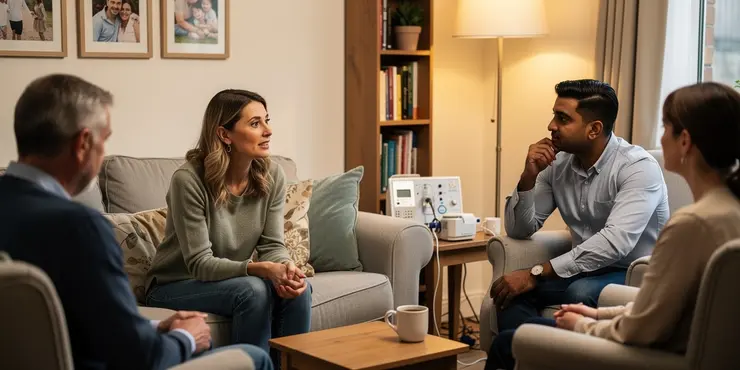
Donna was diagnosed with kidney failure and soon found herself facing regular hospital visits for dialysis. The routine was tiring, and the time spent travelling and waiting began to affect her day-to-day life. Like many people in the UK, she wanted treatment that fitted more naturally around work, family, and home life.
When home haemodialysis was suggested, Donna was unsure at first. Dialysis at home felt like a big step, but she was reassured by the support available from her renal team. With training and guidance, she began to see that home treatment could offer more control and flexibility.
Learning to dialyse at home
Donna was trained carefully before starting treatment at home. She learned how to use the equipment, set up her space, and follow the safety checks needed each time. The process took patience, but she felt more confident with every session.
Having her own machine at home gave Donna a sense of independence. She could do her treatment at times that suited her routine, rather than planning her life around hospital appointments. That made a real difference to how she felt physically and emotionally.
Living with greater flexibility
One of the biggest benefits for Donna was the extra freedom home haemodialysis gave her. She no longer had to spend so much time travelling to and from hospital, which meant more time for rest, family, and the things she enjoyed. For many people, that can make the treatment feel less disruptive.
Donna also found that home haemodialysis could be adapted to suit her needs. Depending on her clinical advice, she was able to work with her team to find a routine that supported her health and lifestyle. This flexibility helped her feel more in control of her condition.
Support from the renal team
Donna’s story shows how important support is when starting home haemodialysis. She was not expected to manage everything alone. Her renal nurse and wider team stayed involved, offering advice, checking progress, and helping her troubleshoot any problems.
For people in the UK considering this option, that ongoing support can be reassuring. Home haemodialysis is a partnership between the patient and the renal unit, with safety and training at the centre. Donna’s experience highlights how the right help can make home treatment feel achievable.
A positive change in everyday life
Over time, Donna began to feel that home haemodialysis was helping her take back some normality. It reduced the disruption caused by regular hospital treatment and gave her more say in how she lived each week. That sense of control mattered to her.
Donna’s story is a reminder that dialysis can look different for different people. For some, home haemodialysis offers comfort, independence, and a better fit with daily life. With the right training and support, it can become a practical and empowering choice.
Frequently Asked Questions
Home haemodialysis Donna's story is about a person named Donna sharing her experience of doing dialysis at home, including the practical, emotional, and lifestyle changes that came with it.
In home haemodialysis Donna's story, Donna chose home treatment to gain more flexibility, more control over her schedule, and a better fit with daily life.
Home haemodialysis Donna's story describes training as a guided process where Donna learned how to use the equipment, follow safety steps, and become confident doing treatment at home.
Home haemodialysis Donna's story includes the dialysis machine and related supplies needed for treatment, along with setup items that make home dialysis safe and practical.
Home haemodialysis Donna's story explains that Donna's daily routine became more flexible because treatment could be scheduled around home life rather than centered on clinic visits.
In home haemodialysis Donna's story, Donna experienced benefits such as greater independence, better scheduling options, and the comfort of receiving treatment at home.
Home haemodialysis Donna's story mentions challenges such as learning the procedure, making space for equipment, and adjusting to the responsibilities of home treatment.
In home haemodialysis Donna's story, family support helped Donna with encouragement, routine adjustments, and practical help during treatment and setup.
Home haemodialysis Donna's story highlights safety steps such as careful preparation, hygiene, monitoring during treatment, and following clinical guidance closely.
Home haemodialysis Donna's story shows that Donna gained a stronger sense of independence because she could manage treatment in her own home on a schedule that suited her.
Home haemodialysis Donna's story suggests that home treatment can reduce the need for frequent clinic visits, which may save time and reduce travel burden.
In home haemodialysis Donna's story, Donna's feelings included a mix of anxiety at first and growing confidence as she became more comfortable with the treatment routine.
Home haemodialysis Donna's story describes lifestyle changes such as planning around treatment time, reorganizing the home, and adapting routines to support dialysis.
Home haemodialysis Donna's story suggests that adjustment took time, with confidence building gradually through training, practice, and support from the care team.
In home haemodialysis Donna's story, Donna was supported by the renal care team, who provided training, guidance, and ongoing follow-up.
Home haemodialysis Donna's story includes practical changes such as setting aside space for equipment, storing supplies, and preparing a clean area for treatment.
Home haemodialysis Donna's story shows that confidence was important because managing treatment at home required Donna to trust her skills and the support she received.
Home haemodialysis Donna's story may encourage other patients by showing that home dialysis can be learned, supported, and integrated into everyday life.
Home haemodialysis Donna's story contrasts home treatment with in-centre dialysis by emphasizing home-based flexibility, independence, and reduced travel compared with fixed clinic sessions.
The overall takeaway from home haemodialysis Donna's story is that home haemodialysis can offer a more personal, flexible, and empowering treatment experience when the right support is in place.

Ergsy Search Results
This website offers general information and is not a substitute for professional advice.
Always seek guidance from qualified professionals.
If you have any medical concerns or need urgent help, contact a healthcare professional or emergency services immediately.
Some of this content was generated with AI assistance. We've done our best to keep it accurate, helpful, and human-friendly.
- Ergsy carefully checks the information in the videos we provide here.
- Videos shown by Youtube after a video has completed, have NOT been reviewed by ERGSY.
- To view, click the arrow in centre of video.
- Most of the videos you find here will have subtitles and/or closed captions available.
- You may need to turn these on, and choose your preferred language.
- Go to the video you'd like to watch.
- If closed captions (CC) are available, settings will be visible on the bottom right of the video player.
- To turn on Captions, click settings.
- To turn off Captions, click settings again.