
Get Answers
Understanding Focal Therapy for Prostate Cancer
Prostate cancer is one of the most common types of cancer affecting men in the UK. Traditionally, treatment options have included active surveillance, surgery, radiation therapy, and hormone therapy. However, focal therapy is emerging as a viable treatment option, particularly for those with localized prostate cancer. This approach aims to target only the cancerous part of the prostate, minimizing damage to surrounding healthy tissue.
What is Focal Therapy?
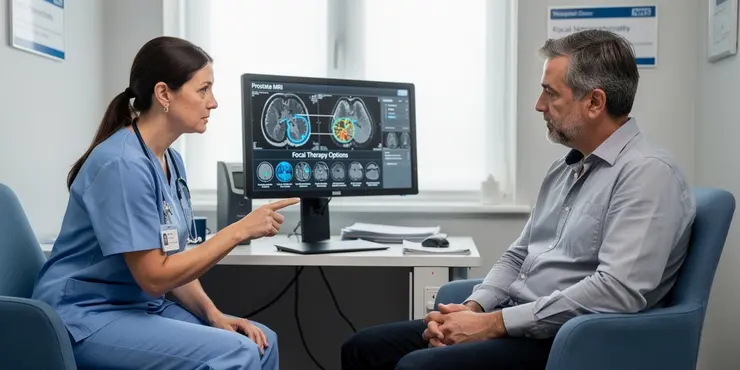
Focal therapy is a minimally invasive treatment option designed to eradicate cancerous tissues in the prostate with precision. It relies on advanced imaging technology to identify the exact location and extent of the cancer. Common methods of focal therapy include High-Intensity Focused Ultrasound (HIFU), cryotherapy, photodynamic therapy, and laser ablation. The aim is to destroy targeted cancer cells while preserving as much of the prostate and its functions as possible.
Benefits of Focal Therapy
One of the most significant advantages of focal therapy is the reduced risk of side effects compared to more radical treatments such as prostatectomy or radiation therapy. By focusing treatment on the cancerous area, focal therapy typically results in fewer complications related to urinary incontinence and sexual dysfunction. This is particularly important for patients who are concerned about their quality of life post-treatment.
Who is Eligible for Focal Therapy?
Focal therapy is generally considered an option for men with low-risk, localized prostate cancer. This means the cancer is confined to a small area within the prostate and is unlikely to have spread. Early detection through PSA testing and MRI scans plays a crucial role in identifying candidates for this treatment. It’s important for patients to discuss their specific case with a healthcare provider to determine eligibility.
Considerations and Limitations
While focal therapy offers several advantages, it may not be suitable for everyone. Patients with more aggressive or advanced prostate cancer may require comprehensive treatment involving surgery or radiation. Additionally, as a relatively new approach, long-term data on the effectiveness and survival rates of focal therapy are still being collected. Therefore, it is important to weigh the potential benefits and risks before proceeding with this treatment.
The Future of Prostate Cancer Treatment
As research advances, focal therapy holds promise for becoming a standard option for prostate cancer treatment. It represents a shift towards personalized medicine, where treatment is tailored to the individual characteristics of the patient's cancer. In the UK, clinical trials and studies continue to explore the efficacy of focal therapy, potentially widening the scope of its application. Patients are encouraged to discuss all available treatment options with their healthcare team to make an informed decision based on the latest research and their personal circumstances.
Understanding Focal Therapy for Prostate Cancer
Prostate cancer is a common cancer that affects men in the UK. Traditional treatments include careful watching, surgery, radiation, and hormone treatments. Now, there is a new type of treatment called focal therapy. This treatment targets only the part of the prostate that has cancer. This helps protect the healthy parts.
What is Focal Therapy?
Focal therapy is a treatment that focuses on removing cancer from the prostate with little damage. It uses special pictures to find exactly where the cancer is. Methods include using things like sound waves, freezing, light, or lasers to kill cancer cells. The goal is to keep as much of the healthy prostate working as possible.
Benefits of Focal Therapy
The main benefit of focal therapy is it usually has fewer side effects. Other treatments like surgery or radiation can have more complications. Focal therapy usually causes fewer problems like difficulty controlling urine or changes in sexual function. This is important for keeping a good quality of life.
Who is Eligible for Focal Therapy?
Focal therapy is usually for men whose prostate cancer is small and hasn't spread. Early testing using PSA tests and MRI scans can help find who can have this treatment. It is important to talk to a doctor to see if focal therapy is a good choice.
Considerations and Limitations
Focal therapy is not for everyone. Men with more serious prostate cancer might need surgery or radiation. Also, focal therapy is quite new, so doctors are still studying its long-term effects. It is important to think about the pros and cons before deciding on this treatment.
The Future of Prostate Cancer Treatment
As science improves, focal therapy could become a regular option for treating prostate cancer. It allows for treatments that are customized for each person's cancer. In the UK, research and tests are ongoing to see how well it works. Patients should talk to their doctor about all available treatments before making a decision.
Frequently Asked Questions
Focal therapy is a type of treatment that targets only the cancerous part of the prostate, preserving as much of the healthy prostate tissue as possible.
Focal therapy is typically considered for men with localized prostate cancer, usually with low to intermediate risk of progression.
Focal therapy targets only the tumor, whereas traditional treatments like surgery and radiation often target the entire prostate.
Benefits of focal therapy include potentially fewer side effects, such as reduced risk of incontinence and erectile dysfunction, compared to surgery.
Yes, types of focal therapy include High-Intensity Focused Ultrasound (HIFU), cryotherapy, laser ablation, and photodynamic therapy.
In some cases, focal therapy may be combined with other treatments like hormone therapy or active surveillance based on the patient's condition.
Recovery time is typically shorter compared to traditional surgery, often allowing patients to return to normal activities within a few days to a week.
While generally well-tolerated, potential side effects of focal therapy can include urinary symptoms, erectile dysfunction, and, rarely, infection or bleeding.
Coverage may vary by insurance provider and region. Patients should check with their insurance provider to determine coverage for focal therapy.
Effectiveness can vary, but focal therapy has shown promising results in controlling localized prostate cancer while minimizing side effects.
Focal therapy is generally most suitable for early-stage, localized prostate cancer and is not typically recommended for advanced stages.
Focal therapy is performed using various techniques to directly target and destroy cancerous tissue, often guided by imaging to ensure precision.
Yes, there are ongoing clinical trials investigating the effectiveness and safety of various focal therapy techniques for prostate cancer.
Yes, a biopsy is typically required to confirm the diagnosis and assess the extent and aggressiveness of the cancer before focal therapy.
Follow-up care typically includes regular PSA tests and imaging to monitor the prostate and ensure the cancer is controlled.
MRI-guided focal therapy uses magnetic resonance imaging to precisely locate and target cancerous tissue within the prostate.
Factors include the size, location, and aggressiveness of the tumor, overall health, and personal preferences regarding treatment.
In some cases, focal therapy can be repeated if cancer recurs, but it depends on the individual case and previous treatments received.
Focal therapy actively treats localized cancer, while watchful waiting involves close monitoring without immediate intervention.
While focal therapy targets the tumor, maintaining a healthy lifestyle may support overall health and recovery post-treatment.
Focal therapy is a type of treatment. It targets only the part of the prostate that has cancer. This helps keep the rest of the prostate healthy.
Focal therapy is a treatment for men with prostate cancer that has not spread. It is usually for men with a lower chance of the cancer getting worse.
Focal therapy goes after just the cancer lump. But old ways like surgery and radiation go after the whole prostate.
Focal therapy can be good because it might have fewer side effects. This means there is a smaller chance of problems like trouble controlling your bladder (incontinence) or trouble getting an erection (erectile dysfunction) than if you have surgery.
Yes, there are different ways to treat cancer in a focused area. These include:
- High-Intensity Focused Ultrasound (HIFU)
- Freezing the cancer (cryotherapy)
- Using a laser to target the cancer (laser ablation)
- Light treatment to kill cancer cells (photodynamic therapy)
To help understand better, you can use pictures or videos. Talking to your doctor or a nurse can also help. They can explain these treatments in a way that is easy to understand.
Sometimes, focal therapy is used with other treatments. These can be hormone therapy or watching and waiting. The right plan depends on how the patient is doing.
After this type of surgery, people often get better faster than with other surgeries. They can usually go back to doing normal things in just a few days to a week.
Most people do not have problems after focal therapy. But sometimes, you might have trouble peeing, trouble getting or keeping an erection, or, very rarely, you might get an infection or bleed. If you need help with this, you can talk to a doctor, use picture charts, or listen to audio guides.
Different insurance companies and places might have different rules. People should talk to their insurance company to find out if they will pay for focal therapy.
Focal therapy is a way to treat prostate cancer. It works well to keep the cancer under control in one area. It also helps to have fewer side effects. This means there are fewer problems after the treatment.
Focal therapy is mainly used for prostate cancer that is in the early stages and has not spread. It is usually not used for cancer that is in advanced stages.
Focal therapy is a way to treat cancer. It uses different tools to aim at and get rid of cancer cells. Doctors use pictures from machines to make sure they do it exactly right.
Yes, doctors are doing studies to see how safe and good different treatments are for prostate cancer.
Yes, doctors usually do a biopsy before focal therapy. A biopsy helps confirm if there is cancer and how serious it is.
Helpful Tips:
- A biopsy is when doctors take a small piece of tissue to look at.
- Focal therapy is a treatment for cancer.
- Ask questions if you don't understand what doctors say.
- Use pictures or drawings to help explain things.
- Bring someone with you to the doctor for support.
After treatment, doctors will do check-ups. They will test your blood with something called a PSA test. They might also take pictures inside your body to make sure the cancer is gone.
MRI-guided treatment helps doctors find and treat cancer in the prostate. They use a special camera, called MRI, to see exactly where the cancer is. This helps them focus on treating only the cancerous parts.
To better understand, you can use pictures or videos about MRI. Asking a doctor for more information can also be helpful.
There are things to think about, like how big the tumor is, where it is, and if it is growing fast. We also need to look at how healthy the person is and what treatments they like best.
Sometimes, you can have focal therapy again if cancer comes back. It depends on your personal situation and what treatments you had before.
Focal therapy is a way to treat cancer that is in one small area. It tries to get rid of the cancer.
Watchful waiting means doctors look after you and check the cancer, but they don't do any treatment right away.
If you or someone you know is finding it hard to read this, you can try using tools like text-to-speech apps, which read the words out loud. You can also ask someone to read with you and explain words you don't understand.
Focal therapy is a special way to treat cancer by focusing on the tumor. It's also important to live a healthy life. This can help you feel better and get stronger after the treatment.

Ergsy Search Results
This website offers general information and is not a substitute for professional advice.
Always seek guidance from qualified professionals.
If you have any medical concerns or need urgent help, contact a healthcare professional or emergency services immediately.
Some of this content was generated with AI assistance. We've done our best to keep it accurate, helpful, and human-friendly.
- Ergsy carefully checks the information in the videos we provide here.
- Videos shown by Youtube after a video has completed, have NOT been reviewed by ERGSY.
- To view, click the arrow in centre of video.
- Most of the videos you find here will have subtitles and/or closed captions available.
- You may need to turn these on, and choose your preferred language.
- Go to the video you'd like to watch.
- If closed captions (CC) are available, settings will be visible on the bottom right of the video player.
- To turn on Captions, click settings.
- To turn off Captions, click settings again.