
Get Answers
Do solar panels add value to a UK home?
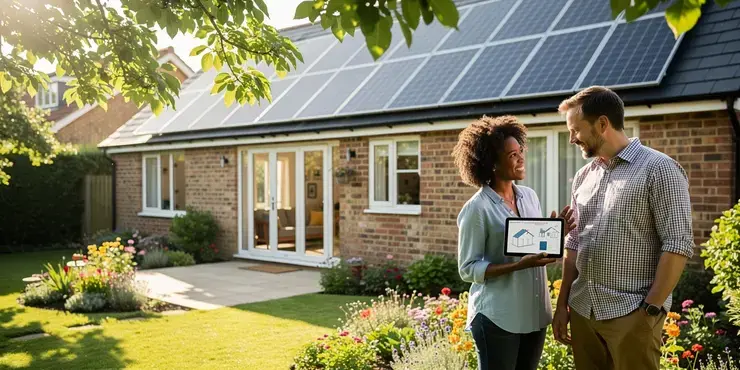
In many cases, yes. Solar panels can make a property more attractive to buyers because they offer lower electricity bills and a more modern, energy-efficient home.
For UK homeowners, this can be especially appealing as energy costs remain a major concern. A home with solar panels may stand out in a competitive market.
Why buyers may pay more
Many buyers like the idea of saving money from day one. If the panels are already installed and working well, the new owner may benefit from reduced running costs straight away.
Solar panels can also improve a home’s Energy Performance Certificate, or EPC, rating. A better EPC can make a property more appealing to eco-conscious buyers and those looking to cut household expenses.
How much value can they add?
The value added depends on several factors, including the size of the system, the age of the panels, and whether they are owned outright. Homes with well-maintained, owned solar panels are usually more attractive than those with leased systems.
There is no fixed amount that solar panels will add to every property. In some cases, they may help a home sell faster rather than dramatically increasing the asking price.
What can reduce the value?
Not all solar installations are seen as a plus by every buyer. If the panels are old, poorly maintained, or awkwardly fitted, they may not create much added value.
Leased or rented solar panels can also be a concern. Some buyers may worry about ongoing contract obligations, so it is important to have the paperwork clear and easy to understand.
Other benefits beyond resale value
Even if the boost to market value is modest, solar panels can still deliver strong long-term savings. Over time, lower energy bills may offset much of the installation cost.
They can also support a home’s appeal in a greener housing market. As more UK buyers look for energy-efficient features, solar panels may become an even stronger selling point.
Should you install them mainly to increase value?
Solar panels are best viewed as both an energy upgrade and a potential value booster. The financial return usually comes from a mix of lower bills, possible export payments, and improved buyer appeal.
If your roof is suitable and you plan to stay in the home for several years, the investment can make sense. For many UK homeowners, solar panels are more likely to add practical value first, and market value second.
Do solar panels add value to a UK home?
In many cases, yes. Solar panels can make a home more attractive to buyers. They can mean lower electricity bills and a newer, energy-saving home.
For UK homeowners, this can matter a lot. Energy costs are still a big worry. A home with solar panels may stand out when many people are looking to buy.
Why buyers may pay more
Many buyers like saving money straight away. If the panels are already fitted and work well, the new owner may start paying less for power from the first day.
Solar panels can also improve a home’s Energy Performance Certificate, or EPC, rating. A better EPC can make a home more appealing to people who want to help the planet and spend less on bills.
How much value can they add?
The extra value depends on a few things. These include the size of the system, how old the panels are, and whether they are owned outright. Homes with well-kept panels that are owned are often more attractive than homes with leased panels.
There is no set amount that solar panels add to every home. Sometimes, they may help a home sell faster instead of raising the price by a lot.
What can reduce the value?
Not every buyer sees solar panels as a good thing. If the panels are old, not cared for, or fitted badly, they may not add much value.
Leased or rented solar panels can also worry some buyers. They may not want a contract to deal with later. Clear paper work is very important.
Other benefits beyond resale value
Even if they do not add much to the sale price, solar panels can still save money over time. Lower energy bills can make up for some of the cost of getting them fitted.
They can also make a home more wanted in a greener housing market. More UK buyers now look for energy-saving features. So solar panels may become even more useful when selling a home.
Should you install them mainly to increase value?
Solar panels are best seen as both a way to save energy and a possible way to boost value. The money benefit usually comes from lower bills, possible payments for extra power, and more buyer interest.
If your roof is right for them and you plan to stay in the home for a few years, they can be a good choice. For many UK homeowners, solar panels may add practical value first, and market value second.
Frequently Asked Questions
Solar panels increase property value means that adding solar panels can make a home more attractive to buyers and may support a higher resale price because of lower energy costs and modern energy features.
Solar panels increase property value for a house by reducing future electricity expenses, improving energy efficiency, and appealing to buyers who want lower utility bills and sustainable features.
Solar panels increase property value in many markets because buyers often see them as a long-term financial benefit, especially when electricity prices are high and the system is owned outright.
Solar panels increase property value by an amount that varies by location, system size, energy savings, and market demand, so the value increase can range from modest to significant.
Solar panels increase property value more in regions with high electricity rates, strong solar incentives, and buyer demand for energy-efficient homes, though results depend on local real estate conditions.
Solar panels increase property value less consistently if the system is leased because the buyer may need to assume the lease or deal with extra contract obligations, which can reduce appeal.
Owned solar panels increase property value more than leased solar panels because ownership avoids ongoing payments and transfer complications, making the home simpler and more attractive to buyers.
Solar panels increase property value when selling a home by helping the property stand out, lowering operating costs for the next owner, and supporting a stronger listing appeal.
Solar panels increase property value even if the home is not fully energy efficient, but the effect may be stronger when combined with insulation, efficient appliances, and good roof condition.
Solar panels increase property value in a slow housing market by adding a practical benefit that can help a home compete, though overall market conditions still influence the final sale price.
Solar panels increase property value based on factors such as system ownership, installation quality, local utility rates, roof age, equipment performance, and buyer awareness of energy savings.
New solar panels increase property value more reliably than older panels because newer systems usually have better efficiency, longer remaining lifespan, and fewer maintenance concerns.
Solar panels increase property value more when a home has high electricity bills because the expected savings become more meaningful to buyers and can improve the home's overall affordability.
Solar panels increase property value enough to offset installation costs in some cases, especially when combined with energy savings, incentives, and a long ownership period, but payback varies widely.
Solar panels increase property value for condos or townhomes when the system is tied to the unit and energy savings are clear, but shared ownership rules and property restrictions can limit impact.
Appraisers consider solar panels increase property value by looking at comparable sales, system ownership, remaining lifespan, energy savings, and local market evidence of buyer demand.
Solar panels increase property value less effectively if the roof needs replacement soon, because buyers may worry about removal and reinstall costs, so roof condition matters a lot.
Solar panels increase property value for luxury homes when buyers value sustainability and lower operating costs, but the effect may be smaller if the market focuses more on aesthetics and location.
Solar panels increase property value for as long as the system remains functional, efficient, and financially beneficial, with the strongest effect usually seen in the early and mid-life of the system.
Homeowners can help solar panels increase property value more by owning the system, keeping records of savings and warranties, maintaining the roof, and ensuring the installation is clean and professionally done.
It means solar panels can help a home look more appealing to buyers. They may also help the home sell for more money. This is because the home can cost less to run.
Solar panels can help a house use less electricity. This can lower energy bills. Buyers may like this and pay more for the home.
Many buyers like solar panels. They can save money over time. This is even more true when power bills are high and the panels are owned.
The amount can be different in each place. It can depend on the system size, savings, and local demand. Sometimes the increase is small. Sometimes it is larger.
Yes. They can help more in places with high power bills. They can also help more where buyers want energy-saving homes. Local market rules matter too.
They may help less if the system is leased. The buyer may need to take over the lease. This can make the home less appealing.
Yes. Owned solar panels usually help more. There are no extra lease payments. This makes the home simpler for buyers.
Solar panels can make the home stand out. They can also lower future bills for the next owner. This can help the home sell better.
Yes, they still can. But they may help more if the home also has good insulation, efficient appliances, and a roof in good shape.
Yes. They can give the home a useful benefit. This may help it compete with other homes. But the market still affects the final price.
Many things matter. These include who owns the system, how well it was fitted, local power costs, the roof age, how well it works, and if buyers know about the savings.
New solar panels often help more. They usually work better. They also have more life left and fewer repair worries.
They can help more when bills are high. Buyers may care more about saving money. This can make the home seem easier to afford.
Sometimes, yes. The value may help cover the cost. This is more likely when the home also saves money on bills and the panels are used for a long time.
They can, if the panels belong to that unit and the savings are clear. But shared rules and building limits can reduce the effect.
Appraisers look at other home sales. They also check who owns the system, how long it should last, how much it saves, and what buyers in the area want.
They may help less. Buyers may worry about taking the panels off and putting them back on. A good roof is very important.
They can help if buyers care about clean energy and lower bills. But in some places, buyers may care more about looks and location.
They can help for as long as they work well and save money. The help is often strongest in the first years and middle years.
Own the system if you can. Keep papers about savings and warranties. Take care of the roof. Make sure the panels are fitted well and kept clean.

Ergsy Search Results
This website offers general information and is not a substitute for professional advice.
Always seek guidance from qualified professionals.
If you have any medical concerns or need urgent help, contact a healthcare professional or emergency services immediately.
Some of this content was generated with AI assistance. We've done our best to keep it accurate, helpful, and human-friendly.
- Ergsy carefully checks the information in the videos we provide here.
- Videos shown by Youtube after a video has completed, have NOT been reviewed by ERGSY.
- To view, click the arrow in centre of video.
- Most of the videos you find here will have subtitles and/or closed captions available.
- You may need to turn these on, and choose your preferred language.
- Go to the video you'd like to watch.
- If closed captions (CC) are available, settings will be visible on the bottom right of the video player.
- To turn on Captions, click settings.
- To turn off Captions, click settings again.