
Get Answers
What collagen is
Collagen is a structural protein found naturally in the body. It helps make up skin, tendons, ligaments, cartilage and bones.
As people get older, collagen production declines. That is one reason some people look at collagen supplements for joint support, recovery or general wellbeing.
Why fitness fans consider it
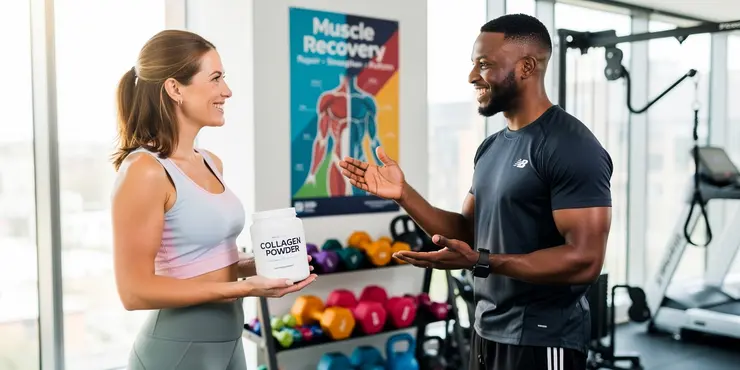
People interested in fitness or bodybuilding often put extra stress on their muscles, joints and connective tissues. Collagen is appealing because it plays a role in the tissues that help hold the body together.
Some gym-goers take it hoping to support tendons, reduce stiffness or cope better with heavy training. Others use it as part of a wider approach to recovery and nutrition.
What the evidence suggests
The research on collagen is promising, but it is not a miracle supplement. Studies suggest it may help some people with joint comfort and tendon or ligament support, especially when paired with regular exercise.
There is also some evidence that collagen can support skin elasticity and bone health. However, for muscle building specifically, it is not as directly useful as complete protein sources such as whey, dairy, eggs or meat.
Collagen and muscle gains
If your main goal is building muscle, collagen should not replace high-quality protein. Collagen is low in some essential amino acids, especially leucine, which is important for stimulating muscle protein synthesis.
That means it is better viewed as a supplement for connective tissue support than as a primary muscle-building protein. Most bodybuilders will still need enough total protein from varied sources to see the best results.
How to use it
Collagen is commonly taken in powder or capsule form. Many people mix the powder into coffee, smoothies or porridge because it is easy to use.
Some research suggests taking collagen alongside vitamin C may be helpful, as vitamin C is involved in collagen formation. As with any supplement, it is sensible to choose a reputable brand and check the ingredient list.
Bottom line
Fitness enthusiasts and bodybuilders may benefit from collagen, especially if they want to support joints, tendons or overall connective tissue health. It may be more useful for recovery and durability than for building muscle directly.
If your diet is already strong and protein intake is adequate, collagen can be an optional add-on rather than a must-have. For the best results, think of it as one part of a broader training, nutrition and recovery plan.
Frequently Asked Questions
Collagen benefits for fitness or bodybuilding may include supporting tendons, ligaments, joints, and connective tissue, which can help athletes train more consistently and recover better from high-impact workouts.
Collagen benefits for fitness or bodybuilding can help provide amino acids used in connective tissue, which may support joint comfort and resilience during lifting, running, and other repetitive training.
Yes, collagen benefits for fitness or bodybuilding may support tendon structure because collagen is a major component of tendons and may help maintain their integrity under training stress.
Collagen benefits for fitness or bodybuilding may indirectly support recovery by helping maintain connective tissue health, though it is not a direct replacement for complete protein sources used for muscle repair.
Collagen benefits for fitness or bodybuilding are more often associated with structural support than immediate performance boosts, but healthier joints and connective tissue can help you train more consistently.
Yes, collagen benefits for fitness or bodybuilding are different because collagen is richer in glycine, proline, and hydroxyproline, while whey is a more complete muscle-building protein with higher leucine content.
Collagen benefits for fitness or bodybuilding are often most useful for people with heavy training loads, repetitive impact sports, or goals related to joint and connective tissue support.
Collagen benefits for fitness or bodybuilding may also support skin elasticity and hydration, which can be appealing to athletes who want both physical performance support and cosmetic benefits.
Yes, collagen benefits for fitness or bodybuilding may be especially relevant for older athletes because connective tissue support becomes more important with age and long-term training wear.
Collagen benefits for fitness or bodybuilding may support bone structure because collagen is an important part of the bone matrix, working alongside minerals like calcium and phosphorus.
Some people use collagen benefits for fitness or bodybuilding by taking collagen shortly before training, often paired with vitamin C, though consistent daily use is usually more important than exact timing.
Vitamin C is commonly associated with collagen benefits for fitness or bodybuilding because it helps the body synthesize collagen, and adequate protein intake also supports overall tissue repair.
Collagen benefits for fitness or bodybuilding may help support tissues that are commonly stressed in training, but they cannot guarantee injury prevention and should be combined with good programming and recovery.
Not necessarily, because collagen benefits for fitness or bodybuilding can also come from a diet that includes collagen-rich foods, but supplements may be convenient for consistent intake.
Types I and III are commonly discussed for collagen benefits for fitness or bodybuilding because they are widely found in skin, tendons, ligaments, and other connective tissues.
The timeline for collagen benefits for fitness or bodybuilding varies, but many people who use it consistently look for changes over several weeks rather than overnight results.
Collagen benefits for fitness or bodybuilding are generally considered safe for most healthy adults, but anyone with allergies, medical conditions, or special dietary needs should check the ingredient source and consult a professional if needed.
Yes, collagen benefits for fitness or bodybuilding can be combined with creatine because they serve different purposes, with creatine supporting high-intensity performance and collagen supporting connective tissue.
Yes, collagen benefits for fitness or bodybuilding can be relevant for women and men alike because both can benefit from connective tissue, joint, and recovery support.
To maximize collagen benefits for fitness or bodybuilding, use it consistently, pair it with adequate vitamin C and protein intake, follow a balanced training plan, and prioritize sleep and recovery.

Ergsy Search Results
This website offers general information and is not a substitute for professional advice.
Always seek guidance from qualified professionals.
If you have any medical concerns or need urgent help, contact a healthcare professional or emergency services immediately.
Some of this content was generated with AI assistance. We've done our best to keep it accurate, helpful, and human-friendly.
- Ergsy carefully checks the information in the videos we provide here.
- Videos shown by Youtube after a video has completed, have NOT been reviewed by ERGSY.
- To view, click the arrow in centre of video.
- Most of the videos you find here will have subtitles and/or closed captions available.
- You may need to turn these on, and choose your preferred language.
- Go to the video you'd like to watch.
- If closed captions (CC) are available, settings will be visible on the bottom right of the video player.
- To turn on Captions, click settings.
- To turn off Captions, click settings again.