
Get Answers
Understanding Inheritance Tax
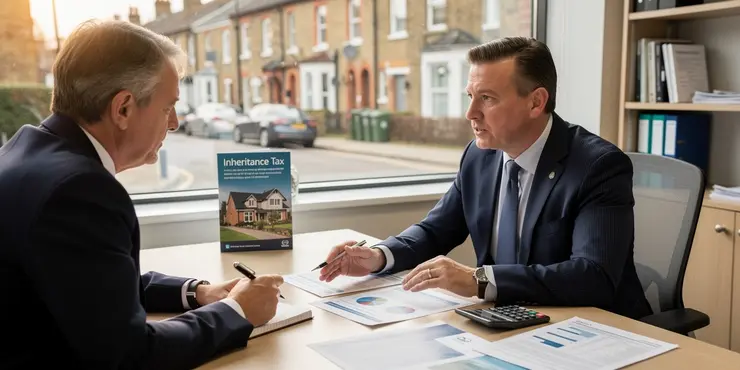
Inheritance Tax (IHT) is a tax on the estate of someone who has died, including their property, possessions, and money. In the UK, IHT is applied to the value of the estate above a certain threshold. For properties, the tax can be significant, given their often high value.
Currently, the standard IHT rate is 40%, but it only applies to the part of the estate above the threshold. Understanding how and when it is applicable can help in planning to minimize the tax burden.
Thresholds and Allowances
As of the latest update, the IHT threshold is £325,000. This is known as the "nil-rate band" and is the amount you can pass on before any tax is charged.
If the estate’s value, including property, exceeds the threshold, 40% tax is due on the amount above £325,000. However, there are additional allowances available that can increase your tax-free allowance.
Property and the Residence Nil-Rate Band
The Residence Nil-Rate Band (RNRB) can increase your IHT threshold if you pass your home to your direct descendants, such as children or grandchildren. In the 2023/2024 tax year, this allowance is up to £175,000.
Combining the RNRB with the standard IHT threshold allows a potential total allowance of £500,000. Couples can double this if both have estates below the threshold and leave their estate to each other.
Transferring Inheritance Tax Allowances
If your spouse or civil partner did not use their entire IHT allowance, you can transfer their unused allowance to your own estate. This transfer can notably increase your own IHT threshold.
It's important to document the unused allowance properly and apply it to reduce the potential taxation on your estate.
Practical Steps to Manage Inheritance Tax
If you inherit a property, it can be advantageous to seek professional advice or consult with an estate planner. They can provide tailored advice on how to manage IHT liabilities.
There are also other ways to reduce your estate’s IHT, such as making lifetime gifts, setting up trusts, or taking advantage of certain reliefs and exemptions.
Paying Inheritance Tax
Typically, the executor of the will handles any IHT liabilities. However, as a beneficiary, it is useful to understand what is expected.
The tax must be paid by the end of the sixth month after the person has died. Property can be complex to value, so ensuring accurate valuation and timely payment is important to avoid penalties.
Frequently Asked Questions
Inheritance Tax is a tax on the estate (including property, money, and possessions) of someone who has died.
It depends on the value of the estate and the applicable tax allowances at the time of inheritance.
The current threshold, also known as the 'nil-rate band', is usually £325,000. Estates valued below this amount are not usually taxed.
Yes, eligible estates can benefit from the 'residence nil-rate band,' which provides an additional threshold if the estate includes a home.
Inheritance Tax is charged at 40% on the value of the estate above the threshold.
Yes, there are certain reliefs, such as the residence nil-rate band and agricultural or business property relief, which may reduce the tax liability.
The mortgage debt is deducted from the property’s value when calculating the taxable estate.
In some cases, such as when the estate includes property, you can pay the tax in installments over 10 years.
Yes, you must report the value of the estate to HMRC for tax purposes.
Generally, transfers between spouses or civil partners are exempt from Inheritance Tax.
Yes, gifts made within 7 years before the person’s death may be liable for tax, affecting the estate’s tax status.
If the deceased person made gifts in the 7 years before death, those gifts might be subject to Inheritance Tax.
Yes, property left to charities is generally exempt from Inheritance Tax.
Documents such as a professional valuation, property survey, and details of any outstanding mortgage may be needed.
Improvements can increase the property’s value, which may impact the overall value of the estate.
Yes, foreign property can be subject to UK Inheritance Tax, depending on the deceased’s domicile status.
Yes, penalties and interest may be charged on unpaid tax after the due date.
The executor of the will or the administrator of the estate is responsible for ensuring that Inheritance Tax is paid.
Renting the property doesn’t change the initial tax liability but may have implications for income tax and capital gains tax.
Consider strategies like utilizing all available exemptions and reliefs or seeking professional advice for estate planning.

Ergsy Search Results
This website offers general information and is not a substitute for professional advice.
Always seek guidance from qualified professionals.
If you have any medical concerns or need urgent help, contact a healthcare professional or emergency services immediately.
Some of this content was generated with AI assistance. We've done our best to keep it accurate, helpful, and human-friendly.
- Ergsy carefully checks the information in the videos we provide here.
- Videos shown by Youtube after a video has completed, have NOT been reviewed by ERGSY.
- To view, click the arrow in centre of video.
- Most of the videos you find here will have subtitles and/or closed captions available.
- You may need to turn these on, and choose your preferred language.
- Go to the video you'd like to watch.
- If closed captions (CC) are available, settings will be visible on the bottom right of the video player.
- To turn on Captions, click settings.
- To turn off Captions, click settings again.