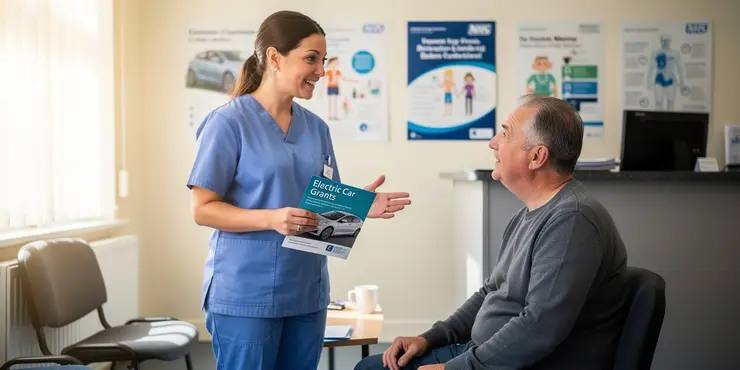

Get Answers
Understanding Grants for Electric Cars in the UK
As the UK pushes towards a greener future, transitioning to electric vehicles (EVs) is a significant initiative. To support this shift, the UK government, along with other bodies, provides grants aimed at making electric vehicles more affordable for the public. However, a common question that arises is whether these grants apply to used electric cars.
Government Grants for New Electric Cars
The primary grant available in the UK for new electric cars is the Plug-in Car Grant (PICG). This grant aims to reduce the price of new low-emission vehicles and is available directly at dealerships, so the buyer doesn't need to apply separately. The amount covered by this grant varies, generally offering a discount off the vehicle's purchase price. Importantly, the PICG is applicable only to new vehicles that meet specific emission standards and are listed by the Office for Zero Emission Vehicles (OZEV).
Grants for Used Electric Cars
While the government has robust schemes for new electric vehicles, the options for used electric cars are notably limited. Currently, government-backed grants like the Plug-in Car Grant do not extend to the purchase of used EVs. Since the grant is intended to boost the sale of new low-emission vehicles, it doesn't cover the purchase of pre-owned electric cars. Nevertheless, purchasing a used electric vehicle can still be a cost-effective and environmentally friendly choice for many buyers.
Alternative Support and Incentives
Although direct grants for used EVs are not available, several incentives and financial benefits can make purchasing a used electric vehicle more attractive. For example, used electric cars are exempt from road tax (Vehicle Excise Duty) in the UK, offering yearly savings. Moreover, electric vehicles typically have lower running costs and benefit from free or reduced parking fees in certain areas. Insurers might also offer more competitive premiums for electric vehicles.
Private and Local Incentives
Some local authorities and private organizations might offer additional support for purchasing electric vehicles, including used ones. For instance, local grants or scrappage schemes might be available in certain areas to encourage the replacement of older vehicles with electric ones. These initiatives can vary widely by region, so prospective buyers should check with their local council or regional initiatives for any available offers.
Conclusion
In summary, while the UK government provides significant support for the adoption of electric vehicles through schemes like the Plug-in Car Grant, these do not extend to used electric cars. However, the purchase of a used EV remains financially appealing due to lower operational costs and local incentives. Prospective buyers should stay informed about regional schemes that may offer additional financial support for transitioning to electric vehicles.
Understanding Help for Electric Cars in the UK
The UK is working hard to be more eco-friendly. One big step is getting people to use electric cars. To help with this change, the UK government, and other groups, give money to make electric cars cheaper. But people often ask: Do these money helps apply to second-hand electric cars?
Help for New Electric Cars
If you want to buy a new electric car, there's a special help called the Plug-in Car Grant (PICG). This grant lowers the price of new cars with low emissions. You can get this help right at the car shop, and you don’t need to fill out any extra forms. The amount of money you save depends on the car. But remember, this help is only for brand new cars that meet certain rules.
Help for Used Electric Cars
The government has good plans for new electric cars, but not much for second-hand ones. Right now, grants like the Plug-in Car Grant do not help with buying used electric cars. This is because the grant is meant to help sell new low-emission cars. Still, buying a used electric car can save money and help the planet.
Other Help and Benefits
Even though there are no direct grants for used electric cars, there are other ways to save money. For instance, you don’t have to pay road tax (Vehicle Excise Duty) for used electric cars in the UK, which saves money every year. Plus, electric cars often cost less to run. In some places, you can park for free or pay less. Insurance might also be cheaper for electric cars.
Local and Private Help
Some towns and private groups might give extra help to buy electric cars, even used ones. For example, you might find local grants or schemes to swap old cars for electric ones. These offers can be different depending on where you live. It's a good idea to ask your local council if there are any special deals.
Summary
To sum up, the UK government gives a lot of help for buying new electric cars, like the Plug-in Car Grant. But this doesn’t include used electric cars. Still, buying a second-hand electric car can save you money because of lower running costs and local deals. It's smart to check local offers that could help you switch to an electric car.
Frequently Asked Questions
It depends on the specific grant program. Some grants may cover used electric cars, while others may not.
Yes, there are some grant programs specifically designed to incentivize the purchase of used electric cars.
You can check the eligibility criteria of the grant program, or contact the administering body for clarification.
Grants might consider factors like the age of the vehicle, battery capacity, and the condition of the car.
It depends on the guidelines of the grants. Some may allow stacking of grants, while others might not.
Not necessarily. Some grants may be limited to certain types or models of electric vehicles.
Yes, you'll typically need to provide proof of purchase to qualify for a grant.
Some grants may be available to both individuals and businesses, but this varies by program.
Some grants may include leasing options, but it's important to check each program's guidelines.
Yes, grants for new electric cars are often larger than those for used ones.
Some programs require pre-approval, while others might need a completed purchase. Check the specific rules.
You'll often need proof of purchase, registration, and possibly personal identification.
Some grants might include environmental criteria, such as emissions standards or energy efficiency ratings.
Some grants may specify eligible brands or models, so it's important to check the criteria.
Typically, grants are reimbursed after purchase, but this can vary by program.
Grant availability can vary by region or country, so it's essential to check local programs.
Yes, some state and local governments have their own grant programs for electric vehicles.
Some grants may have income-based eligibility criteria, while others do not.
The processing time can vary but typically ranges from a few weeks to several months.
Some grants may allow funds to be used for additional expenses, but this depends on the program guidelines.
It depends on the grant. Some grants might pay for used electric cars, but others might not.
Yes, there are programs that give money to help people buy used electric cars.
You can find out if you can apply for the grant. Check the rules or ask the people who run the program for help.
Grants might look at things like how old the car is, how big the battery is, and how good the car is working.
Grants have rules. Some let you use more than one grant. Others do not let you do this.
No, not always. Some money help might only be for certain kinds of electric cars.
Yes, you usually need to show a receipt or proof that you bought something to get a grant.
Some money help, called grants, might be for people and for businesses. But not all programs give money to both.
Some grants might let you rent things you need. But you should always check the rules for each grant.
Yes, you usually get more money to help buy a new electric car than a used one.
Some programs need you to get permission before you start. Other programs want you to buy something first. Make sure to check what the rules are for each program.
You might need to show a receipt, sign up some details, and maybe even show ID like a school card or library card.
Some grants might have rules about the environment, like keeping the air clean or saving energy.
Some grants might say you have to choose certain brands or models. So, it's important to look at the rules carefully.
Usually, you get the money from grants back after you buy something. But, this can change depending on the program.
Grants are money you can get to help with things. Where you live can change what grants you can apply for. It's a good idea to look at programs near you.
Yes, some state and local governments give out money to help people get electric cars.
Some grants give money only if your income is below a certain amount. Other grants do not worry about income.
The time it takes can be different. It usually takes a few weeks to a few months.
Some grants might let you use the money for extra things. But it depends on the program rules.

Ergsy Search Results
This website offers general information and is not a substitute for professional advice.
Always seek guidance from qualified professionals.
If you have any medical concerns or need urgent help, contact a healthcare professional or emergency services immediately.
Some of this content was generated with AI assistance. We've done our best to keep it accurate, helpful, and human-friendly.
- Ergsy carefully checks the information in the videos we provide here.
- Videos shown by Youtube after a video has completed, have NOT been reviewed by ERGSY.
- To view, click the arrow in centre of video.
- Most of the videos you find here will have subtitles and/or closed captions available.
- You may need to turn these on, and choose your preferred language.
- Go to the video you'd like to watch.
- If closed captions (CC) are available, settings will be visible on the bottom right of the video player.
- To turn on Captions, click settings.
- To turn off Captions, click settings again.