
Get Answers
Understanding the Relationship
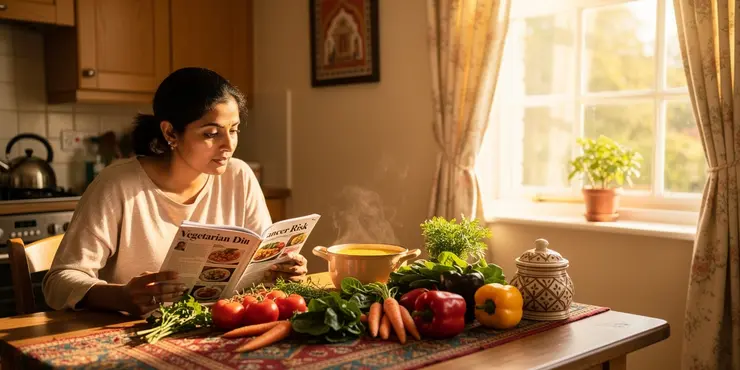
Many people believe that a vegetarian diet may reduce cancer risk. The idea is based on the consumption of fruits and vegetables that are high in fibre and antioxidants.
Research has often suggested that vegetarians may indeed have a lower risk of certain cancers. However, it’s essential to explore this topic with a critical eye.
Studies Supporting Reduced Cancer Risk
A number of studies have found that vegetarians tend to have lower rates of certain cancers. This includes lower incidences of colorectal and breast cancers.
One possible reason is the high intake of plant-based foods. These foods are rich in nutrients that are believed to protect against cancer.
Contrasting Evidence
Despite supportive findings, not all studies are in agreement. Some research points out that the risk reduction is not significant.
Certain studies fail to find a consistent link between vegetarian diets and lower cancer rates. These findings highlight the complexity of diet and cancer risk relationships.
Factors Influencing Study Outcomes
Various factors can cause discrepancies in study outcomes. Differences in study design, population, and diet types are significant contributors.
For example, vegetarian diets are diverse, ranging from lacto-vegetarian to vegan. These variations can influence the health outcomes observed in studies.
Conclusion
Overall, the consensus on vegetarian diets and cancer risk remains inconclusive. While many studies support a protective role, some do not.
Future research with more robust designs is necessary. It will give clearer insights into how plant-based diets may impact cancer risk.
Frequently Asked Questions
No, not all studies agree on this point. While some research suggests a lower cancer risk among vegetarians, findings can vary depending on the study design, population, and types of vegetarian diets considered.
Factors such as population demographics, lifestyle variables, the definition of vegetarianism, and variations in diet can all influence study outcomes.
Vegetarian diets are typically higher in fruits, vegetables, and fiber and lower in processed and red meats, factors associated with reduced cancer risk.
Not necessarily. The reduction in cancer risk can vary depending on the specific foods consumed and other lifestyle factors among vegetarians.
Limitations include self-reported dietary data, potential confounding factors, and the observational nature of many studies.
Yes, vegetarians may engage in other healthy behaviors, such as not smoking or exercising regularly, which can also impact cancer risk.
Dietary fiber, abundant in vegetarian diets, is believed to reduce the risk of certain cancers, such as colorectal cancer.
Some studies suggest a lower risk of gastrointestinal cancers among vegetarians, but findings can be inconsistent.
No, the percentage of risk reduction reported varies, and some studies find no significant difference.
Differences in sample size, population diversity, and data collection methods can lead to varied findings.
A common criticism is the challenge in controlling for all potential confounding variables that may affect cancer risk.
Yes, genetics is a significant factor in cancer risk and can influence outcomes regardless of diet.
Diet focusing on whole foods and low in processed items are generally considered more beneficial.
Cultural dietary habits and genetic backgrounds can influence study findings and interpretations.
Long-term studies help assess the effects of diet on cancer risk over time, minimizing short-term variability.
Some studies suggest even small amounts of processed or red meats can increase certain cancer risks, but this varies.
The WHO classifies processed meat as a carcinogen, meaning it's seen as having a cancer-causing potential.
Yes, many studies in this field are observational, which identifies associations but not cause-and-effect.
Meta-analyses attempt to summarize findings from various studies, but conclusions about vegetarian diets can still be debated.
Consuming a diet rich in fruits, vegetables, whole grains, and legumes, while limiting red and processed meats, is common advice.

Ergsy Search Results
This website offers general information and is not a substitute for professional advice.
Always seek guidance from qualified professionals.
If you have any medical concerns or need urgent help, contact a healthcare professional or emergency services immediately.
Some of this content was generated with AI assistance. We've done our best to keep it accurate, helpful, and human-friendly.
- Ergsy carefully checks the information in the videos we provide here.
- Videos shown by Youtube after a video has completed, have NOT been reviewed by ERGSY.
- To view, click the arrow in centre of video.
- Most of the videos you find here will have subtitles and/or closed captions available.
- You may need to turn these on, and choose your preferred language.
- Go to the video you'd like to watch.
- If closed captions (CC) are available, settings will be visible on the bottom right of the video player.
- To turn on Captions, click settings.
- To turn off Captions, click settings again.