
Speak To An Expert
Get clear, personalised advice for your situation.
Jot down a few questions to make the most of your conversation.
Can Technology Aid in the Care of Alzheimer's Patients?
Alzheimer's disease, a progressive neurological disorder, affects millions worldwide, with a significant impact on patients and their families in the UK. As the disease progresses, patients experience memory loss, confusion, and difficulties in daily living activities, requiring increasing levels of care. Technology offers innovative solutions to support Alzheimer’s patients and their carers, enhancing their quality of life and improving care management.
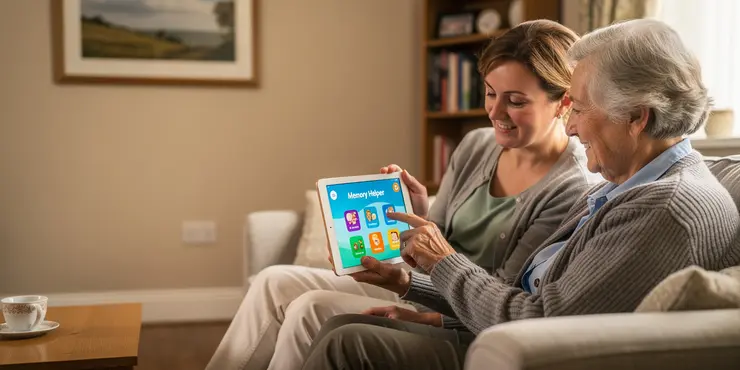
One of the foremost ways technology aids in Alzheimer’s care is through assistive devices and applications designed to enhance memory and cognitive function. Various mobile apps and digital tools provide cognitive exercises, reminders, and games that are designed to stimulate mental function and can potentially slow the progression of symptoms. These apps often have features like medication reminders, daily schedulers, and calming activities, providing crucial support to both patients and caregivers.
Safety is a critical concern in Alzheimer’s care, and technology provides valuable solutions here as well. GPS tracking devices, for instance, are essential tools for ensuring patient safety, particularly for those who may wander or become disoriented in unfamiliar surroundings. Wearable devices can track location, monitor health metrics like heart rate, and send immediate alerts to caregivers, offering peace of mind and timely intervention when necessary.
Additionally, smart home technology can ease daily activities and ensure a safer living environment for Alzheimer’s patients. Smart devices like automated lighting, voice-activated assistants, and smart thermostats can support patients in managing their environment more independently. Voice-assisted technology, such as Amazon Alexa or Google Home, allows patients to easily control household appliances, seek reminders, and even call for help without needing to use a traditional phone.
For families and professional caregivers, technology facilitates better communication and monitoring. Remote monitoring systems enable real-time observation of patients' health and activities from a distance, allowing family members or healthcare providers to stay informed. These systems often come with motion sensors, sleep trackers, and video cameras, providing comprehensive insights into the patient’s daily life and enabling timely interventions.
Moreover, technology bridges the gap in social interactions, an essential aspect of mental health. Virtual communication tools help Alzheimer’s patients maintain connections with family and friends, reducing isolation and providing emotional support. Video calls and social platforms ensure frequent interaction, which can positively influence emotional well-being despite physical distance.
Though technology offers tremendous potential in Alzheimer’s care, it is essential to address challenges such as digital literacy among older adults and data privacy concerns. Continued collaboration between tech companies, healthcare providers, and policymakers in the UK is crucial to optimise these technologies’ benefits. By leveraging technology effectively, we can enhance care for Alzheimer’s patients, supporting them and their caregivers in navigating the challenges of this complex condition.
Frequently Asked Questions
Technology can enhance the safety of Alzheimer's patients through GPS tracking devices, emergency response systems, and home monitoring systems that alert caregivers to irregular activity.
Examples of apps that assist Alzheimer's patients include memory aids, medication reminders, and appointment scheduling apps.
Yes, technology such as AI-based screening tools and advanced brain imaging techniques can aid in the early diagnosis of Alzheimer's.
Wearable devices can track the physical activity, sleep patterns, and location of Alzheimer's patients, providing valuable data to caregivers and healthcare providers.
Yes, virtual assistants equipped with voice recognition can help Alzheimer's patients by providing reminders, playing music, and answering questions in a user-friendly manner.
AI in Alzheimer's patient care can analyze patterns in patient data, predict disease progression, and assist in personalizing treatment plans.
Home automation can assist Alzheimer's patients by controlling lighting, appliances, and security systems, thus creating a safer and more comfortable environment.
Memory care software is designed to engage Alzheimer's patients in brain-stimulating activities, track cognitive function, and assist with memory training.
Virtual reality can be used in Alzheimer's therapy to provide immersive experiences that stimulate memory, reduce anxiety, and enhance overall well-being.
Telemedicine supports Alzheimer's patients by facilitating remote consultations with healthcare providers, thus improving access to care and reducing the need for travel.
Social robots can provide companionship, engage in basic interactions, and offer cognitive stimulation to Alzheimer's patients, thereby reducing feelings of loneliness.
Yes, technologies like GPS trackers and door sensors can help caregivers monitor and manage wandering behaviors in Alzheimer's patients.
Cognitive training programs can benefit Alzheimer's patients by improving cognitive functioning through exercises designed to enhance memory, attention, and problem-solving skills.
Smart home technologies relevant to Alzheimer's care include automated lighting, voice-activated assistants, and security systems that ensure safety and accessibility.
Yes, technology can help with medication management through digital pill dispensers and smartphone apps that send reminders to take medication on time.
Digital reminiscence therapy benefits Alzheimer's patients by using video and audio to trigger memories, thereby enhancing mood and cognitive function.
Caregivers benefit from technology through tools that offer better tracking of patient's health, communication aids, and platforms that connect them with support networks.
Yes, communication devices with text-to-speech and picture-based systems can assist non-verbal Alzheimer's patients in expressing needs and wants.
Virtual support groups provide caregivers with a platform to share experiences, access resources, and obtain emotional support from others in similar situations.
Machine learning algorithms can analyze data to predict Alzheimer's disease progression, potentially helping in developing more effective treatment plans tailored to individual patients.

Ergsy Search Results
This website offers general information and is not a substitute for professional advice.
Always seek guidance from qualified professionals.
If you have any medical concerns or need urgent help, contact a healthcare professional or emergency services immediately.
Some of this content was generated with AI assistance. We've done our best to keep it accurate, helpful, and human-friendly.
- Ergsy carefully checks the information in the videos we provide here.
- Videos shown by Youtube after a video has completed, have NOT been reviewed by ERGSY.
- To view, click the arrow in centre of video.
- Most of the videos you find here will have subtitles and/or closed captions available.
- You may need to turn these on, and choose your preferred language.
- Go to the video you'd like to watch.
- If closed captions (CC) are available, settings will be visible on the bottom right of the video player.
- To turn on Captions, click settings.
- To turn off Captions, click settings again.