
Speak To An Expert
Get clear, personalised advice for your situation.
Jot down a few questions to make the most of your conversation.
Understanding Sunburn and Tanning
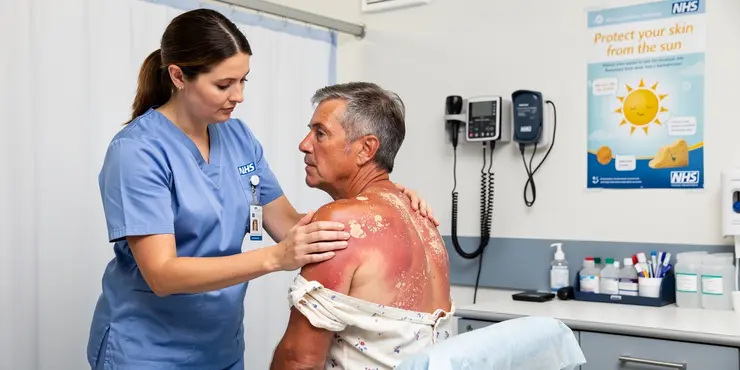
Sunburn and tanning are both responses of the skin to ultraviolet (UV) radiation from the sun. When the skin is exposed to UV rays, it produces more melanin, the pigment responsible for skin colour, in an attempt to protect itself from damage. Sunburn occurs when the skin is exposed to excessive UV radiation, causing it to become red, painful, and damaged.
Can Sunburn Turn into a Tan?
Technically, a sunburn does not directly turn into a tan. A sunburn signifies skin damage caused by overexposure to UV rays. As the skin begins to heal, it may start producing more melanin, which can lead to the appearance of a tan. However, this is not the same as turning a sunburn into a tan; rather, it is the body's natural response to protect against further UV damage.
In some cases, after the redness and sting of a sunburn subside, individuals may notice a tan. This is because the increased melanin production during the healing process can cause the skin to appear darker. However, it is essential to understand that achieving a tan through sunburn is a sign of skin damage and poses risks for long-term health, including premature aging and skin cancer.
Risks of Using Sunburn to Achieve a Tan
Relying on sunburn as a means to develop a tan is not advisable. Sunburn results in damage to the skin cells, which increases the risk of long-term consequences like wrinkles, dark spots, and more alarmingly, skin cancers. The risk is particularly significant when sunburns occur repeatedly. In the UK, the incidence of skin cancers, including melanoma, has been increasing, partly due to inadequate sun protection habits.
Moreover, the pain and peeling associated with sunburn can lead to further skin irritation and discomfort. The peeling process also means that the so-called tan achieved is usually uneven and short-lived, as the damaged skin sheds to reveal new skin underneath.
Safe Alternatives to Tanning
For those who desire a tan, there are safer alternatives to sunbathing. Self-tanning lotions and sprays offer a way to achieve the look of a tan without exposure to harmful UV rays. These products contain dihydroxyacetone (DHA), a colour additive that temporarily darkens the skin.
It is also important to use broad-spectrum sunscreen with an appropriate SPF to protect against both UVA and UVB rays whenever spending time outdoors. Wearing protective clothing, hats, and sunglasses can further reduce UV exposure.
Conclusion
While it may seem that sunburn can lead to a tan, it's crucial to recognise that sunburn is a sign of skin damage with potentially serious consequences. Protecting your skin from UV radiation not only helps prevent sunburn but also reduces the risk of long-term damage, allowing for a healthier approach to sun exposure. Embracing safer tanning methods and protective measures can maintain skin health while enjoying outdoor activities.
Understanding Sunburn and Tanning
Sunburn happens when your skin gets too much sun. Tanning is when the skin gets darker. Both happen because of sunlight. Sunlight has something called UV rays. When your skin gets sunlight, it makes more of a substance to protect itself. This substance is called melanin, and it gives skin its color. When your skin gets too much sun, it can become red, sore, and hurt. This is called sunburn.
Can Sunburn Turn into a Tan?
Sunburn itself does not become a tan. A sunburn is when your skin gets hurt by too much sun. When the skin starts to get better, it makes more melanin. This can make your skin look darker, like a tan. But this is not the same as changing a sunburn into a tan. It’s just your body trying to protect itself from more harm.
Sometimes, after a sunburn, the red and soreness go away, and your skin looks darker. This happens because as your skin heals, it makes more melanin. But getting a tan from a sunburn means the skin was harmed. This can be bad for your skin later on, leading to wrinkles or even skin sickness, like cancer.
Risks of Using Sunburn to Achieve a Tan
Getting a tan by letting your skin burn is not a good idea. Sunburn damages your skin, and this can lead to skin troubles, like wrinkles and dark spots. Even worse, it can lead to skin cancer. More and more people are getting skin cancer because they do not protect their skin from the sun.
Sunburn also hurts and makes your skin peel. Peeling can make your skin feel bad and uncomfortable. Plus, the tan you get is not even and does not last long because the skin peels off, showing new skin.
Safe Alternatives to Tanning
If you want a tan, there are safer ways to do it. You can use special creams or sprays that make your skin look tan without staying in the sun. These have a safe color ingredient that makes skin look darker for a while.
It’s important to use sunscreen to keep your skin safe when you’re outside. Sunscreen stops both kinds of UV rays. Wearing hats, sunglasses, and long sleeves can also help keep your skin safe.
Conclusion
It might seem like sunburn could lead to a tan, but sunburn is actually bad for your skin. Protecting your skin from the sun keeps it healthy. Using safe ways to get a tan and keeping your skin safe when outside will help you enjoy the sun without harm.
Frequently Asked Questions
Yes, as the skin heals from a sunburn, it may produce more melanin, leading to a tan.
After a sunburn, the skin increases melanin production in an attempt to protect itself, potentially resulting in a tan.
No, sunburn damage can increase skin cancer risk, and it's better to tan gradually with protection.
It can take several days to a week for a sunburn to fade and for any tan to become apparent.
Peeling removes dead skin cells, which may reduce the appearance of a tan.
No, not everyone's skin reacts the same way. Some people might not tan after sunburn.
Skin type, melanin levels, and the severity of the burn all influence this.
Repeated sunburns and tans may increase skin aging and the risk of skin cancer.
Using sunscreen and avoiding excessive sun exposure can minimize tanning after a burn.
Darker skin has more melanin, so it may tan more easily, but serious burns are still harmful.
It's not recommended to try to speed this up; focus on skin healing and protection.
Yes, severe or repeated sunburns can cause long-lasting skin damage and increase cancer risk.
Moisturize, stay hydrated, use aloe vera, and stay out of the sun until healed.
Use gradual exposure, wear sunscreen, and take breaks from the sun.
No, it's a sign of skin damage and the body's response to UV radiation.
No, peeling depends on the severity of the burn and individual skin responses.
Melanin protects against UV radiation, resulting in a tan, but can increase after sunburn.
Tanning oils are not recommended as they often provide little protection from UV rays.
Stay hydrated, cool the skin, use aloe vera, and avoid further sun exposure.
At least SPF 30 is recommended for effective protection against sunburn.
When your skin gets better from a sunburn, it might make more of something called melanin. This can cause your skin to get a tan.
When you get sunburn, your skin tries to protect itself by making more of something called melanin. This can make your skin look darker, like a tan.
Tools like picture stories or voice-reading apps can help understand this better.
No, getting sunburn can hurt your skin and make it more likely you will get skin cancer. It is safer to slowly tan your skin while using sunscreen.
A sunburn can take a few days or up to a week to get better. After that, you might start to see a tan.
Peeling takes off dead skin, which might make your tan look lighter.
No, not everyone's skin is the same. Some people do not get a tan after they get sunburned.
This depends on a few things, like your skin type, how much melanin is in your skin, and how bad the burn is.
Getting sunburned or a tan many times can make your skin look older. It can also make it more likely for you to get skin cancer.
Put on sunscreen and stay out of the sun so your skin doesn't get dark after a burn.
Darker skin has something called melanin. This is what gives it the color. Because it has more melanin, it can tan easier in the sun. But getting too much sun is still bad. It can burn the skin and hurt you.
Remember to use sunscreen and wear a hat when you are in the sun. This helps keep your skin safe. Parents and teachers can help remind you.
Don't try to make this go faster. It's better to help your skin heal and keep it safe.
Yes, getting a bad sunburn or too many sunburns can hurt your skin for a long time. It can also make it more likely for you to get skin cancer.
Put lotion on your skin. Drink lots of water. Use aloe vera. Stay away from the sun until your skin is better.
Get used to the sun slowly. Put on sunscreen to protect your skin. Take breaks and rest in the shade.
No, a tan means your skin is hurt. Your body changes color because of the sun's rays.
Peeling depends on how bad the burn is and how your skin reacts.
Melanin helps keep your skin safe from the sun. This makes your skin look tan. If you get a sunburn, your skin might make more melanin.
Tanning oils are not a good choice because they don't protect your skin from the sun.
Drink lots of water, put cool cloths on your skin, use aloe vera gel, and don't go out in the sun again.
You should use sunscreen with at least SPF 30. This will help protect your skin from getting sunburned.

Ergsy Search Results
This website offers general information and is not a substitute for professional advice.
Always seek guidance from qualified professionals.
If you have any medical concerns or need urgent help, contact a healthcare professional or emergency services immediately.
Some of this content was generated with AI assistance. We've done our best to keep it accurate, helpful, and human-friendly.
- Ergsy carefully checks the information in the videos we provide here.
- Videos shown by Youtube after a video has completed, have NOT been reviewed by ERGSY.
- To view, click the arrow in centre of video.
- Most of the videos you find here will have subtitles and/or closed captions available.
- You may need to turn these on, and choose your preferred language.
- Go to the video you'd like to watch.
- If closed captions (CC) are available, settings will be visible on the bottom right of the video player.
- To turn on Captions, click settings.
- To turn off Captions, click settings again.