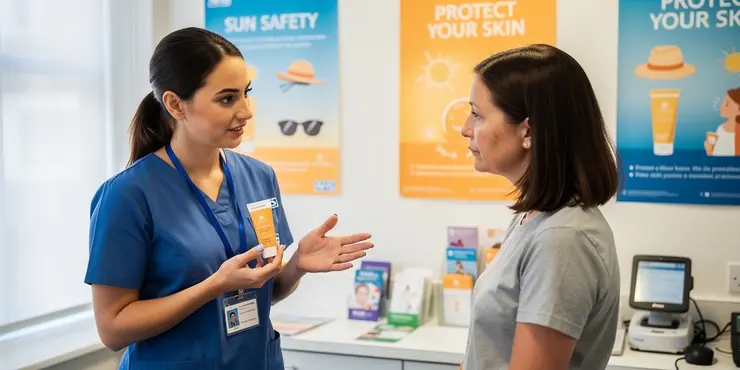

Speak To An Expert
Get clear, personalised advice for your situation.
Jot down a few questions to make the most of your conversation.
Understanding Sunburn
Sunburn is a common issue that occurs when skin is overexposed to ultraviolet (UV) rays from the sun. These rays damage the skin, leading to a red, painful appearance often accompanied by peeling. For residents of the UK, where weather can be quite variable, the occasional sunny days can sometimes lead to unexpected sunburns as individuals may not be as vigilant in sun protection compared to those in sunnier climates.
Preventing Sunburn
Preventing sunburn involves a combination of lifestyle choices and the use of protective products. The key strategy is to protect your skin from UV exposure whenever it is strong enough to cause damage. This can typically occur from late March to the end of September in the UK, especially between 11 am and 3 pm when the sun's rays are strongest.
Use Sunscreen
Sunscreen is one of the most effective tools in preventing sunburn. Choose a broad-spectrum sunscreen with a Sun Protection Factor (SPF) of at least 30. It should also offer protection against both UVA and UVB rays. Apply it generously on all exposed skin about 20 minutes before going out into the sun, and reapply at least every two hours, or more often if swimming or sweating.
Seek Shade
Another effective method to avoid sunburn is seeking shade, especially during peak sun hours. During a sunny day, staying under umbrellas, trees, or canopies can significantly reduce your exposure to UV rays. This is especially important for the UK’s unpredictable weather, as temperatures can rise unexpectedly, catching people off guard.
Wear Protective Clothing
Clothing can be an excellent barrier against UV rays. Wearing long-sleeved shirts, hats with wide brims, and sunglasses provides additional protection. Fabrics with a tight weave offer better defense against sun exposure. Some clothing is also designed with built-in UV protection factor (UPF), which provides extra peace of mind.
Be Mindful of Reflective Surfaces
Even on cooler days, or those with intermittent cloud cover typical of the UK climate, UV rays can penetrate clouds and reflect off surfaces such as water, sand, or concrete, increasing exposure levels. Always take precautions when near these surfaces, even if the sun doesn’t feel very strong.
Check the UV Index
The UV index is a valuable tool for understanding the day's potential for sunburn. In the UK, it's wise to check the UV index as part of your daily weather preparation. If the index is three or higher, take extra precautions, as the risk of sunburn increases significantly at these levels.
Conclusion
Sunburn can be effectively prevented with proper preparation and awareness. Utilizing sunscreen, seeking shade, wearing protective clothing, being cautious around reflective surfaces, and checking the UV index can all contribute to a sun-safe experience, even on surprisingly sunny UK days.
Understanding Sunburn
Sunburn happens when your skin is outside too long without protection. The sun has special rays called ultraviolet (UV) rays. These rays can hurt your skin. Your skin might turn red and hurt. Later, it can peel. In the UK, the weather changes a lot. When the sun is out, it can be easy to forget to protect your skin.
Preventing Sunburn
There are things you can do to stop sunburn. Make smart choices and use products that help. You should protect your skin when the sun is strong. In the UK, this is usually from March to September. The sun is strongest from 11 am to 3 pm. Try to be careful during this time.
Use Sunscreen
Sunscreen helps stop sunburn. Pick one with at least SPF 30. It should protect against both UVA and UVB rays. Put it on your skin 20 minutes before you go outside. Use it on any skin that is showing. Put on more every two hours. Do this even more if you are swimming or sweating.
Seek Shade
Stay in the shade to avoid sunburn, especially when the sun is strong. You can sit under umbrellas, trees, or tents. This helps keep UV rays away. In the UK, the weather can change fast. Always be ready to find shade when the sun comes out.
Wear Protective Clothing
Clothes can keep UV rays off your skin. Wear long sleeves, wide hats, and sunglasses. Clothes with a tight weave work best. Some clothes have special UV protection. They are good to wear if you want to feel safer.
Be Mindful of Reflective Surfaces
UV rays can get through clouds. They can also bounce off things like water or sand. This means more UV rays might reach you. Be careful when you are near these surfaces, even if it's cloudy or cool outside.
Check the UV Index
The UV index tells you how strong the sun's rays are. In the UK, check this index every day. If the number is three or higher, be extra careful. This means the risk of sunburn is higher.
Conclusion
You can stop sunburn if you are ready. Use sunscreen, find shade, wear the right clothes, watch out for shiny surfaces, and check the UV index. This can help keep you safe from the sun, even on sunny days in the UK.
Frequently Asked Questions
Sunburn is the skin's response to excessive ultraviolet (UV) exposure, leading to red, painful, and sometimes peeling skin.
Yes, sunburn can be prevented by taking protective measures against UV exposure.
To prevent sunburn, use broad-spectrum sunscreen, wear protective clothing, seek shade, avoid peak sun hours, and wear a hat and sunglasses.
Broad-spectrum sunscreen offers protection against both UVA and UVB rays, which are responsible for most sunburns and skin damage.
Reapply sunscreen every two hours, or more often if swimming, sweating, or toweling off.
Use a sunscreen with an SPF of at least 30 for effective sunburn prevention.
While natural oils like coconut and shea butter provide minimal protection, they are not substitutes for sunscreen.
Yes, up to 80% of UV rays can penetrate clouds, so sunscreen is necessary even on cloudy days.
Yes, some medications can increase sun sensitivity, making sunburn more likely. Check with your doctor or pharmacist.
Yes, UV rays can cause sunburn even in winter, especially when reflected off snow.
Wearing long sleeves, pants, and UPF-rated clothing can block UV rays and prevent sunburn.
A wide-brimmed hat provides the best protection for your face, neck, and ears from the sun.
UV rays are strongest between 10 a.m. and 4 p.m., so limiting sun exposure during these times helps prevent sunburn.
Sunscreen significantly reduces UV exposure but does not block all rays; additional measures like clothing and shade improve protection.
A higher UV index indicates a greater risk of harm from unprotected sun exposure and increased likelihood of sunburn.
No, tanning beds expose your skin to UV radiation, increasing the risk of skin damage and cancer without preventing future sunburns.
Sunglasses protect your eyes and the sensitive skin around them from UV damage, complementing other sunburn prevention methods.
Yes, children's skin is more sensitive and requires extra protection, including shade, clothing, and sunscreen.
While hydration doesn't prevent sunburn, it helps your body cope with sun exposure and keeps your skin healthy.
Avoiding the sun reduces risk, but sunscreen, clothing, and other protective measures can prevent sunburns while you enjoy outdoor activities.
Sunburn happens when you stay in the sun too long. It makes your skin red, sore, and it might peel.
You can stop getting sunburn by staying safe from the sun’s rays. Here are some tips to help:
- Wear sunscreen with SPF 30 or higher.
- Put on a hat and sunglasses.
- Stay in the shade when the sun is strong.
- Wear clothes that cover your skin.
These tips can help keep your skin safe from the sun.
To stop sunburn:
- Use sunscreen that protects from many kinds of sun rays.
- Wear clothes that cover your skin.
- Stay in the shade when you can.
- Try not to go out when the sun is very strong.
- Put on a hat and sunglasses.
Broad-spectrum sunscreen helps protect your skin from the sun's UVA and UVB rays. These rays can cause sunburn and hurt your skin.
Put on more sunscreen every two hours. Do this more often if you are swimming, sweating, or using a towel.
Put on sunscreen with SPF 30 or higher to help stop sunburn.
Natural oils, like coconut oil and shea butter, give a little bit of protection. But they are not the same as sunscreen and should not be used instead of it.
Yes, even if it is cloudy, the sun's rays can still go through the clouds. You should wear sunscreen to protect your skin.
Some medicines can make your skin more sensitive to the sun. This means you can get sunburned more easily. Ask your doctor or pharmacist for help.
Yes, the sun's UV rays can still burn your skin in winter. This can happen when the sun shines on snow and bounces the rays back at you.
Wear long sleeves and pants to cover your skin. Clothes with UPF can block the sun and stop sunburn.
A big hat with a wide brim is the best choice for keeping the sun off your face, neck, and ears.
The sun is strongest and can burn your skin between 10 in the morning and 4 in the afternoon. It's a good idea to stay in the shade or indoors during these times to keep from getting a sunburn.
Sunscreen helps keep you safe from the sun, but it doesn't stop all of the sun's rays. Wearing clothes that cover your skin and staying in the shade can help keep you safe too.
A high UV index means being in the sun can hurt your skin. You might get sunburnt more easily.
You can use sunscreen to protect your skin. Wear a hat and sunglasses, and try to stay in the shade when the sun is strong.
No, tanning beds are not safe. They shine UV rays on your skin. This can hurt your skin and give you cancer. Tanning beds do not stop sunburns later.
Sunglasses help keep your eyes safe from the sun. They also protect the skin around your eyes. This is important because the sun can hurt your skin and eyes. Wearing sunglasses is a good way to stay safe in the sun. You can also use sunscreen and wear a hat to protect yourself more.
Yes, children's skin is softer. It needs more care. Give them shade, put clothes on them, and use sunscreen.
Drinking water doesn't stop sunburn, but it helps your body stay strong in the sun and keeps your skin healthy.
Staying out of the sun is good, but you can also stay safe by using sunscreen, wearing clothes that cover your skin, and taking other steps to stop sunburns. This way, you can have fun outside.

Ergsy Search Results
This website offers general information and is not a substitute for professional advice.
Always seek guidance from qualified professionals.
If you have any medical concerns or need urgent help, contact a healthcare professional or emergency services immediately.
Some of this content was generated with AI assistance. We've done our best to keep it accurate, helpful, and human-friendly.
- Ergsy carefully checks the information in the videos we provide here.
- Videos shown by Youtube after a video has completed, have NOT been reviewed by ERGSY.
- To view, click the arrow in centre of video.
- Most of the videos you find here will have subtitles and/or closed captions available.
- You may need to turn these on, and choose your preferred language.
- Go to the video you'd like to watch.
- If closed captions (CC) are available, settings will be visible on the bottom right of the video player.
- To turn on Captions, click settings.
- To turn off Captions, click settings again.