
Speak To An Expert
Get clear, personalised advice for your situation.
Jot down a few questions to make the most of your conversation.
Introduction
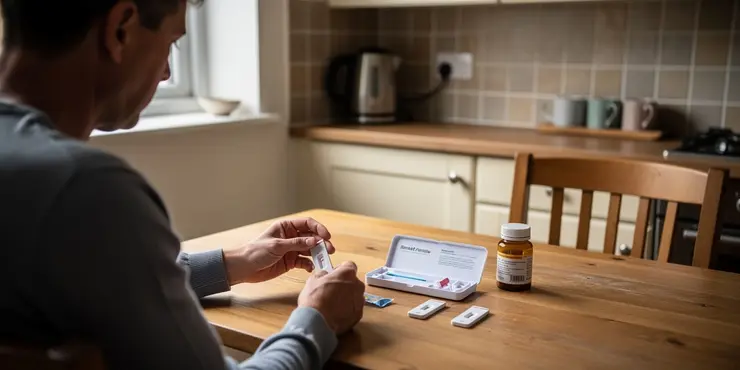
For individuals who rely on prescription medications, understanding how changes in medication can impact health is crucial. Self-testing offers a way for patients in the UK to monitor their health conditions and observe how their prescriptions affect their well-being. This method of tracking can empower individuals to make informed decisions about their health in collaboration with healthcare professionals.
What is Self-Testing?
Self-testing involves using at-home diagnostic tools to track health markers, such as glucose levels, cholesterol, and blood pressure. These tests are typically easy to use and offer immediate results. With advancements in technology, self-testing kits are increasingly becoming more accessible and affordable for the general public. They allow for continuous monitoring without the need for frequent visits to a healthcare facility.
Benefits of Self-Testing for Prescription Changes
When a doctor adjusts a prescription, it can take time to understand how the new medication affects your body. Self-testing can help you:
- Monitor Immediate Effects: Self-testing can quickly show how a new medication affects your health markers, such as blood sugar levels for diabetic patients.
- Track Long-Term Trends: Regular testing over a period can provide data, helping you and your healthcare provider understand the long-term impact of a medication.
- Improve Communication with Healthcare Providers: With data from self-tests, you can have more informed discussions with your GP about how a medication is working for you.
Popular Self-Testing Kits in the UK
In the UK, various self-testing kits are available over-the-counter or online. These include:
- Blood Glucose Meters: Essential for diabetics to monitor blood sugar levels and adjust their medications accordingly.
- Blood Pressure Monitors: Useful for those with hypertension to manage and assess the effectiveness of treatment plans.
- Cholesterol Tests: Helps in tracking lipid levels, particularly when starting or changing cholesterol medications.
Limitations of Self-Testing
While self-testing offers convenience, it is not without limitations. It's important to remember:
- Accuracy: Home tests are generally reliable, but they can occasionally give inaccurate results. Always confirm significant changes with a lab test if possible.
- Misinterpretation: Without professional advice, you might misinterpret results. Regular consultation with your healthcare provider is crucial.
Conclusion
Self-testing can be a valuable tool in managing prescription medications and understanding their effects on your health. While it provides insightful data, it should complement, not replace, professional medical advice. By using self-testing kits judiciously, patients in the UK can have more control over their health and medication management.
Introduction
If you take medicine from the doctor, it is important to know how changes in your medicine can affect your health. In the UK, self-testing helps people check their health at home and see how their medicine is working. This can help you make better choices about your health with your doctor.
What is Self-Testing?
Self-testing means using simple tools at home to check things like blood sugar, cholesterol, and blood pressure. These tests are easy to use and show results fast. New technology makes self-testing kits cheaper and easier to get. They help you keep an eye on your health without going to the doctor all the time.
Benefits of Self-Testing for Prescription Changes
When a doctor changes your medicine, it might take time to see how it affects you. Self-testing can help you:
- See Quick Changes: Self-tests can show fast how new medicine affects things like blood sugar in people with diabetes.
- Watch Long-Term Effects: By testing regularly, you and your doctor can see how the medicine works over time.
- Talk Better with Your Doctor: With self-test results, you can have better talks with your doctor about your medicine.
Popular Self-Testing Kits in the UK
In the UK, you can buy different self-testing kits in shops or online. These include:
- Blood Glucose Meters: Important for people with diabetes to check blood sugar and change medicine if needed.
- Blood Pressure Monitors: Good for people with high blood pressure to see how treatment is working.
- Cholesterol Tests: Helps check fat levels in the blood, especially when starting new cholesterol medicine.
Limitations of Self-Testing
While self-testing is handy, there are some things to remember:
- Accuracy: Home tests usually work well, but sometimes they can give wrong results. It's good to check big changes with a lab test.
- Understanding Results: Without a doctor, you might get confused by your results. Always talk to your doctor regularly.
Conclusion
Self-testing is a useful way to manage your medicine and see how it affects your health. It gives you useful information but should not replace advice from your doctor. By using self-tests wisely, people in the UK can better manage their health and medicine with their doctor’s help.
Frequently Asked Questions
Self-testing prescription changes tracking is a way for patients to record, monitor, and review changes made to their prescriptions over time using a personal log, app, or clinic portal. It helps track dose changes, medication swaps, additions, stops, and reasons for each change so the history stays organized and easy to review.
Self-testing prescription changes tracking can be useful for anyone whose medications change often, including people with chronic conditions, complex treatment plans, or multiple prescribers. It is especially helpful for patients who want a clear record to share with doctors, pharmacists, or caregivers.
Self-testing prescription changes tracking is important because it reduces confusion about current medications, helps prevent duplicates or conflicting prescriptions, and supports safer decisions during appointments or emergencies. A clear record can also make it easier to spot errors or unexpected changes.
To start self-testing prescription changes tracking, list each medication, its current dose, the date it changed, the prescribing clinician, and the reason for the change if known. Then update the record every time a prescription is started, stopped, increased, decreased, or replaced.
Self-testing prescription changes tracking records should usually include the medication name, dose, form, frequency, start date, change date, prescribing provider, reason for the change, and any side effects or notes. Including the pharmacy and refill dates can also be helpful.
Self-testing prescription changes tracking should be updated as soon as a prescription changes, ideally the same day or as soon as the patient receives the updated instructions. It should also be reviewed before appointments, hospital visits, and pharmacy refills.
Yes, self-testing prescription changes tracking can help during doctor visits by giving a quick summary of what has changed since the last appointment. This can improve communication, reduce mistakes, and help the clinician make better decisions based on an accurate medication history.
Yes, self-testing prescription changes tracking can help prevent prescription errors by making it easier to compare current instructions with previous ones. It can highlight missing updates, unintended dose changes, or medications that should no longer be taken.
Self-testing prescription changes tracking can be done with a paper notebook, spreadsheet, medication app, patient portal, or medication management tool. The best tool is one that is easy to update, easy to access, and simple to share when needed.
For multiple medications, self-testing prescription changes tracking works best when each medicine has its own line or entry with the current dose, schedule, and change history. Color-coding, tags, or separate categories for active, stopped, and temporary prescriptions can also help keep records clear.
In self-testing prescription changes tracking, side effects should be recorded with the date they started, how severe they were, and whether they improved after a dose change or medication switch. This information can help clinicians decide whether the prescription should be adjusted.
Yes, self-testing prescription changes tracking should include over-the-counter medicines, vitamins, herbal products, and supplements because they can affect prescription safety and effectiveness. Recording them helps create a more complete medication picture.
Caregivers can assist with self-testing prescription changes tracking by helping update the record, verifying medication instructions, and noticing changes in symptoms or side effects. They can also help make sure the information is available during appointments or emergencies.
Yes, self-testing prescription changes tracking is very useful after hospital discharge because medication plans often change during a hospital stay. Tracking the updated list helps patients follow the discharge instructions correctly and avoid taking outdated medications.
To verify self-testing prescription changes tracking, compare the record with pharmacy labels, discharge papers, after-visit summaries, and the patient portal. If anything does not match, contact the prescribing clinician or pharmacist to confirm the correct instructions.
Yes, self-testing prescription changes tracking can be shared with pharmacists to help them check for interactions, duplicates, or dosing concerns. A current medication list or digital record can make pharmacy consultations more efficient and safer.
Common mistakes in self-testing prescription changes tracking include forgetting to record a change, not noting the date, leaving out the reason for the change, and failing to remove discontinued medicines. Another common issue is not updating the record after hospital or specialist visits.
Self-testing prescription changes tracking can support refill management by showing when a prescription was changed, when refills are due, and whether the current supply matches the latest instructions. This helps prevent running out early or refilling the wrong dose.
Privacy concerns in self-testing prescription changes tracking include protecting personal health information from unauthorized access, especially when using apps, cloud storage, or shared devices. Patients should use passwords, secure accounts, and trusted tools when storing medication records.
You should ask a clinician about your self-testing prescription changes tracking record whenever there is uncertainty about the current dose, an unexpected side effect, conflicting instructions, or a recent hospital or specialist visit. It is also wise to ask before making any medication changes on your own.

Ergsy Search Results
This website offers general information and is not a substitute for professional advice.
Always seek guidance from qualified professionals.
If you have any medical concerns or need urgent help, contact a healthcare professional or emergency services immediately.
Some of this content was generated with AI assistance. We've done our best to keep it accurate, helpful, and human-friendly.
- Ergsy carefully checks the information in the videos we provide here.
- Videos shown by Youtube after a video has completed, have NOT been reviewed by ERGSY.
- To view, click the arrow in centre of video.
- Most of the videos you find here will have subtitles and/or closed captions available.
- You may need to turn these on, and choose your preferred language.
- Go to the video you'd like to watch.
- If closed captions (CC) are available, settings will be visible on the bottom right of the video player.
- To turn on Captions, click settings.
- To turn off Captions, click settings again.