
Get Answers
Can peptides be absorbed through the skin?
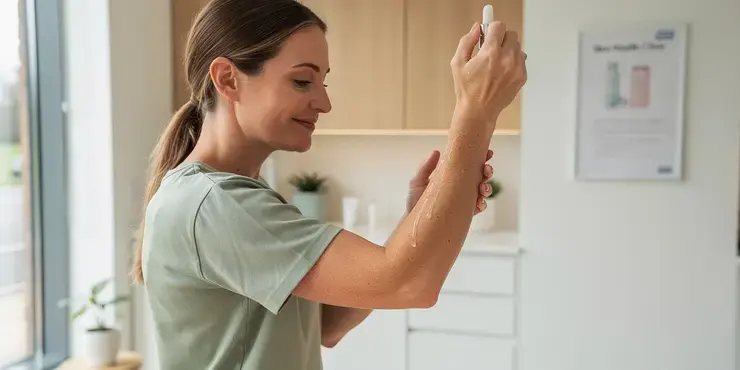
Yes, some peptides can be absorbed through the skin, but it depends on the type of peptide and the product formula. Peptides are short chains of amino acids, and many are used in skincare for their potential to support the skin barrier and signal certain skin processes.
However, the skin is designed to be a barrier. This means not every peptide can pass through easily, and many will mainly work on the outer layers rather than reaching deep into the skin.
How skin absorption works
The outer layer of the skin, called the stratum corneum, is very effective at keeping substances out. For a peptide to be absorbed, it usually needs to be small enough and placed in a formula that helps it move across this barrier.
Factors such as the peptide’s size, stability and the delivery system all matter. Ingredients like liposomes, encapsulation or certain solvents may help improve penetration.
What peptides can do in skincare
Many topical peptides are used to help improve the appearance of skin rather than to act like a medicine. They are often found in products aimed at hydration, firmness or the look of fine lines.
Some peptides may help support the skin’s natural barrier or signal skin cells in ways that encourage a smoother, more refreshed appearance. The effects are usually subtle and depend on regular use.
Why not all peptides work the same way
Not every peptide is designed to be absorbed deeply into the skin. Some are too large or unstable, so they may break down before they can do much beyond the skin’s surface.
Others are made to act locally in the upper layers of skin. Even when they do not travel far, they can still be useful in a well-formulated skincare product.
What UK consumers should look for
If you are buying a peptide skincare product in the UK, it is worth checking the ingredient list and the product claims. Look for clear information about the type of peptide used and what the product is meant to do.
Results can vary from person to person, so it is sensible to manage expectations. A good formula, regular use and sun protection often matter just as much as the peptide itself.
The bottom line
Peptides can be absorbed through the skin to some extent, but absorption is not guaranteed. Their effectiveness depends on the peptide, the formulation and the condition of the skin.
For most skincare products, peptides are best seen as supportive ingredients rather than miracle fixers. They can be part of a useful routine, especially when combined with other proven skincare steps.
Frequently Asked Questions
Peptides skin absorption refers to the movement of peptide molecules from a product into or across the outer skin layers. Because peptides are usually large and water-loving, peptides skin absorption is often limited to the surface or upper skin layers rather than deep systemic penetration.
The effectiveness of peptides skin absorption depends on the peptide size, formula, delivery system, and skin condition. Many topical peptide products are designed for surface or near-surface activity, where peptides skin absorption can still support visible skin benefits without needing deep penetration.
Peptides skin absorption is influenced by molecular size, charge, concentration, formulation type, pH, solvent system, and the presence of penetration enhancers. Skin hydration and whether the skin barrier is intact also affect peptides skin absorption.
Yes, peptides skin absorption rates differ because not all peptides have the same structure, size, or stability. Smaller or specially formulated peptides may show better peptides skin absorption than larger peptides that remain mostly on the skin surface.
Yes, peptides skin absorption can be improved with delivery technologies such as liposomes, nanocarriers, encapsulation, microemulsions, or penetration enhancers. These systems help protect peptides and may increase the amount of peptides skin absorption into the upper skin layers.
Peptides skin absorption does not need to reach deep tissue to be useful in skincare. Many products rely on peptides skin absorption in the outer skin layers to support hydration, the look of firmness, and a smoother appearance.
Yes, skin type can affect peptides skin absorption. Dry, compromised, or more permeable skin may allow different absorption behavior than oily or highly intact skin, which can change how peptides skin absorption performs from person to person.
Smaller molecules generally have a better chance of peptides skin absorption than larger ones. Since the skin barrier is selective, very large peptides often have limited peptides skin absorption and may act mainly on the surface.
Yes, peptide stability strongly affects peptides skin absorption. If a peptide breaks down easily in a formula or on the skin, less intact material is available, which can reduce meaningful peptides skin absorption.
Yes, peptides skin absorption can be measured using lab methods such as Franz diffusion cells, tape stripping, and analytical chemistry techniques. These tests help researchers estimate how much peptides skin absorption occurs through or into the skin layers.
Combining peptides with moisturizers can influence peptides skin absorption by improving skin hydration and barrier softness. Better hydration can sometimes increase peptides skin absorption in the upper layers, though the effect depends on the formula.
Peptides skin absorption itself is not usually a major cause of irritation, but the full formula may cause sensitivity. Preservatives, acids, solvents, or other active ingredients can affect comfort even when peptides skin absorption is low.
Peptides skin absorption is typically different from retinoids or acids because peptides are often larger and less likely to deeply penetrate. Retinoids and acids may act more strongly on exfoliation or cell signaling, while peptides skin absorption is often aimed at gentler surface-level support.
Damaged or compromised skin can increase peptides skin absorption because the barrier is less effective. However, this can also raise the risk of irritation, so products designed for peptides skin absorption should still be chosen carefully.
Yes, pH can matter for peptides skin absorption because it affects peptide stability, solubility, and the skin barrier environment. A well-balanced pH can help preserve the peptide and support more effective peptides skin absorption.
Yes, format can change peptides skin absorption. Serums often use lighter delivery systems, creams can improve hydration and retention, and sprays may provide more limited contact time, so peptides skin absorption may vary across formats.
For most cosmetic peptides, peptides skin absorption is not expected to reach the bloodstream in meaningful amounts. Most topical peptides are designed to act locally in the skin, where peptides skin absorption remains limited to superficial layers.
Peptides skin absorption can begin soon after application, but the amount absorbed over time depends on the formula and skin condition. Many products are intended for repeated use, since peptides skin absorption is usually gradual and limited.
Yes, both peptide size and charge affect peptides skin absorption. Smaller, less strongly charged peptides usually have an easier time interacting with the skin barrier, while highly charged molecules often show lower peptides skin absorption.
The best way to support peptides skin absorption is to apply products to clean skin, use a formula designed for stability and delivery, and follow with moisturization if needed. Consistent use and avoiding harsh layering with incompatible actives can help peptides skin absorption perform better.

Ergsy Search Results
This website offers general information and is not a substitute for professional advice.
Always seek guidance from qualified professionals.
If you have any medical concerns or need urgent help, contact a healthcare professional or emergency services immediately.
Some of this content was generated with AI assistance. We've done our best to keep it accurate, helpful, and human-friendly.
- Ergsy carefully checks the information in the videos we provide here.
- Videos shown by Youtube after a video has completed, have NOT been reviewed by ERGSY.
- To view, click the arrow in centre of video.
- Most of the videos you find here will have subtitles and/or closed captions available.
- You may need to turn these on, and choose your preferred language.
- Go to the video you'd like to watch.
- If closed captions (CC) are available, settings will be visible on the bottom right of the video player.
- To turn on Captions, click settings.
- To turn off Captions, click settings again.