
Get Answers
Can PCOS happen if you are not overweight?
Yes. Polycystic ovary syndrome, or PCOS, can affect people of any body size, including those who are not overweight. Weight is not a reliable way to tell whether someone has PCOS.
In the UK, many people assume PCOS only affects those with a higher body weight, but that is not true. Some people with PCOS are slim or have a normal BMI and still experience clear symptoms.
What symptoms might suggest PCOS?
Common signs include irregular or very infrequent periods, acne, excess facial or body hair, and thinning hair on the scalp. Some people also notice difficulty conceiving, oily skin, or weight changes, but these are not needed for a diagnosis.
Symptoms can vary a lot from person to person. You may have only one or two signs, or several, and they may develop gradually over time.
Can you self-diagnose PCOS?
You can spot patterns that may point to PCOS, but you cannot confirm it yourself. A proper diagnosis usually involves a GP review, symptom history, and sometimes blood tests or an ultrasound scan.
Self-checking can be useful if you notice irregular cycles, new acne, or hair growth that feels unusual for you. Keeping a record of your periods and symptoms can help a GP see whether PCOS is likely.
Why being not overweight does not rule it out
PCOS is linked to hormone levels, ovulation, and sometimes insulin resistance, but it does not look the same in everyone. Some people do not have weight gain at all, while others may be told their symptoms are “not PCOS” because they are not overweight.
This can delay diagnosis and treatment. If your periods are irregular or you have symptoms that affect your confidence or health, they still deserve proper medical attention.
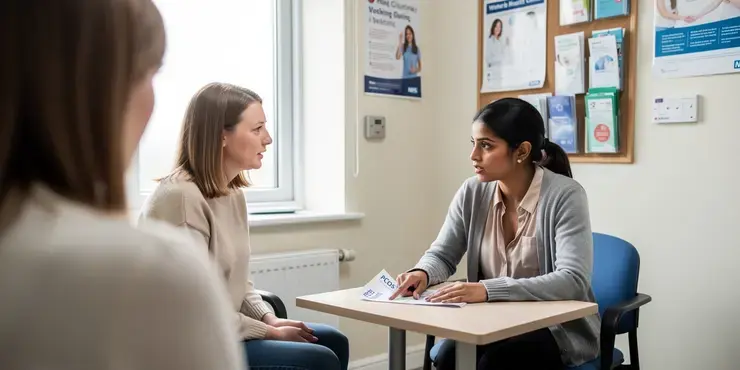
When to speak to a GP in the UK
Book a GP appointment if your periods are more than 35 days apart, stop for several months, or are very unpredictable. You should also seek advice if you have new or worsening acne, excess hair growth, or hair thinning.
If you are trying to get pregnant and things are not happening as expected, mention that too. A GP can look at possible causes, including PCOS, and advise on next steps through the NHS.
What to do before your appointment
Write down when your periods start, how long they last, and any symptoms you notice. Photos of acne or hair growth concerns can also help if the symptoms come and go.
List any medicines you take and any family history of PCOS, diabetes, or hormone problems. This information can make the appointment more useful and help your GP decide on tests or referral.
Frequently Asked Questions
PCOS symptom self diagnosis if not overweight means noticing patterns of symptoms that can happen in people with PCOS even when body weight is normal. Common clues include irregular or absent periods, acne, excess facial or body hair, scalp hair thinning, and signs of insulin resistance. It is not a confirmed diagnosis, but it can help you decide when to seek medical evaluation.
The most common signs of PCOS symptom self diagnosis if not overweight include irregular periods, skipped ovulation, acne, unwanted hair growth, hair thinning on the scalp, and fertility problems. Some people also notice darkened skin patches, weight changes that are subtle rather than obvious, or increased cravings and fatigue.
Yes, PCOS symptom self diagnosis if not overweight can absolutely happen in people with a normal BMI. PCOS is not limited to people who are overweight, and many people with normal body weight still experience hormonal and menstrual symptoms. A normal BMI does not rule it out.
PCOS symptom self diagnosis if not overweight can be useful for spotting patterns, but it is not fully reliable on its own. Similar symptoms can be caused by thyroid problems, high prolactin, stress, eating disorders, or other hormone conditions. Lab tests and sometimes ultrasound are usually needed to confirm the cause.
Period changes that suggest PCOS symptom self diagnosis if not overweight include cycles longer than 35 days, fewer than eight periods a year, very unpredictable bleeding, or months without a period. If you regularly ovulate and your periods are consistently on time, PCOS becomes less likely, though not impossible.
Acne alone usually is not enough for PCOS symptom self diagnosis if not overweight. Hormonal acne can be one sign, especially if it is persistent, starts in adulthood, or appears along with irregular periods or hair growth changes. Acne by itself has many causes, including skin care products, stress, and normal hormone variation.
Excess hair growth can support PCOS symptom self diagnosis if not overweight when it appears in places more typical of male-pattern hair growth, such as the chin, upper lip, chest, abdomen, or inner thighs. New or increasing coarse hair in these areas can point to higher androgen levels, which are common in PCOS.
Yes, scalp hair thinning can be part of PCOS symptom self diagnosis if not overweight. It often shows up as gradual thinning at the crown or widening of the part rather than sudden bald patches. This pattern can happen alongside acne, irregular periods, or unwanted facial hair.
Several conditions can mimic PCOS symptom self diagnosis if not overweight, including thyroid disease, high prolactin, congenital adrenal hyperplasia, Cushing syndrome, hypothalamic amenorrhea, and some medication effects. Because of this overlap, a clinician may order hormone tests to rule out other causes.
After PCOS symptom self diagnosis if not overweight raises concern, doctors often use blood tests for testosterone, DHEAS, prolactin, thyroid function, blood sugar, and sometimes LH and FSH. A pelvic ultrasound may also be used, though PCOS can be diagnosed without it in some cases. The exact workup depends on your symptoms and age.
Yes, PCOS symptom self diagnosis if not overweight can still involve insulin resistance. Insulin resistance is not limited to people who are overweight, and some people with normal weight still have elevated insulin levels or blood sugar problems. Signs may include fatigue after meals, cravings, acne, or dark skin patches.
For PCOS symptom self diagnosis if not overweight, track cycle length, missed periods, acne flares, hair growth changes, scalp thinning, weight changes, and fertility concerns over several months. A period-tracking app or calendar can help show patterns that are easy to miss day to day. Bring the record to a healthcare visit.
PCOS symptom self diagnosis if not overweight should lead to a medical appointment if periods are very irregular, you go months without bleeding, symptoms are worsening, or you are trying to get pregnant without success. You should also seek care if you have severe acne, rapid hair growth changes, or signs of another hormone disorder.
Yes, PCOS symptom self diagnosis if not overweight can be harder in teenagers because irregular cycles and acne can be normal in the first years after puberty. However, very infrequent periods, significant excess hair growth, or persistent severe acne may still warrant evaluation. Teen PCOS diagnosis usually requires careful medical assessment.
No, having regular periods does not completely rule out PCOS symptom self diagnosis if not overweight. Some people with PCOS ovulate irregularly but still bleed on a fairly regular schedule, or they may have other signs like high androgen symptoms. A doctor may still consider PCOS if several symptoms fit.
Yes, PCOS symptom self diagnosis if not overweight can still affect fertility because irregular ovulation can make conception harder. Even when body weight is normal, hormonal imbalance may interfere with predictable ovulation. Many people with PCOS conceive with the right treatment and monitoring.
While waiting for evaluation, regular meals, balanced nutrition, adequate sleep, stress reduction, and consistent physical activity may help some symptoms of PCOS symptom self diagnosis if not overweight. These steps may support insulin sensitivity and hormone balance, though they do not replace medical care. Avoid extreme dieting or overexercise, which can worsen hormone problems in some people.
Yes, PCOS symptom self diagnosis if not overweight can be confused with post-birth control changes because cycles, acne, and hair changes can shift after stopping hormonal contraception. If symptoms persist for several months or were present before birth control, PCOS becomes more likely. A clinician can help distinguish temporary adjustment from an underlying disorder.
PCOS symptom self diagnosis if not overweight is a personal recognition of symptom patterns, while a confirmed diagnosis is made by a healthcare professional using medical criteria. A diagnosis usually considers menstrual irregularity, signs of elevated androgens, and sometimes ultrasound findings, while also ruling out other conditions. Self-diagnosis can be a useful first step, but it should not be the final answer.
After suspecting PCOS symptom self diagnosis if not overweight, the next step is to document symptoms and schedule a medical visit. Ask about hormone testing, possible metabolic screening, and whether your symptoms fit PCOS or another condition. Early evaluation can help with symptom control, fertility planning, and long-term health monitoring.

Ergsy Search Results
This website offers general information and is not a substitute for professional advice.
Always seek guidance from qualified professionals.
If you have any medical concerns or need urgent help, contact a healthcare professional or emergency services immediately.
Some of this content was generated with AI assistance. We've done our best to keep it accurate, helpful, and human-friendly.
- Ergsy carefully checks the information in the videos we provide here.
- Videos shown by Youtube after a video has completed, have NOT been reviewed by ERGSY.
- To view, click the arrow in centre of video.
- Most of the videos you find here will have subtitles and/or closed captions available.
- You may need to turn these on, and choose your preferred language.
- Go to the video you'd like to watch.
- If closed captions (CC) are available, settings will be visible on the bottom right of the video player.
- To turn on Captions, click settings.
- To turn off Captions, click settings again.