
Get Answers
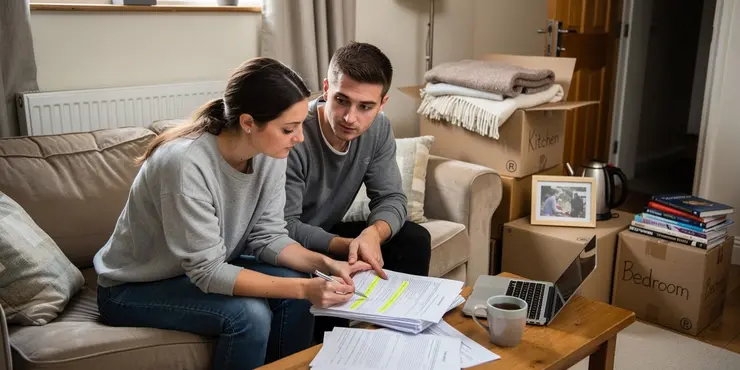
Can moving home affect Council Tax payments?
Yes, moving home can sometimes lead to a Council Tax overpayment. This usually happens because your old council account is still being billed after you have moved out, or because your new bill starts before the correct date.
Council Tax is normally charged based on who lives in a property and from what date. If your moving date is not updated quickly, you could end up paying for more than one address at once.
Common reasons for an overpayment
A common cause is a delay in telling the council that you have moved. If they do not know the exact date you left, they may continue charging you for the old property.
Another issue can happen if the new council tax account is set up too early. This may lead to overlapping charges, especially if you move at the end of a month or during a busy period for the council.
Overpayments can also happen if you pay by direct debit and forget to cancel it. In some cases, a payment may still go through after your liability has ended.
What to do if you think you have overpaid
Check your Council Tax bills from both your old and new addresses. Look at the dates shown on each account and compare them with the date you moved.
If there is an error, contact the council as soon as possible. They can update your records, stop any future incorrect payments, and confirm whether you are owed a refund.
It is helpful to keep proof of your move, such as tenancy agreements, completion statements, or utility bills. These documents can support your request if the council asks for evidence.
Can you get a refund?
If you have paid too much Council Tax, you may be entitled to a refund. The council may pay this back directly or use it to reduce another balance on your account.
If you have moved within the same local authority area, the council may transfer any credit from your old address to your new one. This is common when your accounts are closely linked.
Refunds usually take time to process, so it is worth checking your account regularly. If the council agrees you have overpaid, ask when and how the refund will be issued.
How to avoid problems when moving
Tell both councils about your move as soon as you know the date. This should reduce the chance of paying too much or being billed incorrectly.
Also update your direct debit details and check your final bill carefully. A quick review after moving can help you spot any Council Tax overpayment before it becomes harder to sort out.
Frequently Asked Questions
Council Tax overpayment when moving homes happens when you pay more Council Tax than you owe because you move out, move in, change occupancy status, or your final and new bills overlap.
You may be entitled to a refund for Council Tax overpayment when moving homes if your account shows a credit after your move, such as from paying too far in advance or being billed for dates you were no longer liable.
To claim a Council Tax overpayment when moving homes refund, contact the relevant council, provide your old and new address details, moving dates, and bank details if a refund is due.
A Council Tax overpayment when moving homes refund usually takes a few weeks, but timing depends on the council's checks, the complexity of your move, and whether any final bills need to be reconciled.
Council Tax overpayment when moving homes can be caused by paying by monthly instalments after you move, giving incorrect move dates, duplicate billing, or a delay in updating your liability with the council.
Yes, you should tell both councils about Council Tax overpayment when moving homes so they can close your old account, open your new one, and calculate any refund or balance due correctly.
Yes, a Council Tax overpayment when moving homes may be used to reduce your new Council Tax bill if the council transfers the credit to your new account.
For Council Tax overpayment when moving homes, councils may ask for tenancy agreements, completion statements, moving dates, forwarding addresses, and proof of payment to verify the refund.
Yes, if you paid by direct debit and overpaid due to moving homes, the council can usually refund the excess to your bank account or apply it to another Council Tax account.
If you overpay Council Tax when moving homes and leave no forwarding address, the council may hold the credit until you provide contact or bank details so they can issue the refund.
Council Tax overpayment when moving homes does not usually affect your credit record, but unpaid Council Tax balances can lead to recovery action if you still owe money after the move.
If your Council Tax overpayment when moving homes refund is incorrect, check the dates on your final bill, ask the council for a statement of account, and request a review if the calculation seems wrong.
A Council Tax overpayment when moving homes is normally refunded to the person liable for the account, but the council may ask for written authorisation if the refund should be paid to someone else.
Yes, you must still pay any new Council Tax bills after moving homes unless the council applies your existing overpayment credit to cover part or all of the new charge.
Councils calculate Council Tax overpayment when moving homes by comparing your liability dates with your payments, then adjusting for any exemptions, discounts, or overlapping billing periods.
Yes, Council Tax overpayment when moving homes can happen even if you moved in mid-month because Council Tax is often charged by days of liability, not just by calendar months.
If the council says there is a Council Tax overpayment when moving homes and you disagree, ask for a detailed account breakdown, verify the move dates, and request a formal explanation in writing.
Sometimes a Council Tax overpayment when moving homes can be transferred to another Council Tax account, but the council will decide based on account ownership and any outstanding debts.
If your landlord caused the Council Tax overpayment when moving homes, you should still contact the council first, because the council can confirm who was liable and who should receive the refund.
To avoid Council Tax overpayment when moving homes, notify both councils promptly, give exact move-out and move-in dates, cancel direct debits only after final bills are checked, and review each bill for overlaps.

Ergsy Search Results
This website offers general information and is not a substitute for professional advice.
Always seek guidance from qualified professionals.
If you have any medical concerns or need urgent help, contact a healthcare professional or emergency services immediately.
Some of this content was generated with AI assistance. We've done our best to keep it accurate, helpful, and human-friendly.
- Ergsy carefully checks the information in the videos we provide here.
- Videos shown by Youtube after a video has completed, have NOT been reviewed by ERGSY.
- To view, click the arrow in centre of video.
- Most of the videos you find here will have subtitles and/or closed captions available.
- You may need to turn these on, and choose your preferred language.
- Go to the video you'd like to watch.
- If closed captions (CC) are available, settings will be visible on the bottom right of the video player.
- To turn on Captions, click settings.
- To turn off Captions, click settings again.