
Get Answers
Introduction to Mobility Equipment Customization
Mobility equipment, essential for enhancing the quality of life for individuals with mobility challenges, can often be customized to meet specific needs. Customization is crucial for users to ensure comfort, safety, and maximum usability. In the UK, a range of options are available for those seeking tailored mobility solutions.
Types of Customizable Mobility Equipment
Several types of mobility equipment can be customized, including wheelchairs, scooters, walking aids, and beds. Customization can involve adjustments for size, add-ons for functionality, and modifications for ease of use. Each type of equipment offers different possibilities depending on the user's requirements and preferences.
Customization Options for Wheelchairs
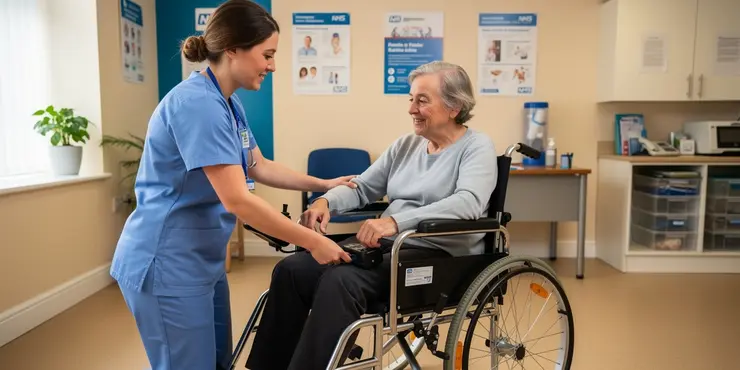
Wheelchairs are among the most customizable mobility aids. Users can select from various frame sizes and types, including lightweight and folding options. Custom seat cushions and backrests can enhance comfort and support. Additionally, wheel configurations and controls can be adjusted to suit individual needs, especially for powered wheelchairs.
Customizing Mobility Scooters
Mobility scooters can also be tailored to enhance independence and accessibility. Options may include adjusting seat height and angle, upgrading to more powerful batteries for extended range, and adding features such as baskets or canopies for enhanced practicality. These adjustments can significantly improve user satisfaction and usability.
Modifications for Walking Aids
Walking aids like walkers and rollators can be customized primarily through handle adjustments and frame sizes to provide better ergonomics. Additional features such as brakes, storage bags, or seats can be included to cater to the user's lifestyle and mobility needs, ensuring that users can navigate their environment more comfortably.
Customized Beds for Improved Accessibility
Adjustable beds are another category where customization plays a vital role in mobility aid. These beds can feature adjustable height, head, and foot sections to help users find a comfortable resting or sleeping position, reduce pressure points, and facilitate easier transfers to and from bed. Specialized mattresses may also be used to prevent pressure sores.
Benefits of Customizing Mobility Equipment
Customizing mobility equipment offers numerous benefits. The primary advantage is improved comfort, enabling users to move and rest more easily. Furthermore, personalized equipment can enhance independence by adjusting to the specific mobility challenges of the user. Lastly, customization can contribute to better safety, reducing the risk of falls or injury.
Accessing Customized Solutions in the UK
In the UK, multiple providers offer customization services for mobility equipment. These services can be accessed privately or through the National Health Service (NHS) in certain cases. Occupational therapists often work with users to determine the best specifications for their equipment, ensuring that the customization meets their specific needs.
Conclusion
Customization of mobility equipment is an essential aspect of ensuring that individuals with mobility challenges can lead independent and comfortable lives. With a variety of options available, users in the UK can work with healthcare professionals to tailor their mobility aids to their unique needs, ultimately enhancing their quality of life.
Introduction to Changing Mobility Equipment
Mobility equipment helps people who find moving around hard. You can change this equipment to fit your special needs. This makes it more comfortable and safer to use. In the UK, you can find many ways to make mobility equipment just right for you.
Types of Mobility Equipment You Can Change
You can change many types of mobility equipment like wheelchairs, scooters, walking aids, and beds. Changes can include making them the right size, adding extra parts, or making them easier to use. What you can do depends on what you need and like.
Ways to Change Wheelchairs
Wheelchairs can be changed a lot. You can pick different sizes and types, like lightweight or folding wheelchairs. You can add seat cushions and backrests for extra comfort. You can also change the wheels and controls, especially for electric wheelchairs, to fit your needs.
Changing Mobility Scooters
You can change mobility scooters to help you do things on your own. You can change the seat height and angle. You can get better batteries to go farther. You can also add things like baskets or covers. These changes can make using the scooter much better.
Changing Walking Aids
Walking aids, like walkers and rollators, can be changed by adjusting the handles and frame sizes. You can add brakes, storage bags, or even a seat. These changes help you move around more easily and comfortably.
Changing Beds for Better Access
You can change beds to help with moving around. Adjustable beds let you change the height and move the head or foot parts. This helps you find a comfy position and makes it easier to get in and out of bed. Special mattresses can stop sores from pressure.
Benefits of Changing Mobility Equipment
Changing mobility equipment has many good points. It makes the equipment more comfortable and easier to use. It helps you do things on your own and makes you safer by stopping falls or harm.
Getting Customized Solutions in the UK
In the UK, there are many places to get mobility equipment changed. You can get help privately or through the NHS in some cases. Occupational therapists can help decide what changes are best for you, making sure the equipment fits your needs.
Conclusion
Changing mobility equipment is important for helping people with moving difficulties live more comfortably and independently. In the UK, there are many ways to get help from healthcare professionals to make your equipment fit your needs and improve your life.
Frequently Asked Questions
Mobility equipment customization is the process of modifying wheelchairs, scooters, walkers, crutches, or related devices to better fit a person's body, lifestyle, medical needs, and daily activities.
Anyone who uses mobility equipment and needs a better fit, improved comfort, greater safety, or better function can benefit from mobility equipment customization, including people with short- or long-term mobility needs.
Common types of mobility equipment that can be customized include manual wheelchairs, power wheelchairs, mobility scooters, walkers, rollators, canes, crutches, and seating or positioning systems.
Mobility equipment customization is important because it can improve posture, reduce pain, prevent pressure injuries, increase independence, improve propulsion or driving efficiency, and make daily use safer and more comfortable.
Mobility equipment customization is usually assessed through measurements, posture evaluation, mobility goals, skin and pressure considerations, strength and range of motion review, and a discussion of the user's daily routines and environment.
Features commonly changed during mobility equipment customization include seat size, back support, footrests, armrests, cushions, handles, wheels, tires, controls, brakes, supports, and accessory placement.
Mobility equipment customization improves comfort by matching the device to body shape, reducing pressure points, supporting better alignment, and allowing adjustments that accommodate pain, fatigue, or limited movement.
Mobility equipment customization improves safety by helping the user maintain balance, reducing the risk of falls or tipping, improving control, supporting proper positioning, and ensuring the device works well in the user's environment.
Yes, mobility equipment customization can help with posture by adding or adjusting supports, optimizing seat and back angles, positioning the pelvis and trunk correctly, and reducing slouching or asymmetrical alignment.
Yes, mobility equipment customization can help prevent pressure sores by improving weight distribution, selecting the right cushion, reducing friction and shear, and supporting regular pressure relief strategies.
Professionals involved in mobility equipment customization may include occupational therapists, physical therapists, assistive technology professionals, rehabilitation engineers, seating specialists, and medical equipment providers.
The time required for mobility equipment customization varies based on the complexity of the modifications, equipment availability, clinical evaluations, insurance approval, and whether custom parts must be ordered or fabricated.
Mobility equipment customization may require a prescription or clinical documentation, especially when the changes are medically necessary or when insurance coverage is being requested.
Mobility equipment customization may be covered by insurance if it is considered medically necessary, but coverage depends on the insurer, the type of equipment, documentation, and the specific customization requested.
Mobility equipment customization usually involves tailoring equipment to a specific person's needs, while standard adjustments are basic changes that can often be made on a general-purpose device without specialized planning.
Yes, mobility equipment customization can often be updated over time as a person's body, strength, goals, or medical condition changes, and as new accessories or components become available.
Mobility equipment customization can increase independence by making transfers, propulsion, steering, reaching, and daily use easier, which can reduce the need for assistance from others.
Important measurements for mobility equipment customization may include seat width, seat depth, seat height, back height, arm height, leg length, shoulder width, pelvic position, and overall user posture.
Yes, mobility equipment customization can help in home and community settings by improving navigation through narrow spaces, enabling better access to furniture or vehicles, and supporting use on varied surfaces and terrains.
Someone should start mobility equipment customization by consulting a qualified clinician or mobility specialist, discussing goals and challenges, getting a proper assessment, and exploring equipment options that match their needs.

Ergsy Search Results
This website offers general information and is not a substitute for professional advice.
Always seek guidance from qualified professionals.
If you have any medical concerns or need urgent help, contact a healthcare professional or emergency services immediately.
Some of this content was generated with AI assistance. We've done our best to keep it accurate, helpful, and human-friendly.
- Ergsy carefully checks the information in the videos we provide here.
- Videos shown by Youtube after a video has completed, have NOT been reviewed by ERGSY.
- To view, click the arrow in centre of video.
- Most of the videos you find here will have subtitles and/or closed captions available.
- You may need to turn these on, and choose your preferred language.
- Go to the video you'd like to watch.
- If closed captions (CC) are available, settings will be visible on the bottom right of the video player.
- To turn on Captions, click settings.
- To turn off Captions, click settings again.