
Get Answers
Introduction to Exercising During Pregnancy
Staying active during pregnancy has numerous benefits for both the mother and the baby. Engaging in regular physical activity can help improve sleep, reduce stress, alleviate pregnancy discomfort, and even prepare the body for labour and delivery. Additionally, exercising while pregnant can contribute to maintaining a healthy weight and improving overall fitness levels. However, it's crucial to know which exercises are safe and to approach them mindfully.
Benefits of Exercise Classes for Pregnant Women
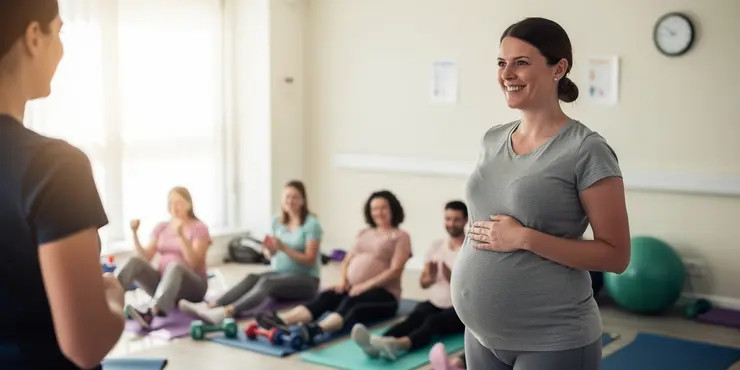
Participating in exercise classes specifically designed for pregnant women can offer numerous advantages. These classes are usually guided by instructors knowledgeable about prenatal fitness, ensuring the safety and appropriateness of the exercises. These sessions can help improve cardiovascular fitness, strength, and flexibility. Moreover, they provide an excellent opportunity for women to meet other expectant mothers, creating a supportive community environment. Exercise classes designed for pregnancy often focus on activities that promote pelvic floor strength and core stability, which are particularly beneficial during this life stage.
Types of Pregnancy-Safe Exercise Classes
In the UK, there are various pregnancy-safe exercise classes available. Popular options include prenatal yoga and pilates, which focus on breathing, gentle stretching, and strengthening exercises. These can improve posture and alleviate back pain, a common issue during pregnancy. Aqua aerobics is another excellent option, offering low-impact resistance exercise that is gentle on the joints. Walking groups tailored for expectant mothers can also provide a safe aerobic workout in a social setting. It's important to choose classes led by qualified instructors experienced in prenatal fitness.
Considerations and Precautions
While exercise is beneficial during pregnancy, it is essential for expectant mothers to take certain precautions. Before starting any exercise program, it is advisable to consult with a healthcare provider, particularly if there are any underlying health concerns. Pregnant women should listen to their bodies and avoid overexertion. Staying hydrated and avoiding exercising in hot or humid environments is crucial. Additionally, exercises involving lying flat on the back should be avoided after the first trimester, as they can restrict blood flow. If any discomfort, dizziness, or pain occurs during exercise, it is important to stop immediately and consult a healthcare professional.
Conclusion
Incorporating exercise classes into a pregnancy routine can be highly beneficial, provided they are approached with care and under professional guidance. By choosing the right type of exercise and taking necessary precautions, expectant mothers in the UK can stay active and healthy throughout their pregnancy, contributing positively to their own well-being and that of their baby.
What Is Exercising During Pregnancy?
Doing exercises while you are pregnant is good for you and your baby. When you exercise, you can sleep better and feel less stressed. It also helps with body aches and gets you ready for when the baby is born. Exercise keeps you healthy and fit, but you need to know which exercises are safe.
Why Are Exercise Classes Good for Pregnant Women?
Exercise classes for pregnant women are very helpful. The teachers know what exercises are safe. These classes can make your heart, muscles, and body strong. You can also meet other moms-to-be and make new friends. The classes help your tummy muscles and back, which is good during pregnancy.
What Exercise Classes Can Pregnant Women Do?
In the UK, there are many exercise classes for pregnant women. Prenatal yoga and pilates are popular. They help you breathe better and stretch safely. Aqua aerobics is great because it's exercise in water, which is gentle. Walking groups for pregnant women are also fun and safe. Make sure the teachers know about exercise for pregnant women.
Things to Remember and Be Careful About
Exercise is good, but be careful if you're pregnant. Talk to your doctor first, especially if you have health issues. Listen to your body and don't work too hard. Drink water and avoid getting too hot. After the first three months, don't lie flat on your back for exercises. If you feel any pain, dizziness, or discomfort, stop right away and talk to a doctor.
In Summary
Joining exercise classes when you are pregnant is a good idea, but do it carefully and with help from experts. Choose the right exercises and be careful. Staying active and healthy helps you and your baby feel good.
Frequently Asked Questions
Yes, it's generally safe for most pregnant women to take exercise classes, but it's important to consult with your healthcare provider before starting any new exercise regimen.
Classes like prenatal yoga, swimming, walking, and low-impact aerobics are often recommended. Always check with your instructor and doctor to ensure suitability.
Look for classes specifically labeled as prenatal or those that explicitly state they are safe for pregnant women. It's also advisable to discuss with the instructor about modifications.
The general recommendation is to exercise at a moderate intensity for 150 minutes a week, which can be broken down into 30-minute sessions on most days.
Exercise can help manage weight gain, improve mood, reduce pregnancy-related discomforts, and increase stamina and muscle strength.
Yes, signs like dizziness, shortness of breath, chest pain, vaginal bleeding, or contractions should prompt you to stop and seek medical advice.
High-intensity workouts should be avoided unless you're accustomed to them and have medical clearance. Most women should focus on moderate-intensity activities.
Yes, it's important to inform your instructor so they can provide appropriate modifications to the exercises.
Yes, many women experience increased fatigue during pregnancy. It's important to listen to your body and rest as needed.
Yes, beginners can start exercising, but it's critical to start gently and seek guidance from healthcare professionals and trained instructors.
Avoid exercises involving lying flat on your back after the first trimester, high-impact sports, or activities with a high risk of falling or abdominal injury.
Wear breathable, comfortable clothing that allows movement, and opt for supportive athletic shoes and a good sports bra.
Modifications might include reducing intensity, avoiding lying flat on your back, and focusing on balance and core stability. A trained instructor can guide you.
Yes, light to moderate weight training with proper form and supervision can be beneficial. Avoid heavy lifting and breath-holding.
Yes, prenatal yoga is excellent for promoting flexibility, strength, and relaxation, and it includes modifications suitable for pregnant women.
Yes, regular exercise can help increase stamina and muscle strength, potentially aiding during labor and delivery.
Stay hydrated and have a light snack with carbohydrates and proteins to maintain energy levels.
As the pregnancy progresses, it may become necessary to further modify activities to accommodate balance changes and comfort, reducing intensity as needed.
Yes, low-impact dance classes can be a fun way to stay active, but avoid high-impact moves or jumps and discuss any concerns with your instructor.
Rather than focusing on heart rate, it's better to use the perceived exertion scale, keeping the intensity at a level where you can still hold a conversation.
Most of the time, it is safe for pregnant women to go to exercise classes. But before you start any new exercises, you should talk to your doctor to make sure it is okay for you.
You can try classes like yoga for pregnant people, swimming, walking, and easy aerobics. Always ask your teacher and doctor if these are safe for you.
Find classes called "prenatal" or ones that say they are safe for pregnant women. Talk to the teacher about how to change the exercises so they are safe for you.
It is good to exercise for 150 minutes every week. You can do this by exercising for 30 minutes on most days.
Exercise is good for you. It can help you keep a healthy weight, make you feel happier, stop aches and pains when you are pregnant, and make your muscles stronger.
If you feel dizzy, have trouble breathing, chest pain, bleeding, or contractions, stop what you're doing and see a doctor.
Do not do really hard exercises unless you do them a lot already and your doctor says it is okay. Most women should do exercises that are not too hard.
Yes, tell your teacher so they can change the exercises to help you.
Yes, many women feel more tired when they are pregnant. It is important to listen to your body and rest when you need to.
Yes, beginners can start exercising. It is important to start slowly and get help from doctors and trained teachers.
After the first three months of being pregnant, do not do exercises where you lie flat on your back. Also, stay away from sports that are very tough or where you might fall or hurt your belly.
Wear clothes that are comfy and let you move easily. Choose shoes that make you feel supported and wear a good sports bra if needed.
You can change your exercises to make them easier. Try not doing them too hard, don't lie flat on your back, and work on keeping your balance and making your tummy strong. A special teacher can help you with this.
Yes, lifting light to medium weights can be good for you if you have someone to help you and you do it the right way. Don't lift very heavy weights and remember to keep breathing while you lift.
Yes, yoga for pregnant women is great. It helps make your body strong and flexible. It also helps you relax. There are special moves that are safe for pregnant women.
Yes, doing regular exercise can make you stronger. It can help you have more energy and stronger muscles, which can be good when having a baby.
Drink water often and eat a small snack with some carbs and proteins. This helps you keep your energy up.
When you are pregnant, your body changes. It can be harder to keep your balance. Some activities might get uncomfortable too. It’s okay to change things so you feel better. You might need to go slower or do less.
Yes, dance classes that are easy on your body can be a fun way to move and exercise. Don't do any big jumps or moves that are too hard. If you have any worries, talk to your dance teacher.
It's better not to worry about your heartbeat speed. Instead, think about how hard you feel you are working. You should exercise at a level where you can still talk to someone.

Ergsy Search Results
This website offers general information and is not a substitute for professional advice.
Always seek guidance from qualified professionals.
If you have any medical concerns or need urgent help, contact a healthcare professional or emergency services immediately.
Some of this content was generated with AI assistance. We've done our best to keep it accurate, helpful, and human-friendly.
- Ergsy carefully checks the information in the videos we provide here.
- Videos shown by Youtube after a video has completed, have NOT been reviewed by ERGSY.
- To view, click the arrow in centre of video.
- Most of the videos you find here will have subtitles and/or closed captions available.
- You may need to turn these on, and choose your preferred language.
- Go to the video you'd like to watch.
- If closed captions (CC) are available, settings will be visible on the bottom right of the video player.
- To turn on Captions, click settings.
- To turn off Captions, click settings again.