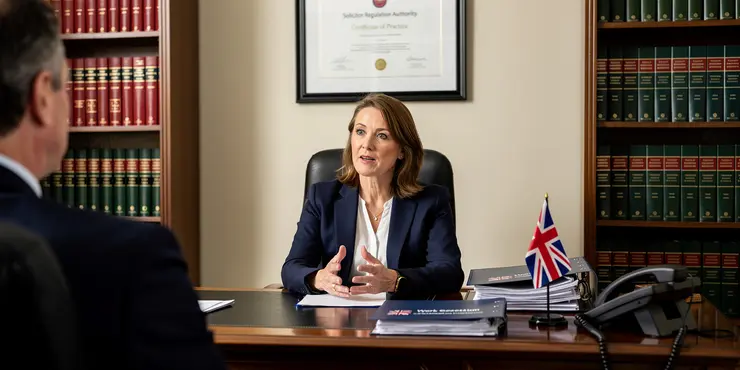

Get Answers
Can I make a compensation claim after a work accident?
Yes, you may be able to make a compensation claim after a work accident if your employer was legally responsible for the injury. In the UK, employers have a duty to protect staff by providing a safe workplace, proper training, and suitable equipment.
If they failed to do this and you were injured as a result, you could have grounds for a claim. This applies whether the accident happened in an office, warehouse, shop, construction site, or any other workplace.
What kinds of accidents can lead to a claim?
Many different workplace accidents may support a compensation claim. These can include slips, trips, and falls, lifting injuries, falls from height, machinery accidents, or accidents caused by unsafe equipment.
You may also be able to claim for injuries caused by repetitive strain, exposure to harmful substances, or stress-related harm in some circumstances. The key question is whether your employer failed in their duty of care.
What do I need to prove?
To make a successful claim, you usually need to show that your employer was negligent and that this negligence caused your injury. This does not mean the accident had to be entirely their fault, but they must have contributed to what happened.
Evidence can make a big difference. Useful proof may include accident book records, photos of the scene, witness details, medical reports, and any emails or documents showing unsafe working conditions.
Will claiming affect my job?
It is illegal for an employer to treat you unfairly simply because you made a genuine compensation claim. Most workplace claims are made against the employer’s insurance policy, not paid directly by the business.
That said, many people worry about tension at work. If you are concerned, it can help to seek legal advice before starting a claim so you understand your rights and the process.
Is there a time limit?
In most cases, you have three years from the date of the accident to start a claim in England and Wales. If your injury developed over time, the three-year limit may begin from the date you first became aware that your condition was linked to your work.
There are some exceptions, especially for children or people who lack mental capacity. It is usually best not to wait, as gathering evidence is easier soon after the accident.
What compensation could cover
Compensation may cover your pain and suffering, as well as financial losses caused by the injury. These losses can include lost wages, medical treatment, travel costs, and the cost of care or help at home.
The amount depends on the seriousness of the injury and how much it has affected your daily life. A solicitor can help assess what your claim may be worth and whether you are likely to succeed.
Frequently Asked Questions
Yes, you may be able to claim compensation after a work accident if someone else was responsible, such as your employer, a contractor, or a third party.
Claims can arise from slips, trips, falls, machinery accidents, manual handling injuries, falls from height, vehicle incidents, and exposure to harmful substances.
Usually, yes. You generally need to show that the accident happened because of negligence, unsafe working conditions, poor training, lack of equipment, or a breach of duty.
You may still be able to claim even if you were partly at fault, although your compensation could be reduced to reflect your share of responsibility.
It is best to start as soon as possible so evidence is easier to collect and important deadlines are not missed.
Yes, there is usually a strict time limit, often three years from the date of the accident or from when you first realised your injury was linked to work.
You can still make a claim while remaining employed. A valid claim should not affect your legal rights, although it is sensible to get advice before proceeding.
Yes, you may still be able to claim even if you were not a permanent employee, depending on who owed you a duty of care and what caused the accident.
Useful evidence includes accident reports, witness details, medical records, photos of the scene, CCTV footage, and proof of lost earnings.
Yes, report it as soon as possible and make sure it is recorded in the accident book or another formal record.
Yes, if the accident caused psychological injury such as anxiety, depression, or post-traumatic stress, that may also be included in a claim.
Compensation may cover pain and suffering, medical treatment, lost income, travel costs, care needs, and other accident-related expenses.
Not necessarily. Many claims are settled without a court hearing, although some cases may need court proceedings if agreement cannot be reached.
A waiver does not automatically stop a claim, especially if your employer was negligent. The wording and enforceability would need to be assessed.
If defective equipment contributed to your injury, you may have a claim against the employer, manufacturer, or another responsible party.
Yes, in fatal cases certain dependants or family members may be able to bring a claim for financial losses and other damages.
You do not always need one, but a solicitor can help assess your chances, gather evidence, and handle negotiations with the insurer.
Costs depend on how the claim is handled. Some solicitors work on a no win, no fee basis, which can reduce upfront costs.
You may still be able to pursue a claim, and there may be other ways to recover compensation depending on the circumstances and the responsible party.
Get medical help, report the accident, gather evidence if you can, note witness details, keep records of injuries and expenses, and seek legal advice promptly.

Ergsy Search Results
This website offers general information and is not a substitute for professional advice.
Always seek guidance from qualified professionals.
If you have any medical concerns or need urgent help, contact a healthcare professional or emergency services immediately.
Some of this content was generated with AI assistance. We've done our best to keep it accurate, helpful, and human-friendly.
- Ergsy carefully checks the information in the videos we provide here.
- Videos shown by Youtube after a video has completed, have NOT been reviewed by ERGSY.
- To view, click the arrow in centre of video.
- Most of the videos you find here will have subtitles and/or closed captions available.
- You may need to turn these on, and choose your preferred language.
- Go to the video you'd like to watch.
- If closed captions (CC) are available, settings will be visible on the bottom right of the video player.
- To turn on Captions, click settings.
- To turn off Captions, click settings again.