
Speak To An Expert
Get clear, personalised advice for your situation.
Jot down a few questions to make the most of your conversation.
Introduction
Many people in the UK consider keeping spiders as pets due to their fascinating nature and relatively low maintenance requirements. However, it is important to understand the legal, practical, and ethical aspects of keeping a spider as a pet. This guide will provide you with essential information to ensure you provide a suitable environment for your arachnid companion.
Legal Considerations
In the UK, keeping a spider as a pet is generally legal. However, certain species may be subject to specific legislation. The Dangerous Wild Animals Act 1976 regulates the ownership of certain exotic animals, including some large or venomous spider species. Before acquiring a spider, it is crucial to check if the species you are interested in requires a license. Local councils issue these licenses, and they may have additional requirements for enclosures and safety measures.
Popular Pet Spider Species
Several spider species are popular among UK pet enthusiasts. The Chilean Rose tarantula (Grammostola rosea) is a common choice due to its docile nature and ease of care. Other popular tarantulas include the Mexican Red Knee (Brachypelma smithi) and the Pinktoe tarantula (Avicularia avicularia). These species are known for their striking appearances and relatively calm temperaments, making them suitable for beginners. Research the specific needs and behaviors of different species before making a choice.
Housing and Care Requirements
Proper care and housing are essential for the wellbeing of your pet spider. Spiders are generally solitary creatures, and housing them individually is recommended. Enclosures should replicate their natural habitat as closely as possible, providing ample hiding spaces and maintaining appropriate humidity and temperature levels. Substrate, such as coconut fiber or vermiculite, should be used to line the enclosure. Additionally, ensure the enclosure is escape-proof and secure.
Feeding and Maintenance
Spiders primarily feed on live insects, such as crickets and mealworms, which should be provided according to the spider's size and dietary needs. It's important to offer a varied diet to ensure nutritional balance. Fresh water should always be available, provided in a shallow dish to prevent drowning. Regular maintenance of the enclosure is necessary, including cleaning and checking for any signs of illness or distress in the spider.
Conclusion
In conclusion, keeping a spider as a pet in the UK is feasible and can be a rewarding experience for those interested in these intriguing creatures. Ensure you research thoroughly and adhere to legal requirements and best practices for care to provide a healthy and safe environment for your spider. By understanding the responsibilities involved, you can enjoy the unique companionship of a pet spider.
Introduction
Some people in the UK like to keep spiders as pets. Spiders can be interesting and do not need much care. But you should know the rules and how to look after a spider properly. This guide will help you make a good home for your pet spider.
Legal Considerations
In the UK, you can keep a spider as a pet. But some types of spiders might have special rules. The law called the Dangerous Wild Animals Act talks about keeping some big or poisonous spiders. Before you get a spider, check if you need a special paper called a license. Local councils give these licenses and might have extra rules about spider homes.
Popular Pet Spider Species
There are a few types of spiders people like in the UK. The Chilean Rose tarantula is a popular choice because it is gentle and easy to care for. Other popular spiders are the Mexican Red Knee and the Pinktoe tarantula. These spiders look cool and are usually calm, so they are good for beginners. Learn about what each spider needs before choosing one to keep.
Housing and Care Requirements
It is important to care for your spider properly. Spiders like to live alone, so give them their own space. Their home should be like where they live in the wild. Give them places to hide and keep it the right humidity and temperature. Use materials like coconut fiber on the floor of the enclosure. Make sure the spider cannot escape from its home.
Feeding and Maintenance
Spiders eat live bugs like crickets and mealworms. Give your spider the right food for its size and kind. Offer different types of food for good health. Always have fresh water in a shallow dish so the spider does not drown. Clean the spider's home often and check if your spider looks sick or unhappy.
Conclusion
In summary, having a spider as a pet in the UK can be fun if you like these creatures. Make sure you know the rules and how to care for your spider. This way, you will have a happy and healthy pet. If you understand what to do, you can enjoy having a spider as a pet.
Frequently Asked Questions
Yes, it is legal to keep a spider as a pet in the UK, but certain species may require special licenses or permits.
Most common pet spider species do not require a license, but some exotic or dangerous species might.
Common pet spiders include tarantulas such as the Chilean rose, Mexican redknee, and Brazilian black tarantulas.
Pet spiders require a secure enclosure with proper ventilation, appropriate substrate, and hiding spots.
Pet spiders typically eat live insects such as crickets, mealworms, and roaches.
Feeding frequency depends on the species and age, but generally spiders are fed once a week or less.
Yes, pet spiders need a shallow water dish for drinking, although some get most of their hydration from their prey.
Most spider species are solitary and should be kept individually to avoid cannibalism.
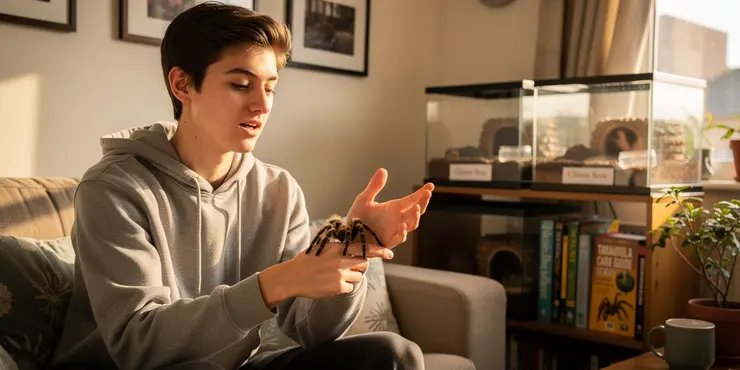
Handling pet spiders is not recommended as it can be stressful for the spider and potentially dangerous for the handler, depending on the species.
The lifespan varies by species, but tarantulas can live anywhere from 5 to 25 years in captivity.
While there is a risk, most pet spiders are not aggressive and bites are rare if handled properly.
Most pet spider bites are not dangerous to humans, but some species have venom that requires medical attention.
It depends on the species, but many spiders require a specific temperature range and do not need special lighting.
Regularly remove uneaten food and waste, and clean the enclosure every few months or as needed without disturbing the spider too much.
Yes, without a secure lid or enclosure setup, spiders can escape, so it's important to ensure the habitat is secure.
A healthy spider generally has a complete and intact exoskeleton, is not lethargic, and displays a good feeding response.
Signs of molting include the spider becoming less active, refusing food, and its exoskeleton appearing dull.
Molting can take a few hours up to a day, with recovery lasting several days to weeks where the spider may not eat.
Yes, there are regulations and restrictions on importing certain species of spiders into the UK to prevent invasive species and ensure ethical treatment.
While children can have spiders as pets, adult supervision is recommended due to the care involved and potential risks.
Yes, you can have a spider as a pet in the UK. But for some types of spiders, you might need a special paper or license.
Most pet spiders do not need a special paper called a license. But some, which are special or might be dangerous, might need one.
Some spiders people keep as pets are tarantulas. These are big, hairy spiders. Common kinds are the Chilean rose, the Mexican redknee, and the Brazilian black tarantulas.
Pet spiders need a safe space to live. Their home should have air holes, good stuff to crawl on, and places to hide.
Pet spiders eat bugs that are alive. They like crickets, mealworms, and roaches.
Tip: You can use pictures or videos to help understand what spiders eat.
How often you feed a spider depends on what type it is and how old it is. Most of the time, you only need to feed a spider once a week or even less.
Yes, pet spiders need a small water bowl to drink from. Some spiders get most of their water from the bugs they eat.
Most spiders like to be alone. It's best to keep them by themselves so they don't eat each other.
It is not a good idea to hold pet spiders. This can make the spider scared and it might be unsafe for you.
You can use a soft brush or a spoon to move the spider gently if you need to.
Tarantulas are big spiders. They can live for a long time. In zoos or at home, tarantulas can live from 5 years to 25 years.
Most pet spiders are not mean. If you hold them carefully, they do not bite often. There is a little risk, but it is not a big worry.
Most pet spiders don't hurt people. But some kinds of spiders can bite and make you sick. You should see a doctor if this happens.
Different kinds of spiders like different temperatures. Most spiders do not need special lights.
Take out any food your spider doesn't eat and clean up any mess. Clean the spider's home every few months or when it needs it. Be gentle so you don't bother the spider.
Yes, spiders can escape if there is no safe lid or cover. So, make sure their home is safe and closed well.
A healthy spider has all its body parts and a strong outer shell. It moves around and eats its food well.
When a spider is getting ready to shed its skin, you might notice a few things:
- The spider is not moving around much.
- It doesn't want to eat.
- Its outer skin looks dull and not shiny.
Supportive tools like magnifying glasses can help you see these changes better. Keeping a calendar can help track the spider's behavior over time.
When a spider molts, it takes off its old skin. This can take a few hours or up to a whole day. After that, the spider needs to rest and get better. This can take a few days or even a few weeks. During this time, the spider might not eat.
It can help to use tools like picture books or videos to learn more about spiders and molting.
Yes, there are rules about bringing some kinds of spiders into the UK. This is to stop harmful species from coming in and to make sure spiders are treated well.
Kids can have spiders as pets, but adults should help because taking care of spiders can be tricky and sometimes risky.

Ergsy Search Results
This website offers general information and is not a substitute for professional advice.
Always seek guidance from qualified professionals.
If you have any medical concerns or need urgent help, contact a healthcare professional or emergency services immediately.
Some of this content was generated with AI assistance. We've done our best to keep it accurate, helpful, and human-friendly.
- Ergsy carefully checks the information in the videos we provide here.
- Videos shown by Youtube after a video has completed, have NOT been reviewed by ERGSY.
- To view, click the arrow in centre of video.
- Most of the videos you find here will have subtitles and/or closed captions available.
- You may need to turn these on, and choose your preferred language.
- Go to the video you'd like to watch.
- If closed captions (CC) are available, settings will be visible on the bottom right of the video player.
- To turn on Captions, click settings.
- To turn off Captions, click settings again.